Stop Bleeding and Start Leading:
Dispelling Teaching’s Greatest Myth is the First Step Towards Educational Reform
Dispelling Teaching’s Greatest Myth is the First Step Towards Educational Reform
2023 was a budget-writing year for the Indiana General Assembly, which consists of 100 House Members and 50 Senators, and on the first day of the session I found myself sitting outside of the Senate chambers waiting for a meeting with the budget chairperson for the senate, Senator Ryan Mishler. A few minutes before the meeting, Sanjay Sarma, the former vice-president of MIT’s Open Learning Department (and currently the president of the Asia School of Business in Malaysia) told me something to the effect of, “I’m going to let you lead the meeting, we are all behind you.”
This meeting, plus a few others with senate leaders, led to a significant increase in funding for a new and innovative type of teacher-education program. I am confident it will enhance the experience of thousands of students and begin a process of turning classroom teaching into a sustainable and respected profession.
Buy print edition
Buy digital edition
Subscribe to print edition
Subscribe to digital edition
Download our app
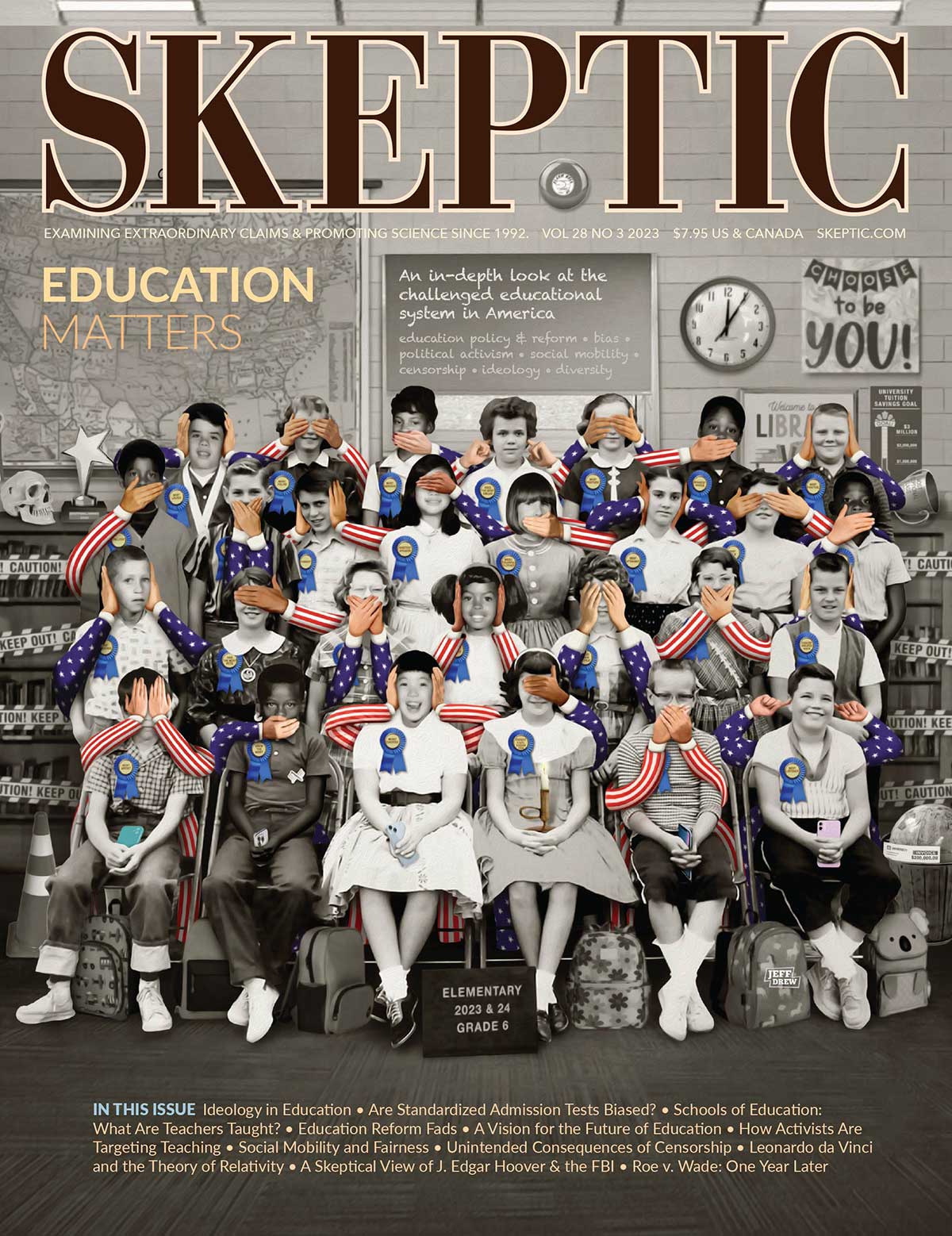
The program itself, and a succinct and workable plan for education reform are outlined in the “Education Matters” edition of Skeptic. That issue also includes articles on the Uses and Abuses of Testing, Resistance to Evidence Use in Education Reform, and why Schools of Education themselves need to be reformed.
However, none of the concrete reforms in that plan can begin until the greatest myth in teaching is dispelled: educational reform will not be created out of sympathy for teachers. Instead, reform must be built upon new ideas presented by teachers. Teachers themselves need to stop bleeding and start leading. And the place to start is by dispelling existing myths. CONTINUE READING THIS POST…
TAGS: bureaucracies, education, education policy, educational reform, funding, leadership, professional development, teachingIsrael-Hamas Study (IHS)
Data for the Skeptic Research Center’s Israel-Hamas study was collected on October 16th, 2023 using the survey company 1Q.
The total sample size for the study was 1567 American adults. The sample skews very slightly toward women (52.3% of participants), most participants (85.8%) have a high school or a college degree and 65.5% identify as white. Just under a third (30.2%) of the sample identify as Democrats, and about a quarter (24.5%) identify as Republicans with the remainder identifying as either politically non-affiliated (26.6%) or “other” (18.7%).
Survey questions inquired about a number of topics related to the 2023 Israel-Hamas War. In the survey, we assessed both peoples’ attitudes towards the war as well as their accuracy about pertinent regional and cultural facts. We will be regularly releasing charts depicting our findings.
For further sample details, please download the supplemental file.
REPORT (IHS-001)
The Israel-Hamas War
First report in the Israel-Hamas Study (IHS)
After decades of back-and-forth conflicts, with Israel generally getting the upper hand but failing to stem the growth of terrorist cells in Palestine, on October 7th, 2023, at around 6 AM, Hamas militants launched a sneak attack, murdering over 1,400 Israelis (including children), injuring over 4,500, and taking over 200 Israelis as hostages (Hutchinson, 2023). In response to these attacks, the Israeli government formally declared war against Hamas. The war has led to the estimated deaths of over 10,000 Gazans. Because this new escalation to war is barely a month old, we should expect these statistics to be revised and updated over time; we are amidst the fog of war. Nevertheless, it is clear that relations between Israel and Palestine have reached a new low, and that war is underway. In light of this, in this report, we ask: What do Americans think about this conflict and how accurate are they about the known facts?
Suggested Citation: McCaffree, K., & Saide, A. (2023). The Israel-Hamas War. Skeptic Research Center, IHS-001.
Dan Ariely — What Makes Rational People Believe Irrational Things?
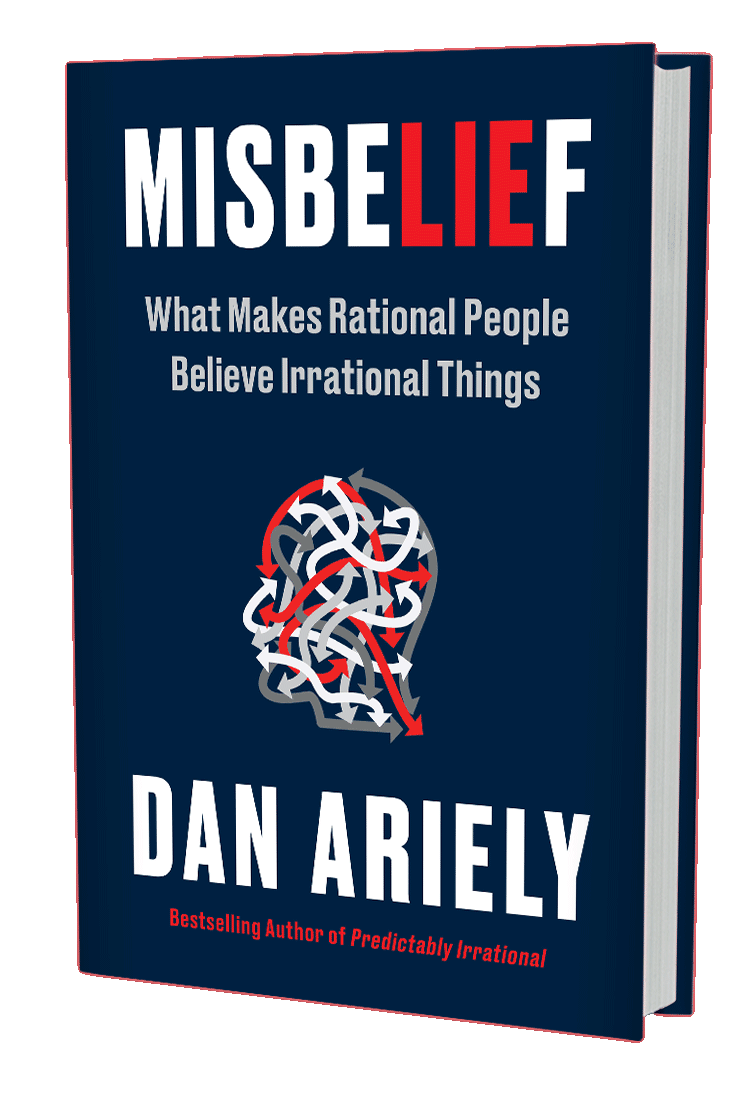
Misinformation affects all of us on a daily basis—from social media to larger political challenges, from casual conversations in supermarkets, to even our closest relationships. While we recognize the dangers that misinformation poses, the problem is complex—far beyond what policing social media alone can achieve—and too often our limited solutions are shaped by partisan politics and individual interpretations of truth.
In Misbelief, preeminent social scientist Dan Ariely argues that to understand the irrational appeal of misinformation, we must first understand the behavior of “misbelief”—the psychological and social journey that leads people to mistrust accepted truths, entertain alternative facts, and even embrace full-blown conspiracy theories. Misinformation, it turns out, appeals to something innate in all of us—on the right and the left—and it is only by understanding this psychology that we can blunt its effects. Grounded in years of study as well as Ariely’s own experience as a target of disinformation, Misbelief is an eye-opening and comprehensive analysis of the psychological drivers that cause otherwise rational people to adopt deeply irrational beliefs. Utilizing the latest research, Ariely reveals the key elements—emotional, cognitive, personality, and social—that drive people down the funnel of false information and mistrust, showing how under the right circumstances, anyone can become a misbeliever.
Yet Ariely also offers hope. Even as advanced artificial intelligence has become capable of generating convincing fake news stories at an unprecedented scale, he shows that awareness of these forces fueling misbelief make us, as individuals and as a society, more resilient to its allure. Combating misbelief requires a strategy rooted not in conflict, but in empathy. The sooner we recognize that misbelief is above all else a human problem, the sooner we can become the solution ourselves.
Dan Ariely is the bestselling author of Predictably Irrational, The Upside of Irrationality, and The (Honest) Truth About Dishonesty. He is the James B. Duke Professor of Psychology and Behavioral Economics at Duke University and is the founder of the Center for Advanced Hindsight. His work has been featured in the New York Times, the Wall Street Journal, the Washington Post, the Boston Globe, and elsewhere. He lives in North Carolina with his family.
Shermer and Ariely discuss:
- What is disinformation and what should we do about it?
- How do we know what is true and what to believe?
- virtue signaling one’s tribe as a misbelief factor
- the role of complex stories in misbelief
- emotions, personality, temperament, trust, politics, and social aspects of belief and misbelief
- the funnel of belief
- social proof and the influence of others on our beliefs
- a COVID-23 pandemic
- social media companies responsibility for disinformation
- What would it take to change your mind?
Behnam Ben Taleblu — The Role of Iran in the Israel-Hamas Conflict
Behnam Ben Taleblu is a senior fellow at Foundation for Defense of Democracies (FDD) where he focuses on Iranian security and political issues. Behnam previously served as a research fellow and senior Iran analyst at FDD. Prior to his time at FDD, Behnam worked on non-proliferation issues at an arms control think-tank in Washington. Leveraging his subject-matter expertise and native Farsi skills, Behnam has closely tracked a wide range of Iran-related topics including: nuclear non-proliferation, ballistic missiles, sanctions, the Islamic Revolutionary Guard Corps, the foreign and security policy of the Islamic Republic, and internal Iranian politics. Frequently called upon to brief journalists, congressional staff, and other Washington-audiences, Behnam has also testified before the U.S. Congress and Canadian Parliament.
His analysis has been quoted in the Washington Post, the Wall Street Journal, Reuters, Fox News, Associated Press, and Agence France-Presse, among others. Additionally, he has contributed to or co-authored articles for Foreign Affairs, Foreign Policy, Fox News, The Hill, War on the Rocks, The National Interest, and U.S. News & World Report. Behnam has appeared on a variety of broadcast programs, including BBC News, Fox News, CBS Interactive, C-SPAN, and Defense News. Behnam earned his MA in International Relations from The University of Chicago, and his BA in International Affairs and Middle East Studies from The George Washington University’s Elliott School of International Affairs.
Shermer and Taleblu discuss:
- Iran and Hamas
- Hamas and Israel
- Iran and Israel: do they really want to wipe Israel off the map?
- Islam, Islamism, Jihadism
- Sharia Law
- Hamas, Hezbollah, and terrorism in the Middle East
- Iran and nuclear weapons
- Would Mutual Assured Destruction (MAD) work with Iran?
- Do economic sanctions work against Iran?
- Trump’s strategies in the Middle East: what worked, what didn’t and why
- Iran, the Iran Deal, and why they support terrorists
- U.S. support for Israel
- The Biden Administrations culpability in releasing/sending $16 billion to Iran
- $95 billion oil revenue
- Iran’s U.S. support for Israel
- How weaker nations can fight stronger nations
- The state of democracies in the world
- The state of U.S. democracy.
Liza Mundy — The Secret History of Women at the CIA
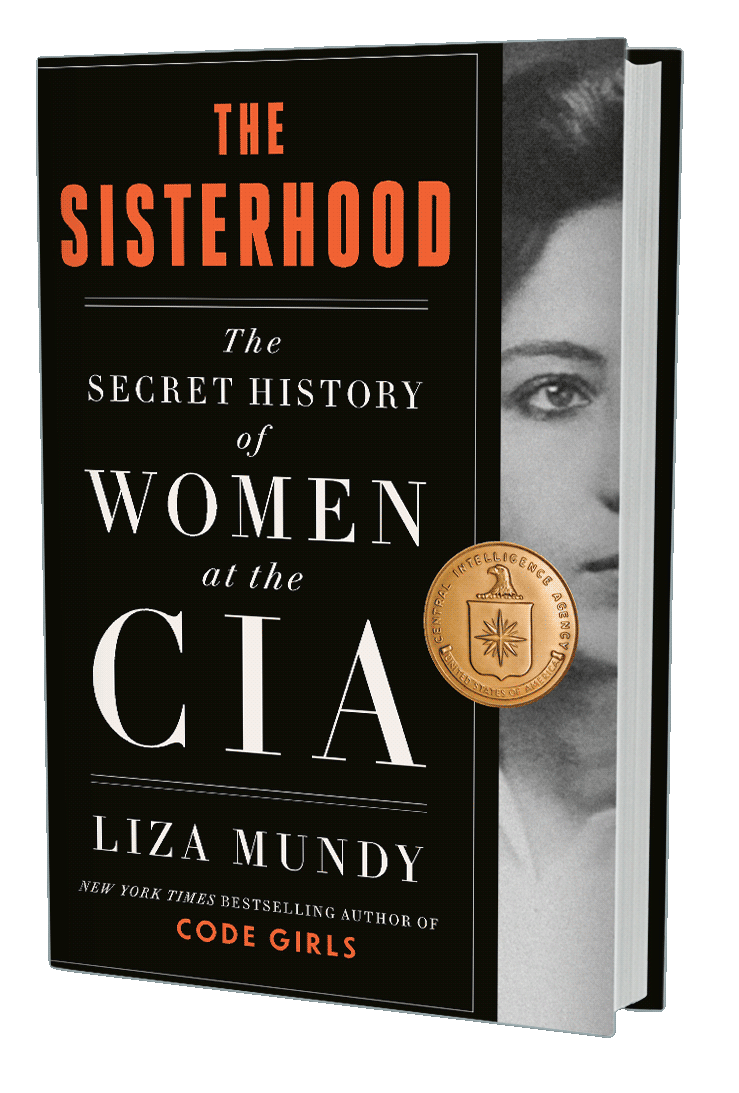
Drawing on hundreds of interviews with key players, many of whom have never before gone on the record, including current CIA employees, journalist Liza Mundy reveals a portrait of a workplace hampered by bias and male ego and yet an agency populated by three generations of intrepid women who found creative ways to work within—and expand—the confines of the roles to which they were funneled for decades: from the women, beginning in the 1940s and 50s, who built the CIA’s critical archives, wrote cables, and maintained their colleagues secrets; those who fought blatant sexism and unfair bias in the 1970s and 80s to become operatives—often using their invisibility and second-class status to their advantage; to the women who transformed spy craft by spearheading the modern era of data analysis to combat increasingly cunning international terrorism, and tracked down Osama Bin Laden.
An over-due investigation of the role women have played in American intelligence since the founding of the Central Intelligence Agency, The Sisterhood also exposes how persistent institutional sexism in the intelligence community at times hindered U.S. national security. Sexism, Mundy provocatively shows, played a distinct role in how unprepared America was before the 9/11 terrorist attacks.
Just as she did so winningly in Code Girls, Mundy’s flair for storytelling brings these women’s rich personalities and incredible accomplishments to vivid life. The Sisterhood takes us to far-flung stations, dangerous cover operations, and inside the windowless depths of Langley, to uncover the stories of women and their hidden contributions to CIA history. We meet Lisa Manfull Harper, a multilingual diplomat’s kid who worked patiently as an unpaid spouse to her husband’s official Cold War posting, and we cheer as she fights bitterly entrenched sexism to finally graduate—after a decade of attempts—at the top of her class from the CIA’s training camp, secretly creating a network to help other women behind her. We’re alongside Heidi August as she is among the first to see Qaddafi’s coup underway in Libya, and races—with only another young secretary to help—to destroy confidential documents at the nearby military base and intelligence out-post. We later share in Heidi’s horror when, in 1985 on the island of Malta, she witnesses the aftermath of a terrorist hijacking and is powerless to stop the deaths of innocent passengers, including Americans. And we feel the stomach-clenching weight of recent history as we see Cindy Storer and the women of “Alec Station” uncover groundbreaking intelligence on a stateless group of jihadist fighters in Afghanistan, only to be ignored and sidelined by the CIA leadership.
Liza Mundy is an award-winning journalist and the New York Times bestselling author of four books, including Code Girls. A former staff writer for the Washington Post, Mundy writes for The Atlantic, Politico, and Smithsonian, among other publications. Her new book is The Sisterhood: The Secret History of Women at the CIA.
Shermer and Mundy discuss:
- Research methods to get accurate CIA information
- A brief history of the CIA
- What is the purpose of intelligence agencies?
- Misogyny and sexism in the early decades
- What sorts of skills are needed to work at the CIA?
- What sorts of skills are needed to be a spy?
- Are there any differences between men and women for anything that the CIA does?
- What do women notice that men don’t in the spy business?
- Lisa Manfull Harper: “Lisa developed a feminine approach to espionage, using empathy and emotional intelligence to win trust and elicit secrets.”
- How did women work around the restrictions on women advancing in the CIA?
- Lisa Manfull Harper and the CIA in the 1950s and finding OBL in the 2000s
- Heidi August and Muammar Qaddafi and fighting terrorism
- Cindi Storer and tracking stateless Arab fighters who drove the Soviets from Afghanistan, mujahidin
- Jeanne Vertefeuille and Aldrich Ames
- Shirley Sulick and the KGB
- Molly Chambers and 9/11, Boko Haram in Nigeria.
Meet the Women of The Sisterhood
Women have been vital to the Central Intelligence Agency since its founding, rising from clerks and secretaries to powerful leaders at all levels of the organization. Despite the institution’s efforts to hold them back, many of these women found subtle, sometimes surreptitious, ways to help one another advance. They noticed things men didn’t see, becoming some of the toughest, shrewdest operatives the agency employed, while making unique sacrifices.
Lisa Manfull Harper: An international debutante and the daughter of a U.S. diplomat, Lisa Manfull’s childhood in Paris and Belgium in the 1950s laid the groundwork for spy work, teaching her how to blend in and quickly adapt to unfamiliar cultures. Embarking on clandestine training at “the Farm,” the CIA’s training facility in eastern Virginia, Lisa Manfull was dismayed to learn that women recruits were steered toward desk jobs. It took Lisa ten years to work her way back to the full Farm course. She finished first in her class. Lisa developed a feminine approach to espionage, using empathy and emotional intelligence to win trust and elicit secrets. Defying many efforts to undermine her—an enduring specialty of the spy service—she rose to become the first female division chief, or “baroness.” She later returned from retirement to join the hunt for Osama bin Laden.
Heidi August: As an eleven-year-old girl, Heidi wrote to the CIA inquiring about careers and received in reply a brochure about how to become a clerk-secretary. Ten years later, in 1968, as a college senior at the University of Boulder, she approached a CIA recruiter and was handed the same brochure. Heidi was posted to Libya, where she witnessed an uprising led by a little-known Libyan officer, Muammar Qaddafi. She moved on to European stations including Finland and Bonn, Germany, where she worked in a typing pool and endured a boss known as “Mr. Peepers.” In 1978, Heidi joined the ranks of the men she worked for, graduating first in her class at the Farm with the aid of quiet advice from Lisa Manfull Harper. In her initial case-officer posting, in Geneva, Heidi tapped into a wave of rising female discontent, targeting women assets, including one who was seeking revenge against her own exploitative bosses. Following her remarkable success in Geneva, Heidi was appointed station chief in the Mediterranean, followed by postings in the Middle East, Ireland, and India. The turning point in Heidi August’s career came in 1985, when she found herself on the island of Malta when a bullet-riddled Egyptair jet landed at Luqa airport after being hijacked by the terrorist group Abu Nidal. Among the scores of passengers killed was an American woman, Scarlett Rogenkamp, shot point-blank by one of the hijackers as Heidi watched from a control tower. Heidi felt a bond with the dead woman, and, in an era when fighting Communism was still the CIA’s central mission, vowed to devote her career to fighting terrorism.
Cindy Storer: In the 1980s, a new generation of women entered on duty. Even then, women were often marginalized and channeled into niche fields—like counterterrorism—where, as it happened, they were perfectly positioned to spot a rising menace. In 1995, the analyst Cindy Storer was among the first CIA officers tracking a stateless group of Arab fighters who had helped drive the Soviets from Afghanistan. In 1996, Storer began working with the mostly female team of “Alec Station,” a unit led by the analyst Michael Scheuer, which sought to divine the intentions of a wealthy Saudi-born businessman-turned-jihadist named Osama bin Laden. The women worked in a windowless basement unit of the CIA’s headquarters. The team struggled to raise awareness even as threats—and explosions—mounted.
Mary Bancroft: Allen Dulles served as OSS station chief in Bern, Switzerland, where his success led to his role as foundational director of the CIA. But his top wartime asset, Nazi officer Hans Bernd Gisevius, was mostly handled by Dulles’s right-hand woman, the multilingual Mary Bancroft (right). Bancroft is shown here with Dulles’s long-suffering and oft-betrayed wife, Clover.
Shirley Sulick: The CIA’s Cold War operations depended to a surprising degree upon the energy, social savvy, and navigational skills of CIA wives. Among the best was Shirley Sulick, who relished driving elaborate routes that enabled her to shake off KGB tails in Moscow so her husband, Mike, could jump out of the car undetected.
Molly Chambers: After 9/11 trans- formed the world she grew up in, Molly Chambers joined a third generation of female clandestine officers. Molly and her female colleagues called them- selves “lady case officers” and texted to cheer one another on amid the loneliness and anxiety of overseas postings in isolated and dangerous regions. Her work included applying new CIA tracking techniques to humanitarian missions including finding some of the “Chibok girls” kidnapped by Boko Haram in Nigeria.
Eloise Page: After WWII, women were urged to depart government jobs and make room for returning GIs. Among those who stayed was Eloise Page, a highborn Virginian who started as a secretary, learned her bosses’ secrets, and rose to become the first female overseas CIA station chief. Notoriously tough, Page got wind of an attempted rebellion by some of the men working in the station. Working her own sources even as members of her staff aspired to unseat her, she ran a successful operation to sabotage the saboteurs.
Sue Mccloud: One of the first female CIA spies of the Cold War, McCloud fit the classic espionage officer’s profile of someone who runs toward danger, not away. She took a train to watch the Hungarian revolution firsthand; handled a young asset named Gloria Steinem; exfiltrated Soviet defectors; and found many sly ways to bring women into the spy corps.
Jeanne Vertefeuille: Schoolmarmish, single, and singularly relentless, she led a team of cold-eyed female counter-intelligence officers who exposed the traitor Aldrich Ames after the agency’s old-boy network had ignored his reckless misbehavior.
Barbara Sude: The analyst Barbara Sude, equipped with a PhD from Princeton and a keen nose for a money trail, authored the famous August 6, 2001, President’s Daily Brief warning that al-Qaeda wanted to mount a strike on U.S. soil.
Gina Bennett: As early as 1993, Gina Bennett had written the first published warning about the “wandering mujahidin” and she continued to write prescient warnings based on her strategic instincts, even as she and fellow terrorism “nerds” went ignored by others in the agency.
Fran Moore: Overcoming decades of agency discrimination against mothers, Fran Moore rose to head the entire analytic directorate, and sat at the pinnacle during the successful hunt to bring down bin Laden.
TAGS: 9/11, bias, CIA, data analysis, discrimination, espionage, intelligence, leadership, misogyny, Science Salon, sexism, The Michael Shermer Show, women's rightsElan Journo — America and the Israeli-Palestinian Conflict
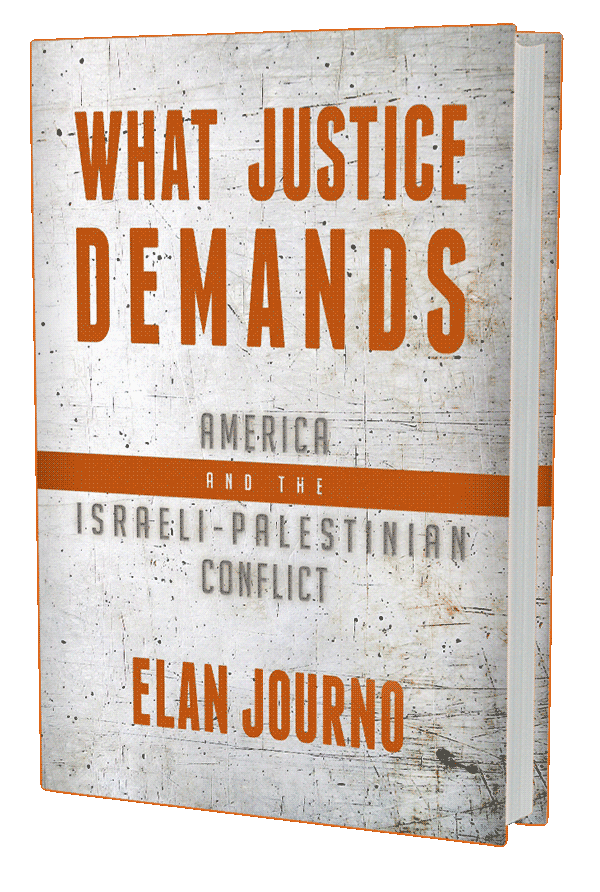
In his 2018 book, What Justice Demands: America and the Israeli-Palestinian Conflict, Elan Journo explains the essential nature of the conflict, and what has fueled it for so long. What justice demands, he shows, is that we evaluate both adversaries—and America’s approach to the conflict—according to a universal moral ideal: individual liberty. From that secular moral framework, the book analyzes the conflict, examines major Palestinian grievances and Israel’s character as a nation, and explains what’s at stake for everyone who values human life, freedom, and progress. What Justice Demands shows us why America should be strongly supportive of freedom and freedom-seekers—but, in this conflict and across the Middle East, it hasn’t been, much to our detriment.
Elan Journo is a vice president and senior fellow at the Ayn Rand Institute. His most recent book is What Justice Demands: America and the Israeli Palestinian Conflict (2018). He is co-author of Failing to Confront Islamic Totalitarianism (2016), a contributor to Defending Free Speech (2016), and editor of Winning the Unwinnable War: America’s Self-Crippled Response to Islamic Totalitarianism (2009). His articles have appeared in a wide range of publications, from Foreign Policy and Middle East Quarterly to The Hill and the Los Angeles Times. He is an editor for ARI’s journal New Ideal. His website is elanjourno.com.
Shermer and Journo discuss:
- the view from 30,000 feet and 30,000 years: who really owns land?
- British Mandate
- Theodore Herzl
- Camp David Accords
- Zionism, Judaism, and Israel
- Where would you rather live?
- Gaza, the West Bank, Golan Heights, and other territorial disputes
- Hamas (Islamic Resistance Movement), Hezbollah (Party of God), and terrorism
- Palestinian grievances
- The Palestinian cause
- Is Israel a colonial conquering empire?
- Is Israel an apartheid state?
- Boycott, Divestment, Sanctions (BDS) movement
- Gender Apartheid
- Arabs, Muslims, and Palestinians as separate identities
- Palestinian Authority
- Palestinian Liberation Organization (PLO)
- Goldstone Report
- Arab nationalism
- Iran, Syria, Lebanon, Egypt, Jordan, Saudi Arabia, and the Gulf States (Qatar, Bahrain, United Arab Emirates, Kuwait)
- Islam and Islamism
- Muslim Brotherhood
- Does Israel purposefully target Palestinians for death?
- What is justice?
- What justice demands
- Freedom and individual autonomy as the starting point.
Greg Lukianoff & Rikki Schlott — Cancel Culture and What to Do About It
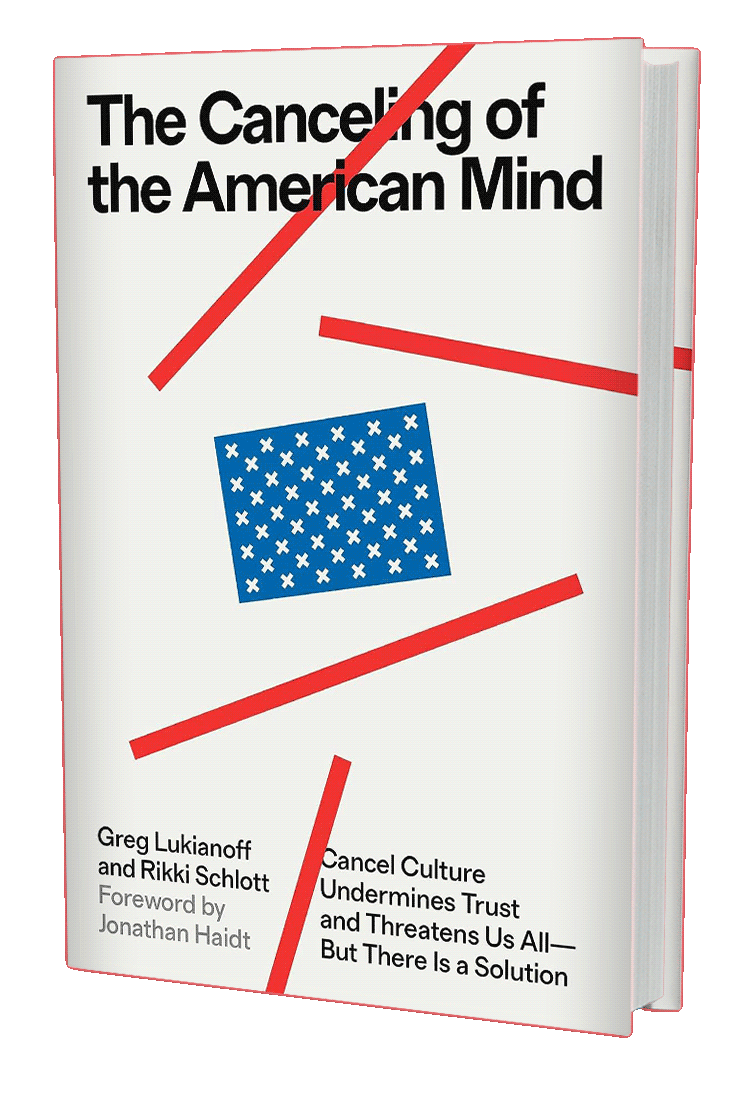
Cancel Culture is a new phenomenon, and The Canceling of the American Mind is the first book to codify it and survey its effects. From the team that brought you the bestselling Coddling of the American Mind comes hard data and research on what cancel culture is and how it works, along with hundreds of new examples showing the left and the right both working to silence their enemies.
The Canceling of the American Mind will change how you view cancel culture. Rather than a moral panic, we should consider it a dysfunctional part of how Americans battle for power, status, and dominance. Cancel culture is just one symptom of a much larger problem: the use of cheap rhetorical tactics to “win” arguments without actually winning arguments. After all, why bother refuting your opponents when you can just take away their platform or career?
The good news is that we can beat back this threat to democracy through better citizenship. The Canceling of the American Mind offers concrete steps toward reclaiming a free speech culture, with materials specifically tailored for parents, teachers, business leaders, and everyone who uses social media. We can all show intellectual humility and promote the essential American principles of individuality, resilience, and open mindedness.
Greg Lukianoff is the president of the Foundation for Individual Rights and Expression (FIRE) and one of the country’s most passionate defenders of free expression. He has written on free-speech issues in the nation’s top newspapers, including the New York Times, the Wall Street Journal, and the Washington Post, and was executive producer of the documentaries Can We Take a Joke? and Mighty Ira. Lukianoff earned his undergraduate degree from American University and his law degree from Stanford. He worked for the ACLU of Northern California, the Organization for Aid to Refugees, and the EnvironMentors Project before joining FIRE in 2001.
Rikki Schlott is a New York City-based journalist and political commentator. She is a research fellow at FIRE, host of the Lost Debate podcast, a columnist at the New York Post, and a regular contributor to numerous publications and television programs. Her commentary focuses on free speech, campus culture, civil liberties, and youth issues from a Generation Z perspective.
Shermer and Lukianoff and Schlott discuss:
- the definition of Cancel Culture
- The Henny Youngman Principle: “Compared to what?” Rates of cancel culture
- Is Cancel Culture an imagined moral panic?
- Cancel Culture on the political Left
- Cancel Culture on the political Right
- Social media and Cancel Culture
- Free speech law vs. free speech norms
- Diversity, Equity, and Inclusion (DEI) and Cancel Culture
- Sensitivity training programs
- Bias Hotlines and the silencing of speech
- Pluralistic Ignorance and the spiral of silence
- The 4 Great Untruths
- Jean Twenge’s theory of generational change
- Solutions to cancel culture.
Robert Sapolsky on Free Will and Determinism
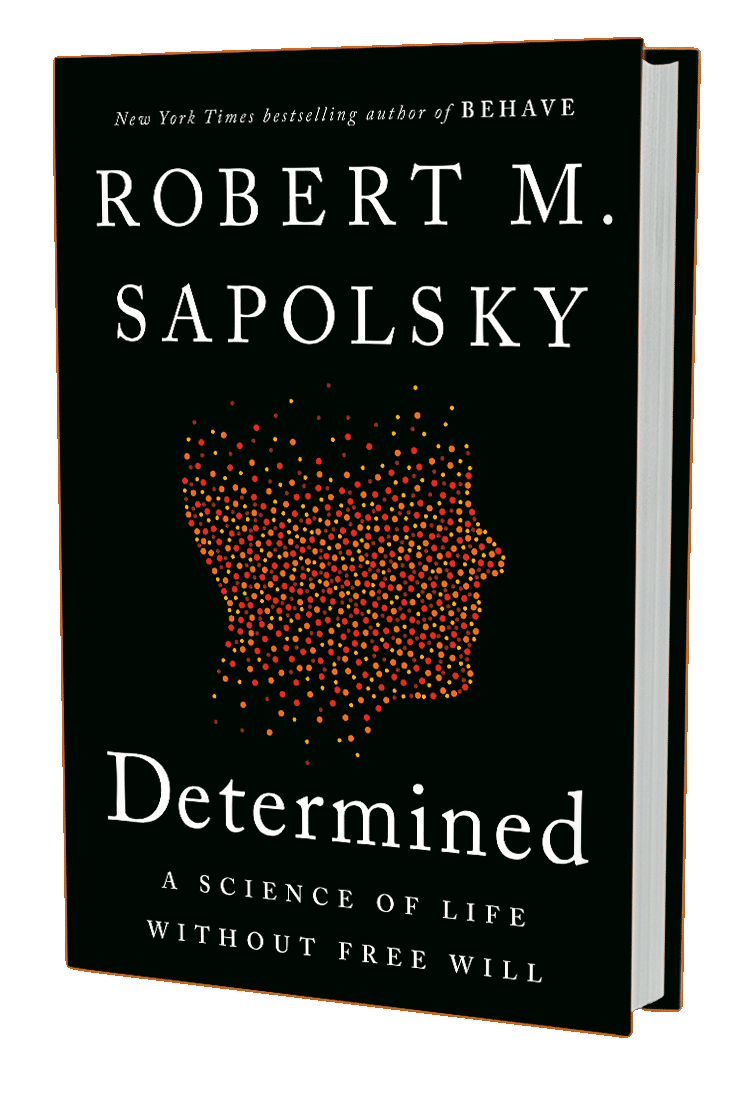
Robert Sapolsky’s Behave, his now classic account of why humans do good and why they do bad, pointed toward an unsettling conclusion: We may not grasp the precise marriage of nature and nurture that creates the physics and chemistry at the base of human behavior, but that doesn’t mean it doesn’t exist. Now, in Determined: A Science of Life Without Free Will, Sapolsky takes his argument all the way, mounting a brilliant (and in his inimitable way, delightful) full-frontal assault on the pleasant fantasy that there is some separate self telling our biology what to do.
Determined offers a marvelous synthesis of what we know about how consciousness works—the tight weave between reason and emotion and between stimulus and response in the moment and over a life. One by one, Sapolsky tackles all the major arguments for free will and takes them out, cutting a path through the thickets of chaos and complexity science and quantum physics, as well as touching ground on some of the wilder shores of philosophy. He shows us that the history of medicine is in no small part the history of learning that fewer and fewer things are somebody’s “fault”; for example, for centuries we thought seizures were a sign of demonic possession. Yet, as he acknowledges, it’s very hard, and at times impossible, to uncouple from our zeal to judge others and to judge ourselves. Sapolsky applies the new understanding of life beyond free will to some of our most essential questions around punishment, morality, and living well together. By the end, Sapolsky argues that while living our daily lives recognizing that we have no free will is going to be monumentally difficult, doing so is not going to result in anarchy, pointlessness, and existential malaise. Instead, it will make for a much more humane world.
Robert M. Sapolsky is the author of several works of nonfiction, including A Primate’s Memoir, The Trouble with Testosterone, and Why Zebras Don’t Get Ulcers. His most recent book, Behave, was a New York Times bestseller and named a best book of the year by the Washington Post and the Wall Street Journal. He is a professor of biology and neurology at Stanford University and the recipient of a MacArthur Foundation “Genius Grant.” He and his wife live in San Francisco. His latest book is Determined: A Science of Life Without Free Will.
Shermer and Sapolsky discuss:
-
Definitions of free will, determinism, compatibilism, libertarian free will, etc. Sapolsky’s typology:
- The world is deterministic and there’s no free will.
- The world is deterministic and there is free will.
- The world is not deterministic; there’s no free will.
- The world is not deterministic; there is free will.
“One compatibilist philosopher after another reassuringly proclaims their belief in material, deterministic modernity…yet somehow, there is still room for free will. As might be kinda clear by now, I think that this doesn’t work (see chapters 1, 2, 3, 4, 5, 6…). I suspect that most of them know this as well. When you read between the lines, or sometimes even the lines themselves in their writing, a lot of these compatibilists are actually saying that there has to be free will because it would be a total downer otherwise, doing contortions to make an emotional stance seem like an intellectual one. Humans ‘descended from the apes! Let us hope it is not true, but if it is, let us pray that it will not become generally known,’ said the wife of an Anglican bishop in 1860, when told about Darwin’s novel theory of evolution. One hundred firty-six years later, Stephen Cave titled a much-discussed June 2016 article in The Atlantic ‘There’s No Such Thing as Free Will…but We’re Better Off Believing in it Anyway.”
Noam Chomsky: “No one really believes in determinism nor acts like it is true, not even determinists.”
Here is how the neuroscientist Sam Harris articulated it in his widely-read book Free Will:
Our wills are simply not of our own making. Thoughts and intentions emerge from background causes of which we are unaware and over which we exert no conscious control. We do not have the freedom we think we have.
In his 2023 book Determined: A Science of Life Without Free Will, the Stanford University biologist Robert Sapolsky states his deterministic position even more succinctly:
We are nothing more or less than the cumulative biological and environmental luck, over which we had no control, that has brought us to any moment.
Remember these exact definitions as I will come back to them shortly.
Could we have done otherwise?
Since philosophers love to employ thought experiments to test ideas, here’s one for you to consider: John Doe is an exceptionally moral person who is happily married to Jane. The chances of John ever cheating on Jane is close to zero. But the odds are not zero because John is human, so let’s say—for the sake of argument—that John has a one-night stand while on the road and Jane finds out. How does John account for his actions? Does he, pace the standard deterministic explanation for human behavior (as in Harris’s and Sapolsky’s descriptors above), say something like this to Jane?
Honey, my will is simply not of my own making. My thoughts and intentions emerge from background causes of which I am unaware and over which I exert no conscious control. I do not have the freedom you think I have. I could not have done otherwise because I am nothing more or less than the cumulative biological and environmental luck, over which I had no control, that brought me to the moment of infidelity…
Could John even finish the thought before the stinging slap of Jane’s hand across his face terminated the rationalization?
If free will is the power to do otherwise, as it is typically defined by philosophers, both John and Jane know that, of course, he could have done otherwise, and she reminds him that should such similar circumstances arise again he damn well better make the right choice…or else.
Consider the “could you have done otherwise?” question in a rewind of the tape of your life. If it is a Read Only Memory (ROM) tape, then no, you could not have done otherwise, because that’s just a replay of a recording of what already happened. If the entire universe is a ROM tape that in a replay everything would repeat exactly as it originally happened, then determinism is true and free will is an illusion. In this universe, it was determined from the moment of the Big Bang that I would type these words and you would read them.
But this is not the universe we live in. In our universe (unlike the one in which thought experiments are run), time flows forward and no future scenario can never perfectly match one the past, so what you did in the past influences what you choose to do next in future circumstances (this has a technical name in psychology called “learning”), which are always different from the past. So, while the world is determined, we are active agents in determining our decisions going forward in a self-determined way, in the context of what already happened and what might happen. This universe is not pre-determined but rather post-determined, and we are part of the causal net of the myriad determining factors to create that post-determined world.
- Christian List’s 3 related capacities for free will: (1) The capacity to consider several possibilities for action; (2) the capacity to form an intention to pursue one of those possibilities; (3) the capacity to take action to move toward that possibility.
- Why free will matters: how what people believe about free will and determinism influences their behaviors
- The three horsemen of determinism: (1) reductionist/materialist perspective (the building blocks are too far away from the action); (2) predetermination; (3) epiphenomenalism: a secondary effect or byproduct that arises from but does not causally influence a process.
- Dualism and free will
- Is the self an illusion?
- Punishment
- Retributive vs. Restorative Justice
- Capital punishment (Mike Dukakis/Kitty)
- Game theory evolution of punishment: Christopher Boehm’s Moral Origins
- Anders Brevivik, Timothy McVeigh, Ted Bundy
- Mr. OFT & Donta Page; Adrian Raine’s The Anatomy of Violence
- Luck
- Consequences of believing determinism: run amok?
- Meaning: “What the science in this book ultimately teaches is that there is no meaning. There’s no answer to ‘Why?’ beyond ‘This happened because of what came just before, which happened because of what came just before that.’ There is nothing but an empty, indifferent universe in which, occasionally, atoms come together temporarily to form things we each call Me.”
Armageddon in the Middle East? Rabbi David Wolpe on Israel, Palestine, Hamas, Gaza, and Anti-Semitism
Named The Most Influential Rabbi in America by Newsweek and one of the 50 Most Influential Jews in the World by The Jerusalem Post, and twice named one of the 500 Most Influential People in Los Angeles by the Los Angeles Business Journal, David Wolpe is the Max Webb Senior Rabbi of Sinai Temple. He is a Visiting Scholar at Harvard Divinity school and the Inaugural rabbinic fellow of the ADL. Rabbi Wolpe previously taught at the Jewish Theological Seminary of America in New York, the American Jewish University in Los Angeles, Hunter College, and UCLA.
A weekly columnist for the New York Jewish Week and weekly Torah columnist for the Jerusalem Post, Rabbi Wolpe has been published and profiled in the New York Times, Los Angeles Times, Washington Post, Time, Newsweek, The Atlantic and many more. He has been featured on The Today Show, Face the Nation, ABC This Morning, and CBS This Morning. In addition, Rabbi Wolpe has appeared prominently in series on PBS, A&E, History Channel, and Discovery Channel, and has engaged in widely watched public debates with Christopher Hitchens, Sam Harris, Richard Dawkins, Steven Pinker, Michael Shermer and many others about religion and its place in the world.
He is the author of eight books, including the national bestseller Making Loss Matter: Creating Meaning in Difficult Times (Riverhead). His new book is titled David, the Divided Heart (Yale U Press). It was a finalist for the National Jewish Book Awards, and has been optioned for a movie by Warner Bros.
Shermer and Wolpe discuss:
- Israel: what happened to their vaunted security apparatus, intelligence agency and military readiness?
- Zionism, Judaism, and Israel
- Palestine, Palestinians, and the Gaza strip
- Hamas, Hezbollah, and terrorism in the Middle East
- West Bank issues with Palestine
- U.S. support for Israel
- Iran, the Iran Deal, and why they support terrorists
- The Biden Administrations culpability in releasing/sending $16 billion to Iran
- Lebanon
- Egypt
- Saudi Arabia
- Shia and Sunni similarities and differences
- Progressive Left failure to denounce Hamas terrorists
- why students & student groups are pro-Palestinian and anti-Israel
- the rise of anti-Semitism in recent years
- proximate causes of anti-Semitism
- ultimate causes of anti-Semitism
- The Abraham Accords
- The Two-State Solution.
Show Notes
The reaction from the political far left in the United States:
The day after Hamas killed 1,200 Israelis, the Democratic Socialists of America (DSA) held a protest “in solidarity with the Palestinian people and their right to resist 75 years of occupation and apartheid.”
Thirty-four Harvard student organizations signed a joint statement excusing the murder and kidnapping of women and children. “The apartheid regime is the only one to blame,” the statement read. “The coming days will require a firm stand against colonial retaliation.”
Wrote Yale Law Professor Zareena Grewal on X/Twitter, after the attack, “Prayers for Palestinians. Israel is a murderous, genocidal settler state, and Palestinians have every right to resist through armed struggle, solidarity.”
Leaders of Black Lives Matter (BLM) wrote that it stands “in solidarity with our Palestinian family” and called on people to “understand the resistance in Palestine as an attempt to tear down the gates of the world’s largest open air prison.” The Chicago BLM chapter posted a graphic stating, “I Stand With Palestine,” along with a silhouette of a paraglider, referring to Hamas terrorists who had paraglided into a music festival and killed 260 young people.
Jerry Coyne on the Two-State Solution
- Since the 1930s, Palestinians turned down five offers of a two-state solution, and most of these offers were good ones—that is, offers that would be acceptable by centrists on the issue.
- Palestinians don’t want a two-state solution (and now neither do Israelis); most Palestinians want Israel eliminated.
- A two-state solution won’t eliminate Palestinian terrorism so long as many Palestinians want Israel wiped off the map
- The 1988 charter of Hamas, the rulers of Gaza, explicitly calls for the elimination of Israel (see first paragraph). So long as Hamas is there, terrorism will be there, too.
- Terrorist attacks have been going on for some time: the violence that occurred in the last two days is simply an escalation of attacks on civilians that have been going on for decades.
- Palestinian children are inculcated from a young age in school with hatred of Jews, and terrorism and desire for martyrdom will remain until the propagandizing stops. This is, of course, a religiously-based form of anti-Semitism.
- Until Palestinians depose Hamas as rulers of Gaza, the violence and attempt to eliminate Israel will continue. Abbas, too, needs to be replaced.
- Those who blame the problems of Gaza on Israel not only neglect the diversion of humanitarian funds by Palestinians into terrorism, but the fact that corruption is so rife that the higher-ups in Hamas, Fatah, and even Mahmoud Abbas, the head of the PA, are billionaires or millionaires. They have simply diverted money meant to go to poor Palestinians to their own bank accounts. Don’t believe me? Go here, here, here, here and here. It really angers me when people don’t even know this!
The Spectres That Haunt Africa:
Strange Ailment in Kenya Sets Social Media Alight
Strange Ailment in Kenya Sets Social Media Alight
…the basis for these epidemics is the emotional conflict aroused in children who are being brought up at home amidst traditional tribal conservatism, while being exposed in school to thoughts and ideas which challenge accepted beliefs.1
On Monday October 2, 2023, news reports from western Kenya told of a bizarre condition that had swept through St. Theresa’s Eregi Girls’ High School. At least 62 students were hospitalized after exhibiting uncontrollable twitching of their arms and legs, including rhythmic muscle contractions and spasms.2 At times the girls were reported to appear as if possessed by spirits and complained of headaches, dizziness, and knee pain. Many were unable to walk and had to be taken in wheelchairs to waiting ambulances. The strange outbreak occurred in the town of Musoli, about 230 miles northwest of Nairobi. When school opened the next day parents stormed the campus demanding that it be closed until more was known about the outbreak.3 By Wednesday, education officials shut down most of the school as the number of students taken to hospital reached 106.4
International media coverage of the outbreak was often ominous. The Hindustan Times reported: “Mystery Illness in Kenya Leaves School Children with Paralyzed Legs.”5 The Indo-Asian News Service proclaimed: “Mysterious Disease Paralyzes 95 Girls in Kenya.” The Latin American CE Noticias Financieras news agency carried the apocryphal headline: “Nearly 100 Students Walk like ‘Zombies’ in Kenya, Mysterious Illness Raises Alarm Bells.”6
Many people took to social media to blame the COVID-19 vaccine, which was given to the school’s students in July of last year. Others suggested that the girls were faking. Samples of blood, urine, phlegm, and stool were taken, along with throat swabs. All proved to be unremarkable. By Thursday, Kenyan health officials also ruled out the role of infectious disease and instead concluded that they were suffering from “hysteria” in response to stress from upcoming exams.7 The reaction to this episode highlights several misconceptions about outbreaks of “mass hysteria.” As someone who has studied this topic for over three decades, allow me to make some observations. CONTINUE READING THIS POST…
TAGS: colonialism, mass hysteria, neurological disorders, outbreaks, psychogenic illness, social media, social panic, stress, superstitionRose Hackman — Emotional Labor: The Invisible Work Shaping Our Lives
Shermer and Hackman discuss:
- her journey to researching emotional labor
- What is emotional labor?
- emotional labor at work, at home, in society
- How much more work do women do than men at home?
- Is marriage and family “emotional labor”?
- sex/gender differences in emotions
- equality vs. equity
- income inequality between men and women
- UBI
- Richard Reeves’ book, Of Boys and Men
- the threat of violence against women and why women are more risk averse
- sex and emotional labor
- sex work and prostitution
- pornography
- #metoo
- emotional capitalism
- liberal vs. conservative attitudes about emotional labor and gender differences
- deaths of despair
- solutions: empathy, lower loneliness, elements of a good life
- reform of capitalism?
About the Book
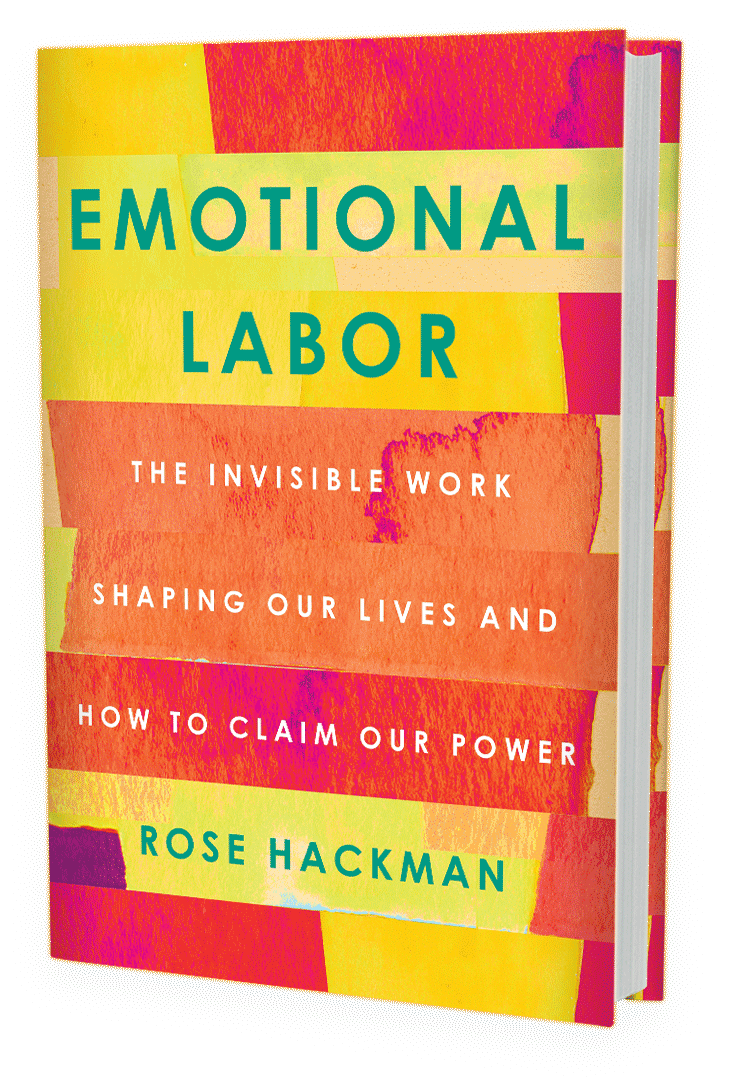
A stranger insists you “smile more,” even as you navigate a high-stress environment or grating commute. A mother is expected to oversee every last detail of domestic life. A nurse works on the front line, worried about her own health, but has to put on a brave face for her patients. A young professional is denied promotion for being deemed abrasive instead of placating her boss. Nearly every day, we find ourselves forced to edit our emotions to accommodate and elevate the emotions of others. Too many of us are asked to perform this exhausting, draining work at no extra cost, especially if we’re women or people of color.
Emotional labor is essential to our society and economy, but it’s so often invisible. In this groundbreaking, journalistic deep dive, Rose Hackman shares the stories of hundreds of women, tracing the history of this kind of work and exposing common manifestations of the phenomenon. But Hackman doesn’t simply diagnose a problem―she empowers us to combat this insidious force and forge pathways for radical evolution, justice, and change.
Drawing on years of research and hundreds of interviews, you’ll learn:
- how emotional labor pervades our workplaces, from the bustling food service industry to the halls of corporate America
- how race, gender, and class unequally shape the load we carry
- strategies for leveling the imbalances that contaminate our relationships, social circles, and households
- empowering tools to stop anyone from gaslighting you into thinking the work you are doing is not real work.
Emotional labor is real, but it no longer has to be our burden alone. By recognizing its value and insisting on its shared responsibility, we can set ourselves free and forge a path to a world where empathy, love, and caregiving claim their rightful power.
Rose Hackman is a British journalist based in Detroit. Her work on gender, race, labor, policing, housing and the environment―published in The Guardian―has brought international attention to overlooked American policy issues, historically entrenched injustices, and complicated social mores. Emotional Labor is her first book.
If you enjoy the podcast, please show your support by making a $5 or $10 monthly donation.
Show Notes
Alan Fiske’s 4 Relational Models
- Communal Sharing: Relatives, couples, marriage, families, friends
- Authority Ranking: Employer/Employee, Teacher/Student, Parent/Child
- Equality Matching: Friends splitting gas, informal exchanges. Marriage?
- Market Pricing: Economy of strangers, money is the social currency of exchange and reciprocity.
- Communal Sharing: freely share resources within a group, no tab keeping, egalitarian, “one flesh” common essence, no contamination, evolved: maternal care, kin selection, mutualism
- Authority Ranking: linear hierarchy, dominance, status, age, size, strength, wealth, precedence, tribute from inferiors, obedience, paternalistic, noblesse oblige; evolved: hierarchical primates
- Equality Matching: tit-for-tat reciprocity, division of resources equitably via turn-taking, coin-flipping, matching contributions, cut and divide cake equally; evolve: fairness & reciprocity, intuitive economics, cheating detection, perspective taking & calculation
- Market Pricing: currency, prices, rents, salaries, benefits, interest, credit; evolve: none
Violations of Fiske’s 4 Models
- Restaurant diner invites owner to dinner instead of paying
- Dinner guest offers to pay host
- Woody Allen’s watch/my neighbor’s car
- Organ sale
- Roads: Public vs. Private
- Sex between Employer & Employee, Teacher & Student, Parent & Child
- Prostitution: Sex is usually within communal sharing or equality matching, not market pricing
Steven Pinker
“Morality consists in respecting or violating one of the relational models: betraying, exploiting, or subverting a coalition; contaminating oneself or one’s community; defying or insulting a legitimate authority; harming someone without provocation; taking a benefit without paying the cost; peculating funds or abusing prerogatives.”
Jonathan Haidt
“Moral judgment is not about finding the truth; it is more about broadcasting the kind of person you are to people that you want to like you. You might call it moral posturing. Moral systems are interlocking sets of values, virtues, norms, practices, identities, institutions, technologies, and evolved psychological mechanisms that work together to suppress or regulate selfishness and make social life possible.”
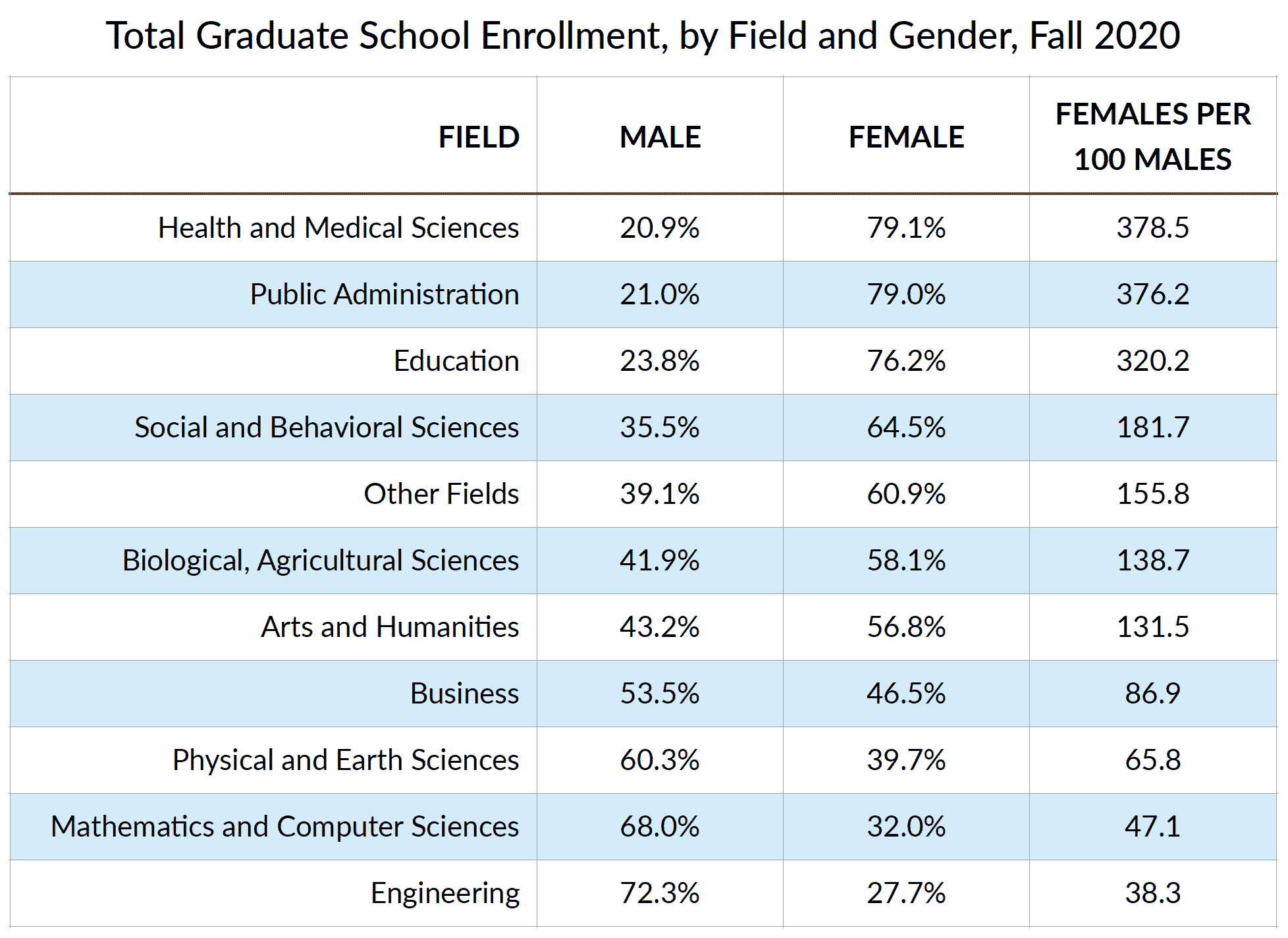
EDUCATIONAL DIFFERENCES
INCOME DIFFERENCES
20 High-Paying Jobs Where Women Outnumber Men
The existence of the gender wage gap is well known. On average, women who work full time earn 83% of what their male colleagues do, according to the American Association of University Women. The median salary for women in the U.S. is $45,760 across all occupations, which is below the overall median salary of $54,132. However, it doesn’t mean that women have to settle for lower wages. They could take steps to identify the size of the wage gap in their current positions and negotiate better pay. Or they could focus on getting jobs in higher-paying fields — especially in occupations where they outnumber men and might have more negotiating power. To locate those jobs, GOBankingRates analyzed data from the U.S. Department of Labor to find all the occupations in which women outnumber men. Although women are paid less than men in most of the jobs on this list, they still make more than the average American in these lucrative professions.
- 20. Fundraisers
-
- Percentage of women in occupation: 72%
- Median earnings for women: $70,435
- 19. Postmasters/Mail Superintendents
-
- Percentage of women in occupation: 50.1%
- Median earnings for women: $70,511
- 18. Medical and Health Services Managers
-
- Percentage of women in occupation: 72%
- Median earnings for women: $71,282
- 17. Technical Writer
-
- Percentage of women in occupation: 56%
- Median earnings for women: $71,568
- 16. Advertising and Promotions Managers
-
- Percentage of women in occupation: 56%
- Median earnings for women: $72,041
- 15. Occupational Therapists
-
- Percentage of women in occupation: 87%
- Median earnings for women: $72,121
- 14. Medical Scientists
-
- Percentage of women in occupation: 55%
- Median earnings for women: $73,907
- 13. Training and Development Managers
-
- Percentage of women in occupation: 54%
- Median earnings for women: $74,867
- 12. Marketing Managers
-
- Percentage of women in occupation: 60%
- Median earnings for women: $75,432
- 11. Budget Analysts
-
- Percentage of women in occupation: 61%
- Median earnings for women: $75,988
- 10. Public Relations and Fundraising Managers
- Percentage of women in occupation: 67% Median earnings for women: $76,776
- 9. Physical Therapists
-
- Percentage of women in occupation: 60%
- Median earnings for women: $77,337
- 8. Human Resources Managers
-
- Percentage of women in occupation: 75%
- Median earnings for women: $80,175
- 7. Psychologists
-
- Percentage of women in occupation: 68%
- Median earnings for women: $80,629
- 6. Natural Sciences Managers
-
- Percentage of women in occupation: 58%
- Median earnings for women: $82,432
- 5. Veterinarians
-
- Percentage of women in occupation: 64%
- Median earnings for women: $95,460
- 4. Nurse Practitioners
-
- Percentage of women in occupation: 88%
- Median earnings for women: $103,312
- 3. Physician Assistants
-
- Percentage of women in occupation: 65%
- Median earnings for women: $105,676
- 2. Pharmacists
-
- Percentage of women in occupation: 55%
- Median earnings for women: $121,218
- 1. Nurse Anesthetists
-
- Percentage of women in occupation: 58%
- Median earnings for women: $171,149
Daniel Dennett Looks Back on His Career
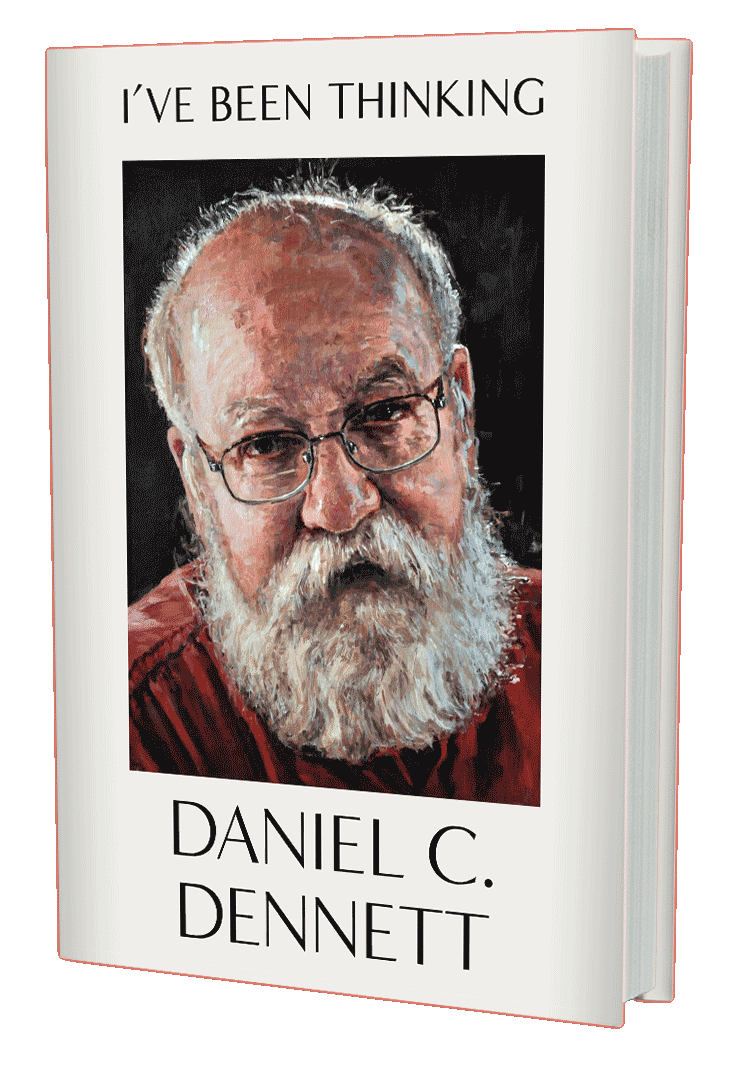
Preeminent philosopher and cognitive scientist, Daniel Dennett has spent his career considering the thorniest, most fundamental mysteries of the mind. Do we have free will? What is consciousness and how did it come about? What distinguishes human minds from the minds of animals? Dennett’s answers have profoundly shaped our age of philosophical thought. In his autobiographical I’ve Been Thinking, he reflects on his amazing career and lifelong scientific fascinations.
Dennett’s relentless curiosity has taken him from a childhood in Beirut and the classrooms of Harvard, Oxford, and Tufts, to “Cognitive Cruises” on sailboats and the fields and orchards of Maine, and to laboratories and think tanks around the world. Along the way, I’ve Been Thinking provides a master class in the dominant themes of twentieth-century philosophy and cognitive science―including language, evolution, logic, religion, and AI―and reveals both the mistakes and breakthroughs that shaped Dennett’s theories.
Key to this journey are Dennett’s interlocutors―Douglas Hofstadter, Marvin Minsky, Willard Van Orman Quine, Gilbert Ryle, Richard Rorty, Thomas Nagel, John Searle, Gerald Edelman, Stephen Jay Gould, Jerry Fodor, Rodney Brooks, and more―whose ideas, even when he disagreed with them, helped to form his convictions about the mind and consciousness. Studded with photographs and told with characteristic warmth, I’ve Been Thinking also instills the value of life beyond the university, one enriched by sculpture, music, farming, and deep connection to family.
Dennett compels us to consider: What do I really think? And what if I’m wrong? This memoir by one of the greatest minds of our time will speak to anyone who seeks to balance a life of the mind with adventure and creativity.
Daniel C. Dennett is University Professor Emeritus at Tufts University and the author of numerous books, including Intuition Pumps and Other Tools for Thinking, Breaking the Spell, Darwin’s Dangerous Idea, and Consciousness Explained. He lives with his wife in Cape Elizabeth, Maine.
If you enjoy the podcast, please show your support by making a $5 or $10 monthly donation.
TAGS: cognitive science, consciousness, evolution, free will, logic, mind, philosophy, religion, Science Salon, The Michael Shermer ShowMatthew Dallek — How the American Right Became Radicalized

At the height of the John Birch Society’s activity in the 1960s, critics dismissed its members as a paranoid fringe. After all, “Birchers” believed that a vast communist conspiracy existed in America and posed an existential threat to Christianity, capitalism, and freedom. But as historian Matthew Dallek reveals, the Birch Society’s extremism remade American conservatism. Most Birchers were white professionals who were radicalized as growing calls for racial and gender equality appeared to upend American life. Conservative leaders recognized that these affluent voters were needed to win elections, and for decades the GOP courted Birchers and their extremist successors. The far right steadily gained power, finally toppling the Republican establishment and electing Donald Trump.
Shermer and Dallek discuss:
- the influence of his father Robert Dallek
- JFK and Vietnam
- What are the “right,” “conservatism,” and “liberalism”?
- “mainstream” vs. “fringe”
- Libertarians, Christians, and conservatives
- Cold War context for the rise of the radical right
- the link between the John Birch Society and radical right figures today like Michele Bachmann, Sarah Palin, Marjorie Taylor Greene, Glenn Beck, Alex Jones, Ron Paul, Rand Paul, and Donald Trump, plus COVID denialism, vaccine disinformation, America First nationalism, school board wars, QAnon plots, allegations of electoral cheating, etc.
- the origin of the John Birch Society
- Who were John Birch and Robert Welch?
- attacks on Eisenhower as a communist
- attacks on MLK Jr. as a communist
- objections to the U.N.
- race, immigration, religion, abortion, foreign policy, war, economics…
- William F. Buckley and the intellectual foundations of modern conservatism
- Birchers in the eras of Eisenhower, Nixon, Ford, Reagan, Bush, Bush, and Trump
- militias, Tea Party, MAGA
- the future of the Republic (if we can keep it)
Matthew Dallek is a political historian whose intellectual interests include the intersection of social crises and political transformation, the evolution of the modern conservative movement, and liberalism and its critics. Dallek has authored or co-authored four books including, most recently, Birchers: How the John Birch Society Radicalized the American Right; Defenseless Under the Night: The Roosevelt Years and the Origins of Homeland Security, which won the Henry Adams prize from the Society for History in the Federal Government; The Right Moment: Ronald Reagan’s First Victory and the Decisive Turning Point in American Politics, which appeared on the Washington Post and the Chicago Tribune’s annual best-of lists; and Inside Campaigns: Elections through the Eyes of Political Professionals. Dallek is a frequent commentator in the national news media on politics, history, and public affairs. His articles and reviews have appeared in the Washington Post, Politico, the Atlantic, Perspectives, the Journal of Policy History, and his commentary has been heard on NPR, CNN International, and MSNBC. He also worked as a speechwriter for House Minority Leader Richard A. Gephardt.
If you enjoy the podcast, please show your support by making a $5 or $10 monthly donation.
TAGS: conservatism, Donald Trump, equality, extremism, JFK, political extremism, politics, radicalism, religion, Science Salon, The Michael Shermer ShowPolina Marinova Pompliano — Ways of Thinking That Power Successful People

- personal journey from college to Fortune to The Profile
- What is genius?
- hindsight bias and culling habits of the most successful people
- What about people who had those habits but are not successful?
- What about people who didn’t have those habit but became successful?
- David Goggins: do something that sucks every single day—Elective hardship
- victimhood: “Suffering is universal but victimhood is optional.” —Holocaust survivor Edith Eva Eger
- fear
- What distinguishes the truly exceptional from the merely great?
- updating existing beliefs
- pursuing meaningful goals
- original creators typically have three things in common: (1) they have a unique point of view on the world; (2) they are confident they can achieve an ambitious goal, and (3) they are willing to fail spectacularly in the name of creating something revolutionary.
- stress-test yourself through regular hardship
- trust = consistency + time.
Polina Marinova Pompliano is the founder of The Profile, a new media company that features longform profiles of successful people and companies each week. Previously, she spent five years at Fortune where she wrote more than 1,300 articles and earned the trust of prominent investors and entrepreneurs. As the author and editor of Term Sheet, Fortune’s industry-leading dealmaking newsletter, Polina interviewed the industry’s most influential dealmakers, including Melinda Gates, Steve Case, Chamath Palihapitiya, Alexis Ohanian, and more. Her new book is Hidden Genius: The Secret Ways of Thinking That Power the World’s Most Successful People.
About the Book
After five years of writing The Profile, Polina Marinova Pompliano has studied thousands of the most successful and interesting people in the world and examined how they reason their way through problems, unleash their creativity, and perform under extreme pressure. The highest performers don’t use tricks or hacks to achieve greatness. They use mental frameworks that fundamentally change the way they see the world. They’ve learned how to unlock their hidden genius in order to reach their full potential. This book will help you do the same. After learning from the world’s most successful people featured inside, you will have a mental toolkit to help you tackle thorny problems, navigate relationships, and use creativity and resilience in times of uncertainty.
If you enjoy the podcast, please show your support by making a $5 or $10 monthly donation.
TAGS: belief, elective hardship, fear, genius, habits, hindsight bias, psychology of victimhood, Science Salon, success, suffering, The Michael Shermer ShowFossil Fuels: The Past and the Future
The oil crises of 1973 and 1979 shocked us into realizing that oil is a scarce commodity, its supply can be manipulated, and the price can rise suddenly and so can inflict “pain at the pump.” However, after each oil crisis briefly induces people to drive less and conserve energy for a while, the price eventually falls, and automakers again offer big gas guzzlers while smaller, fuel-efficient cars don’t sell as well.
Then, starting in the late 1990s, oil prices increased, with the price of a barrel of oil rising from $30 in mid-2003 to $60 by August 2005, which then climbed steeply to an all-time record of $147 by July 2008. This real oil crisis has no single, simple cause the way the 1973 OPEC embargo or the Iran-Iraq turmoil of 1979 produced temporary disruptions. Rather, the real effects of declining petroleum reserves are being felt as China and India demand more oil for their rapidly growing economies. Short-term events such as the 2006 Israel-Lebanon conflict, the Iranian nuclear buildup, Hurricane Katrina’s disruption of oil production in the Gulf of Mexico in 2005, and other factors like the 2020 economic slowdown due to the COVID-19 pandemic, caused spikes or crashes in the prices, but even after the effects of such events end, price still keeps climbing. Only a global recession, triggered by excessive speculation on overpriced real estate and too many people being given mortgages they could not afford on these same overpriced houses, pushed down oil demand, and the price retreated (although still nowhere near 1973 or 1979 levels).
The long-term effect is gradual, so we don’t see the gas station lines in the U.S. now the way we did in the 1970s (although they do occur in China), yet as the price at the pump reaches painful levels above $4 a gallon, people start to conserve again. As of this writing, gas is selling for over $5 a gallon in California.
To understand what may lie in the future, let’s start from the beginning.
The Origin of Oil
What is oil? How is it found and produced? Contrary to popular myth, oil is not produced from the bodies of long-dead dinosaurs. Rather, it is organic material that is formed by the decomposition of trillions of marine plankton as they became buried in sediments.1 Oil is actually a mixture of many different kinds of complex organic molecules, mostly long chains of carbon atoms with hydrogen atoms attached, or hydrocarbons. Chemically, oil is about 85 percent hydrogen and 13 percent carbon, with minor amounts of sulfur, nitrogen, and oxygen. The simplest of these hydrocarbons is methane (CH4), which is the major component of natural gas, along with longer-chain molecules like ethane (C2H6), propane (C3H8), and butane (C4H10). CONTINUE READING THIS POST…
TAGS: energy, fossil fuels, renewable energyLee McIntyre — Disinformation: How to Fight for Truth and Protect Democracy

Lee McIntyre is Research Fellow at the Center for Philosophy and History of Science at Boston University. Formerly Executive Director of the Institute for Quantitative Social Science at Harvard University, he has taught philosophy at Colgate University, Boston University, Simmons University, Tufts Experimental College, and Harvard Extension School. He is the author of Dark Ages, Post-Truth, The Scientific Attitude, and How to Talk to a Science Denier. His new book is On Disinformation: How to Fight for Truth and Protect Democracy.
Shermer and McIntyre discuss:
- default to truth theory
- RFK Jr.
- Did reason evolve for veridical perception or group identity?
- How do we know what is true and what to believe?
- What is disinformation?
- Trump and his lies
- Is Trump an existential threat to our democracy?
- worst case scenarios if Trump wins in 2024
- What happened to conservatives and the Republican Party in the Trump era?
- Do people vote their party or their values?
- Left lies: trans issues, race issues, GMOs, nuclear power, climate doomsdayism
- facts and values, science and morality
- What went wrong during the COVID-19 pandemic?
- lies and disinformation about masks and vaccines
- social media companies responsibility for disinformation
- what we should do personally and politically about disinformation.
About the Book
The effort to destroy facts and make America ungovernable didn’t come out of nowhere. It is the culmination of seventy years of strategic denialism. In On Disinformation, Lee McIntyre shows how the war on facts began, and how ordinary citizens can fight back against the scourge of disinformation that is now threatening the very fabric of our society. Drawing on his twenty years of experience as a scholar of science denial, McIntyre explains how autocrats wield disinformation to manipulatea populace and deny obvious realities, why the best way to combat disinformation is to disrupt its spread, and most importantly, how we can win the war on truth.
McIntyre takes readers through the history of strategic denialism to show how we arrived at this precarious political moment and identifies the creators, amplifiers, and believers of disinformation. Along the way, he also demonstrates how today’s “reality denial” follows the same flawed blueprint of the “five steps of science denial” used by climate deniers and anti-vaxxers; shows how Trump has emulated disinformation tactics created by Russian and Soviet intelligence dating back to the 1920s; provides interviews with leading experts on information warfare, counterterrorism, and political extremism; and spells out the need for algorithmic transparency from Facebook, Twitter, and YouTube. On Disinformation lays out ten everyday practical steps that we can take as ordinary citizens—from resisting polarization to pressuring our Congresspeople to regulate social media—as well as the important steps our government (if we elect the right leaders) must take.
Compact, easy-to-read (and then pass on to a friend), and never more urgent, On Disinformation does nothing less than empower us with the tools and knowledge needed to save our republic from autocracy before it is too late.
If you enjoy the podcast, please show your support by making a $5 or $10 monthly donation.
TAGS: climate change denial, COVID-19, democracy, disinformation, Donald Trump, GMO, morality, nuclear energy, politics, race, reason, science, Science Salon, social media, The Michael Shermer Show, transgender, truth, vaccinationSkeptic Interviews Steven Koonin
Skeptic: How did you get interested in energy?
Koonin: I was educated in New York City public schools and grew up in a middle-class household. I went to Caltech as an undergrad, MIT for my PhD, and then returned to Caltech as faculty for 30 years. I was the Provost for the last nine. I am trained in nuclear physics and quantum mechanics, and did a lot of wonderful research. In the late 80s, I joined JASON, which is a group of scientists and engineers who work on the most important problems for the U.S. government, many of them classified. I got exposed to climate science because the Department of Energy came to JASON and inquired about the application of (then new) multiple processor computers to climate modeling and using small satellites to conduct climate observations. I got intrigued by that and learned about climate science and energy. And then, in 2004, John Brown, who was the CEO of British Petroleum, called me up and said, “Steve, come join us as Chief Scientist.” Suffice to say, they didn’t need me to find oil and gas… They were pretty good at that! They needed help figuring out what beyond petroleum really means. I accepted, packed up the family, and moved to London, shifting from academia to the private sector. I helped BP quite a bit with their initial foray into renewables, particularly biofuels, but also wind and solar. After living in London for five years, my wife and I were ready for a new experience. And then my friend Steven Chu, a Nobel Prize-winning physicist now at Stanford, became the Secretary of Energy. He asked me to help out.
Skeptic: That was in the Obama administration?
Koonin: Yes. I spent two-and-a-half years working for Obama in the Department of Energy. And I wound up doing pretty much what I did for BP, namely, figuring out technology strategies. What technology should the government be investing in, in order to reduce emissions and to improve energy security? How should it go about the process from basic research to development to demonstration to deployment? Which technologies really matter and could make a difference?
Skeptic: Can you give us a sense of what it’s like to think about these problems in different environments, from inside Caltech versus BP, and then inside a government agency?
Koonin: In the academic environment, it used to be—and I’m not sure it is now—that you could discuss, debate, and raise questions, and all of that was in the process of refining the science. In the private sector, it’s much more goal-oriented, and the goal, ultimately, is to make money. In my case, it was how do we make BP into a company that is more respectful of the environment and the climate. They weren’t so much interested in the science. It was more about what technologies should be developed or which businesses they could invest in to try to make money—and there weren’t many. In the government, I was dealing with energy security and the economic side of things, particularly the interplay of demographics and economics. The data showed that there would be massive growth in energy consumption in the next 40 to 50 years and that fossil fuels were and remained the primary source of the world’s energy. These days, approximately 80 percent of energy still comes from fossil fuels.
Skeptic: You used the term energy security. What does that mean from a government’s perspective? Is it the government’s job to make sure that people have enough energy to lead a decent life? CONTINUE READING THIS POST…
TAGS: carbon emissions, climate change, decarbonization, economics, global security, nuclear energy, Obama, renewable energyEddie Tabash — The Law vs. Separation of Church and State
Eddie Tabash is a constitutional lawyer in Los Angeles. He graduated magna cum laude from UCLA in 1973. He graduated from Loyola Law School of Los Angeles in 1976. He is known for his expertise in demonstrating how the religion clauses of the First Amendment require the separation of church and state, which includes equality before the law for nonbelievers. He is an atheist who endeavors to secure a society in which no branch of government can treat people differently because of either accepting or rejecting any tenet of religious belief.
Shermer and Tabash discuss:
- the history of the relationship between church and state
- the founding framers of the U.S. Constitution and their arguments for separating church and state
- Madison and Jefferson on church and state
- how most of the 13 colonies had government-sanctioned religions and religious tests for office
- The Constitutional Convention and the First Amendment
- major cases in history that shaped current laws on church/state issues
- how the Moral Majority of the Reagan era 1980s shaped the SCOTUS of today
- The Federalist Society and how it shapes the selection of SCOTUS justices
- how the current religious right wing supermajority on the Supreme Court is drastically eroding the separation of church and state and how modern secular government is being weakened. We could be facing the beginning stages of an actual theocracy.
- the push by some Republicans to hold a new Constitutional Convention and redesign the entire U.S. Constitution in order to make America an officially state-sanctioned Christian country and government
-
the religious beliefs and attitudes of the current SCOTUS:
- Chief Justice John G. Roberts, Jr.
- Associate Justice Sonia Sotomayor
- Associate Justice Clarence Thomas
- Associate Justice Samuel A. Alito, Jr.
- Associate Justice Elena Kagan.
- Associate Justice Amy Coney Barrett
- Associate Justice Neil M. Gorsuch
- Associate Justice Brett M. Kavanaugh
- Associate Justice Ketanji Brown Jackson
If you enjoy the podcast, please show your support by making a $5 or $10 monthly donation.
TAGS: Constitutional Convention, First Amendment, politics, religion, religious beliefs, Science Salon, The Michael Shermer Show, U.S. ConstitutionNancy Segal — Twins, Behavior Genetics, Eugenics, and Human Behavior
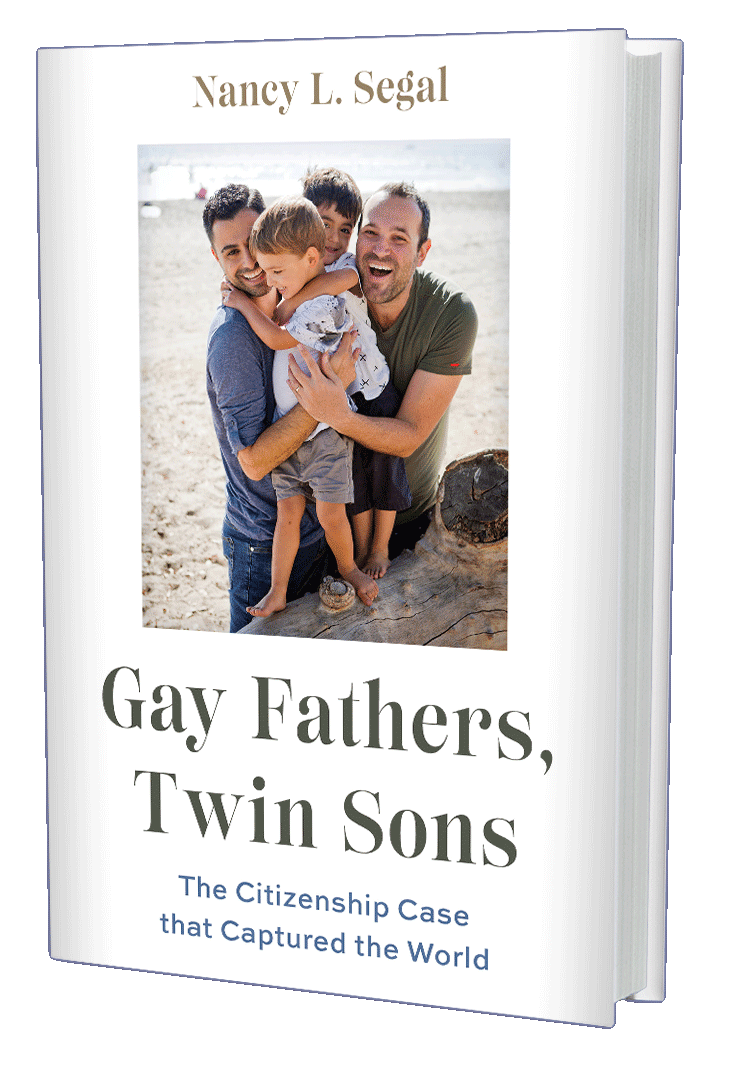
This episode is a conversation based Nancy Segal’s two new books The Twin Children of the Holocaust: Stolen Childhood and the Will to Survive and Gay Fathers, Twin Sons: the Citzenship Case that Captured the World.
Shermer and Segal discuss:
- her historical interest in twins research and behavior genetics
- the many different types of twins and family arrangements
- twins separated accidentally (switched with an unrelated infant, switched with another twin)
- twins separated intentionally
- twins reunited
- a brief history of twins research
- Josef Mengele and his twins research
- Minnesota Study of Twins Reared Apart
- the gay fathers and twin sons story
- immigration and naturalization law related to IVF, twins, gay couples, etc.
- abortion
- eugenics and the Nobel Prize sperm bank
- the meaning of “heritability”
- the relative role of nature and nurture in how lives turn out, and
- the “nonshared environment.”
Nancy L. Segal, PhD, is a Psychology Professor, and Director and Founder of the Twin Studies Center at California State University, Fullerton. She has authored over 300 scholarly articles and eight books. Her 2012 book, Born Together-Reared Apart: The Landmark Minnesota Twin Study, won the American Psychological Association’s William James Book Award. Her recent work, Deliberately Divided: Inside the Controversial Study of Twins and Triplets Adopted Apart, was the focus of a July 2022 BBC-TV documentary. Her work has been featured in the New York Times and Atlantic Monthly. She has appeared on national and international televised programs, including the Oprah Winfrey Show, Good Morning America, the Today Show and the BBC. She is also the author of The Twin Children of the Holocaust: Stolen Childhood and the Will to Survive, an annotated collection of photographs taken at the Holocaust twins’ 40th anniversary reunion and hearing on Josef Mengele’s war crimes. Her other books include Entwined Lives: Twins and What They Tell Us About Human Behavior, Indivisible by Two: Lives of Extraordinary Twins, Someone Else’s Twin: The True Story of Babies Switched at Birth, Twin Mythconceptions: False Beliefs, Fables, and Facts About Twins, and Accidental Brothers: The Story of Twins Exchanged at Birth and the Power of Nature and Nurture. Segal lives and works in southern California.
About the Book
The January 2018 headline story in the Los Angeles Times was riveting. Andrew from the United States and Elad Dvash-Banks from Israel married in Canada in 2010 when gay couples could not marry in these countries. The couple conceived fraternal twins, Aiden and Ethan, with a Canadian surrogate by means of egg and sperm donation. The two boys were born just four minutes apart. Aiden was conceived with a donated egg and Andrew’s sperm cell, and Ethan was conceived with a donated egg (from the same woman) and Elad’s sperm cell.
Andrew and Elad wished to raise their children in the United States, but when they arrived at the American Consulate in Toronto to apply for citizenship, a staff member fired off a series of “shocking” and humiliating questions, and informed the couple of her authority to require a DNA test to determine each parents’ relatedness to each twin—she warned that without these tests neither twin would be granted U.S. citizenship. Andrew and Elad knew which twin each had fathered and had planned on keeping this information confidential. They knew this because DNA analyses had already been performed, but the consulate insisted that these costly tests be repeated using their designated laboratory.
Having no alternative, DNA testing was arranged, and results submitted to the consulate. Soon, two envelopes arrived at their home, bearing both welcome and dreaded news: United States citizenship was offered to Aiden, whose father was a U.S. citizen, but not to Ethan, whose father was Israeli. And, thus, their ground-breaking legal journey began. The couple’s high-profile lawsuit nearly reached the U.S. Supreme Court, capturing worldwide attention along the way.
Nancy Segal brings the story to life through firsthand accounts of each father’s life history and analysis of the legal intricacies that threatened to deny U.S. citizenship to one of their twin sons.
If you enjoy the podcast, please show your support by making a $5 or $10 monthly donation.
TAGS: behavioral genetics, citizenship, eugenics, heritability, Holocaust, human behavior, nature versus nurture, Science Salon, supreme court cases, The Michael Shermer Show, twinsRanking American Presidents:
Does It Make Any Sense?
Does It Make Any Sense?
Coinciding with Truman’s historic upset over Dewey, Harvard historian Arthur Schlesinger published the first known ranking of U.S. presidents in Life magazine in November 1948. Schlesinger’s methodology was simple: he surveyed an array of historians and political scientists, asking them to rank presidents from “Failure” to “Great.” Schlesinger repeated his survey in 1962.
Twenty years later, the Siena College Research Institute (SCRI) took up the mantle of ranking presidents. The SCRI conducts its survey every second year of the first term of a new president. Other outlets have benefited from the presidential-ranking game as well. C-SPAN has released a poll with every new president since 2000. These types of rankings are also published by the Wall Street Journal, Newsweek, The History News Network, The Times, and the United States Presidency Centre in London. However, the mainstay of the presidential ranking remains the SCRI. As we shall see, there are three significant problems with this methodology: presentism, the evolving role of the presidency, and sui generis.

Left to right: James Monroe, John Quincy Adams, Andrew Jackson, and William Henry Harrison
The Problem of Presentism
Presentism is “the tendency to interpret the past in present terms,”1 and therein lies the first of the three major fallacies of ranking presidential performance. Cultural norms evolve over time, and it is impossible to predict how these cultural norms will change in the future.
In 2001, only 35 percent of Americans supported samesex marriage,2 and George W. Bush was re-elected in 2004 after backing a constitutional amendment banning it.3 His predecessor, Bill Clinton, signed The Defense of Marriage Act in 1996, one of the most discriminatory anti-gay statutes in American history.4 Barack Obama opposed gay marriage when he first ran for president.5 Yet today, 75 percent of Americans support same-sex marriage.6 Times change, and so do attitudes. CONTINUE READING THIS POST…
TAGS: policy, politics, ranking