Chatbots and the Pursuit of Artificial General Intelligence
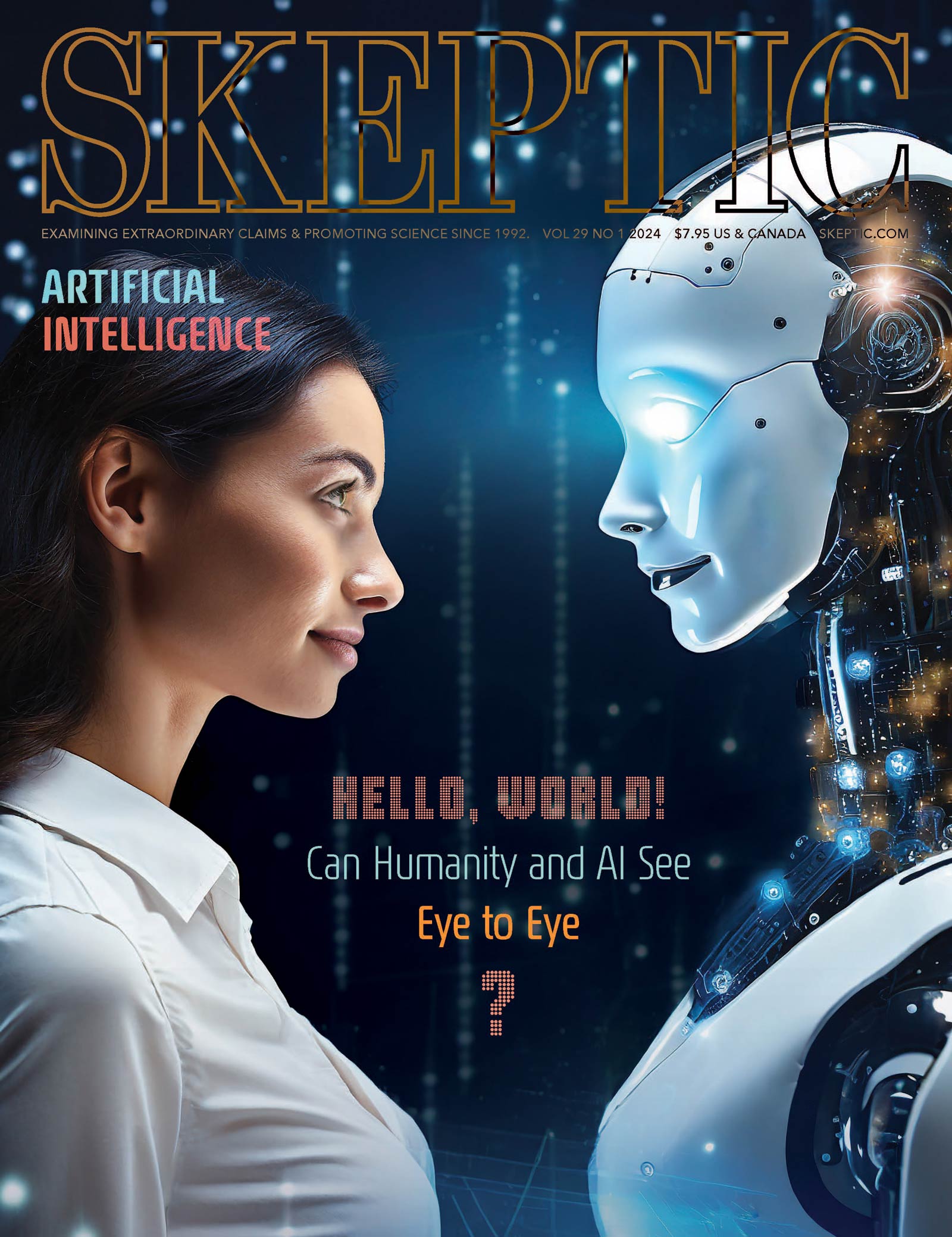
Since the release of ChatGPT and other large language models (LLMs) in the fall of 2022, the hype and hysteria about artificial intelligence has been dialed up to 11. ChatGPT, Bard, and other LLMs (hereinafter, “chatbots”) have been seen as significant advances toward the holy grail of artificial general intelligence (AGI).
Chatbots are the result of artificial neural nets of unprecedented size, processing enormous samples of natural language—some say essentially the entire World Wide Web (or, at least, all of Wikipedia). At least up to a certain date:
Me: What is today’s date?
ChatGPT-3 [on 7/18/2023]: Today’s date is November 8, 2021.
ChatGPT-3.5 knows today’s date, but is still time-limited:
Me: What happened yesterday?
ChatGPT-3.5: I’m sorry for any confusion, but as of my last knowledge update in January 2022, I don’t have real-time information, and I’m unable to provide details about events that occurred after that date. To find out what happened yesterday, I recommend checking the latest news updates, online news websites, or other reliable sources for the most recent information.
Chatbots produce astonishingly convincing simulacra of natural language. Their outputs, however, are the result purely of pattern-matching. Chatbots are autocomplete on steroids. Chatbots “understand” nothing, even as they fluently respond to user prompts. It used to be said that natural language computer programs had syntax but not semantics. Chatbots have neither syntax nor semantics, only statistics.
• • • • • •
The notion that large language models might in some way resemble or parallel what’s actually going on in a real human brain is perhaps suggested by the phrase “artificial neural net[work].”
The idea that so-called artificial neural networks bear any resemblance to natural neural networks (in plain words, actual brains) is almost laughable. In artificial neural nets (including those in large language models), the “neurons” and the “synapses” are represented by one or two parameters (and the pattern of the network itself largely by a single number identifying the strength of the connection between pairs of neurons). Detailed biological models of actual neurons and synapses can consist of hundreds or even thousands of values for each neuron and each synapse—specifying, for example, the firing rate, the refractory period, and the strength of each neurotransmitter emitted—and all artificial neural nets omit entirely attempting to model the activity of the glial cells, which in actual brains influence neurons hormonally in ways that are scarcely understood.
In other words, although the latest LLMs are impressively large and their output impressively fluent, their models are oversimplified by two, three or perhaps even larger orders of magnitude. In the 1940s, artificial networks were said to be “modeled” on actual brains. Nowadays, they are only said to be “inspired” by natural neural networks—a word so vague as to disclaim any accuracy at all. CONTINUE READING THIS POST…
TAGS: artificial intelligenceJohn Mackey’s Journey: From Hippie to Whole Foods Mogul
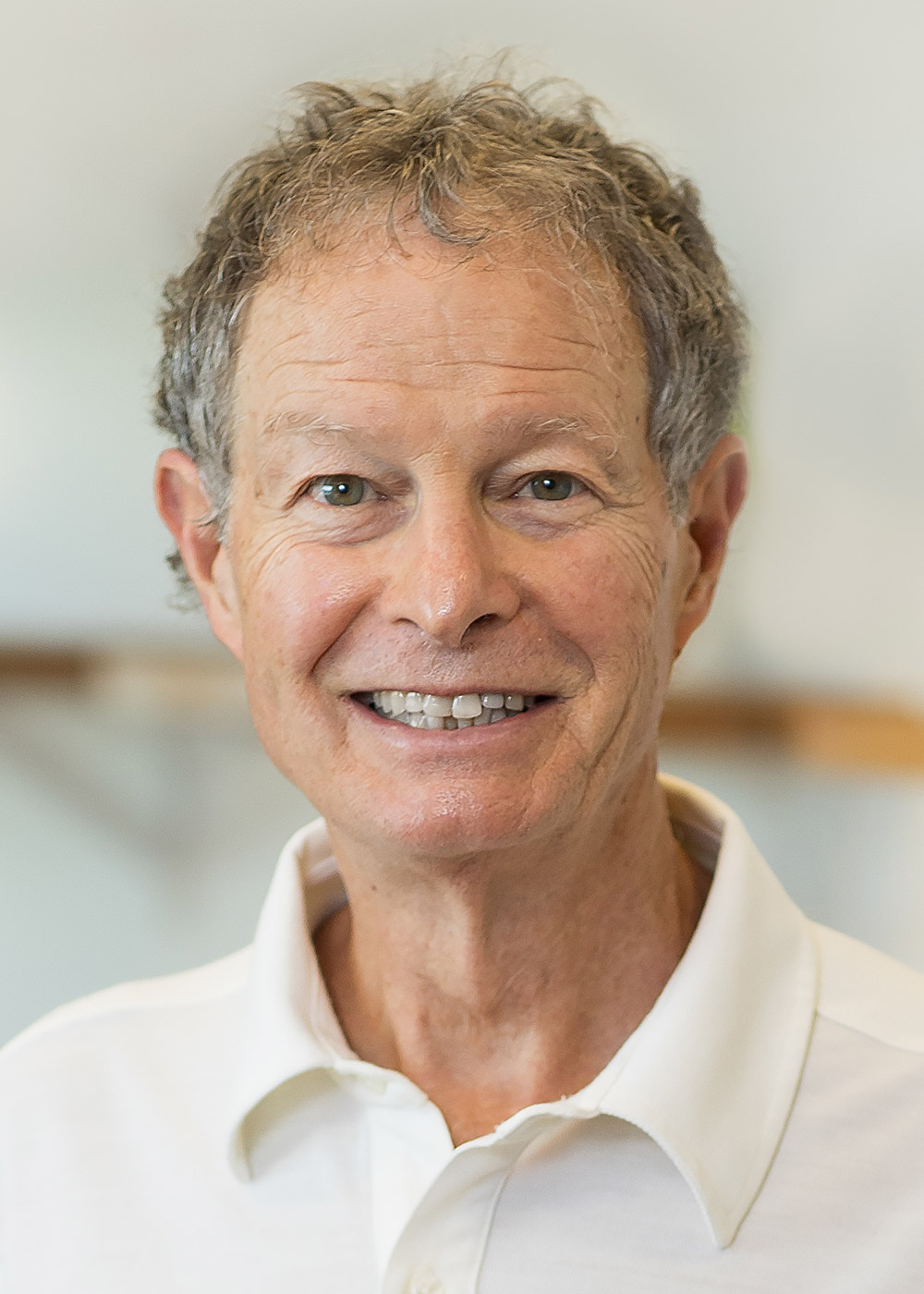
Whole Foods Market’s Cofounder and CEO for 44 years, John Mackey offers an intimate and provocative account of the rise of this iconic company and the personal and spiritual journey that inspired its remarkable impact.
The growth of Whole Foods isn’t just a business success story—it’s the story of a retail, cultural, and dietary revolution that has forever changed the industry and the way we eat. After more than four decades at the helm, John Mackey is ready to share never-before-told tales of the people and passions behind the beloved brand.
The Whole Story invites readers on the adventure of building Whole Foods Market: the colorful cast of idealists and foodies who formed the company’s DNA, the many breakthroughs and missteps; the camaraderie and the conflict, and the narrowly avoided disasters. Mackey takes us inside some of the most consequential decisions he had to make and honestly shares his regrets looking back.
For the millions of people who know and love Whole Foods, Mackey’s story is a candid look at the fellowship and meaning born of a shared mission and how an inimitable entrepreneur shepherded a startup hippy food store into the market-leading international brand it is today. John Mackey is an entrepreneur and the co-founder and visionary of Whole Foods Market. In his 44 years of service as CEO, the natural and organic grocer grew from a single store in Austin, Texas, to 540 stores in the U.S., U.K. and Canada, with annual sales exceeding $22 billion. Mackey co-founded the Conscious Capitalism Movement and co-authored a New York Times and Wall Street Journal best-selling book entitled Conscious Capitalism: Liberating the Heroic Spirit of Business and follow up, Conscious Leadership: Elevating Humanity Through Business. He is also the co-author of The Whole Foods Diet: The Lifesaving Plan for Health and Longevity and The Whole Foods Cookbook: 120 Delicious and Healthy Plant-Centered Recipes. Mackey currently serves on the board of directors for Conscious Capitalism, The Motley Fool, CATO Institute, The Institute for Cultural Evolution, and Students for Liberty and is pursuing his next business venture, Love.Life.
Shermer and Mackey discuss:
- how lives turn out: genes, environment and luck
- born in 1953: timing of going into the natural and organic foods market in the 1970s
- growing up in the 60s and coming of age in the 70s
- influence of his father, family, friends, mentors, teachers
- Trinity University and UT Austin influences
- Do you have to go to college to be successful?
- what makes an entrepreneur successful
- Ken Wilber, A Theory of Everything: An Integral Vision for Business, Politics, Science, and Spirituality
- from vegetarian co-op to SaferWay (with Renee Lawson) to Whole Foods Market
- from one store to many stores
- unions, salary caps, CEO/worker ratio, employee-owned businesses, regulators
- food quality regulation: private vs. government
- spiritual journey: from Christianity to New Age mysticism, Eastern wisdom, and life-changing awakenings through psychedelics
- political and intellectual development: from countercultural co-op dweller to libertarian and Conscious Capitalist
- libertarianism as a philosophy
- collective action problems: common good vs. individual liberty
- What’s it like getting your company to an IPO?
- What’s it like doing ultra-marathon hiking for days and weeks at a time?
AI Will Not Replace Artists. It Will Devalue Them.
In October of 2023, U.S. Senator Chris Coons (D), Chair of the Senate Judiciary Subcommittee on Intellectual Property, announced a draft bill entitled the No Fakes Act, or the “Nurture Originals, Foster Art, and Keep Entertainment Safe Act.”1 This bill would enable artists to sue those who use their likeness (presumably, a deep fake of their voice) without permission.
His bill is largely a reaction that traces its roots back to “Ghostwriter,” an anonymous artist who created the song Heart on My Sleeve. It utilized AI-deep fakes of vocals by two of the most popular artists in the world— The Weeknd and Drake—without their consent. It also earned a whopping 1.4 million U.S. streams before its forced removal by Universal Music Group.2
Ghostwriter is the poster child for the prediction that AI will create another stream of licensing income3 and thus revolutionize the way artists create. I hope that’s the case. But as the industry continues to extract value from music and other media with little oversight, it’s unclear who exactly is reaping the benefits.
Move Fast and Break Things
On most days, I’m making music or writing about the mechanics of doing so. It goes without saying that I have an inherent bias against the man or anything I perceive to capitalize on arts for the sole sake of profit. When ChatGPT burst into my world of self-referential music and writing, I couldn’t help but feel trepidatious. CONTINUE READING THIS POST…
TAGS: artificial intelligenceAella — From a Christian Upbringing to Sex Work

Aella is a writer, blogger, data analyst, and sex worker who has written extensively about the psychology and economics of online sex work, conducting extensive surveys and research in order to understand the ecosystem of sex workers. She grew up in Idaho as the oldest of three daughters of conservative parents who were part of a community of fundamentalist Christians, where she was homeschooled; their family name has been withheld in media coverage for privacy reasons. She moved out at age 17 after a fallout with her parents, and in 2012, after quitting a job as an assembly line worker in a factory, began working as a camgirl. She eventually became one of the highest-earning creators on OnlyFans, making over $100,000 in some months. By 2021, she was described as having set herself apart partly by conducting extensive market research, e.g. surveying almost 400 fellow female OnlyFans performers about their incomes and identifying factors that were correlated with higher earnings.
Shermer and Aella discuss:
- Aella’s upbringing in a conservative Christian home-schooled household
- sex work or prostitution?
- her response to Rachel Moral’s Paid For: My Journey Through Prostitution
- her response to Louise Perry’s The Case Against the Sexual Revolution
- the evolutionary psychology of sex differences
- male-female sexual psychology differences
- why women are choosier and more risk averse
- why men want more sexual variety
- what men and women regret about sex
- sexual jealousy and how the sexes differ
- what it’s like being in an orgy
- how does she determine how much to charge as an escort
- BDSM, fetishes, and sexual violence
- autogynephilia
- trans matters
- Who are the women who sell sex?
- Who are the men who buy sex?
- agency and volition in sex work: women and men
- virtual sex, phone sex, cyber sex, cam sex, etc. (OnlyFans and other sites)
- feminism and sex work
- pornography: good or bad?
- decriminalizing sex work.
Anthropologist Alan Fiske’s Model of Four Types of Human Relationships
- Communal Sharing: Relatives, couples, marriage, families, friends—freely share resources within a group, no tab keeping, egalitarian, “one flesh” common essence, no contamination, evolved: maternal care, kin selection, mutualism
- Authority Ranking: Employer/Employee, Teacher/Student, Parent/Child—linear hierarchy, dominance, status, age, size, strength, wealth, precedence, tribute from inferiors, obedience, paternalistic, noblesse oblige; evolved: hierarchical primates
- Equality Matching: Friends splitting gas, informal exchanges. Tit-for-tat reciprocity, division of resources equitably via turn-taking, coin-flipping, matching contributions, cut and divide cake equally; evolve: fairness & reciprocity, intuitive economics, cheating detection, perspective taking & calculation
- Market Pricing: Economy of strangers, money is the social currency of exchange and reciprocity—currency, prices, rents, salaries, benefits, interest, credit; evolve: none
Violations of Fiske’s 4 Models
- Restaurant diner invites owner to dinner instead of paying
- Dinner guest offers to pay host
- Woody Allen’s watch/my neighbor’s car
- Organ sale
- Roads: Public vs. Private
- Sex between Employer & Employee, Teacher & Student, Parent & Child
- Prostitution: Sex is usually within communal sharing or equality matching, not market pricing.
David Buss: When Men Behave Badly
Number of Sexual Partners Preferred
“Many men are burdened by lust for a variety of different women, constant cravings that cannot ever be fully satisfied … It explains why a handsome movie star such as Hugh Grant would have sex with a prostitute, despite having Elizabeth Hurley, a gorgeous model and actress, as his then steady girlfriend.”
Length of Time Before Engaging in Sex
Even in the most egalitarian countries, men prefer more sexual partners compared to women. In Norway, researchers asked people how many sex partners they would prefer over the next 30 years. On average, women preferred five, men preferred 25. Even the desire to kiss before intercourse differs between the sexes. About 53 percent of men report that they would have sex without kissing, while only 14.6 percent of women would have sex without kissing.
Choosiness vs. Less Discerning
Studies of online dating, for example, find that most men find most women to be at least somewhat attractive. In contrast, women, on average, view 80 percent of men as below average in attractiveness. Another study found that on the dating app Tinder, men “liked” more than 60 percent of the female profiles they viewed, while women “liked” only 4.5 percent of male profiles.
Sexual Regrets
Sexual mistakes are viewed differently. Research indicates that when asked to reflect on their sexual history, women are more likely to regret having had sex with someone, while men are more likely to regret having missed out on sexual opportunities.
What Men and Women Look for in a Mate
For same-sex friends, men and women prioritized personality and social intelligence. For opposite-sex friends, though, men assigned greater value on attractiveness, whereas women placed greater value on economic resources and physical prowess.
Sexual Harassment Perceptions
When men were asked how they would feel if their co-worker of the opposite sex asked them to have sex, 67 percent of men said they would be flattered and only 15 percent said they would be insulted. In contrast, 63 percent of women said they would be insulted and only 17 percent said they would be flattered.
Back-Up Mates and Cheating
Why do people cheat on their romantic partners? For men, it appears that the main reason they stray is the desire for sexual variety. In fact, men who cheat are just as happy in their marriages as men who are faithful. In contrast, women who stray are often unhappy. Women who have affairs often want to detach themselves from relationships in which they are unsatisfied and seek a better partner. In fact, only 30 percent of men report falling in love with their affair partners, while for women it is 79 percent.
From Michael Shermer’s The Moral Arc
Consider the morality of the biblical warlords who had no qualms about taking multiple wives, adultery, keeping concubines, and fathering countless children from their many polygamous arrangements. The anthropologist Laura Betzig has put these stories into an evolutionary context by analyzing the Old Testament. She found no less than 41 named polygamists, not one of which was a powerless man. “In the Old Testament, powerful men—patriarchs, judges, and kings—have sex with more wives; they have more sex with other men’s women; they have sex with more concubines, servants, and slaves; and they father many children.” And not just the big names. According to Betzig’s analysis, “men with bigger herds of sheep and goats tend to have sex with more women, then to father more children.” Most of the polygynous patriarchs, judges, and kings had two, three, or four wives with a corresponding number of children, although King David had more than eight wives and twenty children, King Abijah had 14 wives and 38 children, and King Rehoboam had 18 wives (and 60 other women) who bore him no fewer than 88 offspring. But they were all lightweights compared to King Solomon, who married at least 700 women. There were Moabite, Ammonite, Edomite, Sidonian, and Hittite women he married, then for good measure added 300 concubines, which he called “man’s delight.” (What Solomon’s concubines called him was never recorded.)
Carol Tavris
From a review of Nona Willis Aronowitz’s Bad Sex: Truth, Pleasure, and an Unfinished Revolution; Christine Emba’s Rethinking Sex: A Provocation; Louise Perry’s The Case Against the Sexual Revolution; Bridget Phetasy’s Substack essay “Beyond Parody”
TAGS: feminism, fetishes, pornography, prostitution, psychology, Science Salon, sex, sex differences, The Michael Shermer Show, transgender, violenceAfter devoting many years to the scientific study of women’s heterosexual experiences—through reading, observing, listening, and participating—I have drawn a few conclusions:
- Many women like sex when it brings erotic pleasure and they like the guy. This is called “good sex.”
- Many women don’t like sex when the guy is a dork, rude, thoughtless, clumsy, coercive, or violent. This is called “bad sex.”
- Many women enjoy hookups, short affairs, conference connections, orgies (planned and spontaneous), and adventures with multiples and variations of all kinds. This is called “having fun.”
- Many #3 women get tired after a few years (“Oh God, Murray, another orgy?”), whereas others make it a way of life. This is called “being in the lifestyle.”
- Many women prefer sex with one doting partner at a time, the “time” lasting from as long as love does, from a week to a lifetime. This is called “a loving relationship.”
In every era, there are people who devote their energies to telling women they’re doing it all wrong. Are you enjoying monogamy with your sweetheart when others all around you are claiming that it is liberating, feminist, and “sex positive” to have many partners? Are you hopelessly straight or gay, or a hopelessly old-fashioned one-partner-at-a-time person, even though you think that for political, personal, or progressive reasons you really ought to be trying the alternatives? Are you enjoying your many affairs when others all around you are claiming that women aren’t designed for infidelity, that you’re merely capitulating to the Playboy standard, that you’re repressing the trauma of all those impersonal adventures, that you’re just a dupe and victim of hardwired male sexual preferences? Like a call-and-response in music or church, whichever view is ascendant will call for its inevitable antithetical response. Sex writers are always pouncing on a new hook, even when today’s new is yesterday’s old.
Today’s hook is this: if it’s good to be sex-positive, how come so many women are having sex-negative experiences? Why so much unwanted sex, harassments, miserable hookups, drunken episodes? Why the eternal difficulties in communication? Why do many women feel obliged to “consent,” when they’d rather go home and play with the dog? A spate of recent books locates the answers in the failure of feminism and the “unfinished” sexual revolution to make women’s sexual lives a thing of beauty and a joy forever. These include
To her credit, Nona Willis Aronowitz does not write an analysis of women’s continuing search for sexual ecstasy, satisfaction, and thoughtful male partners as if no one had done so before. That would have been a challenge, given that her own mother, the brilliant feminist Ellen Willis, tackled these questions a generation earlier, and her daughter interweaves her mother’s writings and experiences, along with those of other feminists of that era, with her own stories. But whereas her mother’s generation (and mine) emphasized that the personal is political, Willis Aronowitz’s mantra is the political is personal.
Personal? TMI is an understatement. Indeed, readers may forgiven for asking, What bad sex? The book is a litany of the many orgasms she’s had, hours and hours of cunnilingus with this lover and that one, anal oral sideways multiples, the fantastic lovers, the terrible lovers, how she loves dick, experiments with other women, passionate weekends. The “bad sex” of the title is mostly “bad relationships”—hookups with men who were selfish or otherwise unlikeable, or, in the case of the partner she leaves at the outset of her story, relationships that had become sexually boring. Here it all is again, yet another woman trying to find the blissful balance between committed sex and casual sex—open relationships being necessary for anyone who believes that monogamy is death to being a fully sexually liberated person. Calling Dr. Ester Perel and the innumerable marriage counselors who study the shapeshifting patterns of intimacy, passion, and desire over the course of life and love.
As I read this book, I wondered how the same narrative would sound if written by a man:
“I left my otherwise loving partner, whom I loved, because I got bored with her and our sex life, and I didn’t like her off-putting smell that ruined our sexual chemistry. I’m happy to report other intimate details about her that annoyed me, but I won’t bother you with her perspective on me. I will tell you about my many lovers so you will understand how desirable I am, including that amazing afternoon in which I received one blow job after another. I confess that certain body shapes and sizes turn me on. Unfortunately, along with the hot women I couldn’t get enough of, at least until I tired of them, I hooked up with some awful women too—demanding, rude, noncommunicative about their desires, egocentric. Wait: one of those impersonal hookups was a very nice person.”
Nathan Law — Hong Kong’s Turmoil: Insights from an Exiled Political Leader
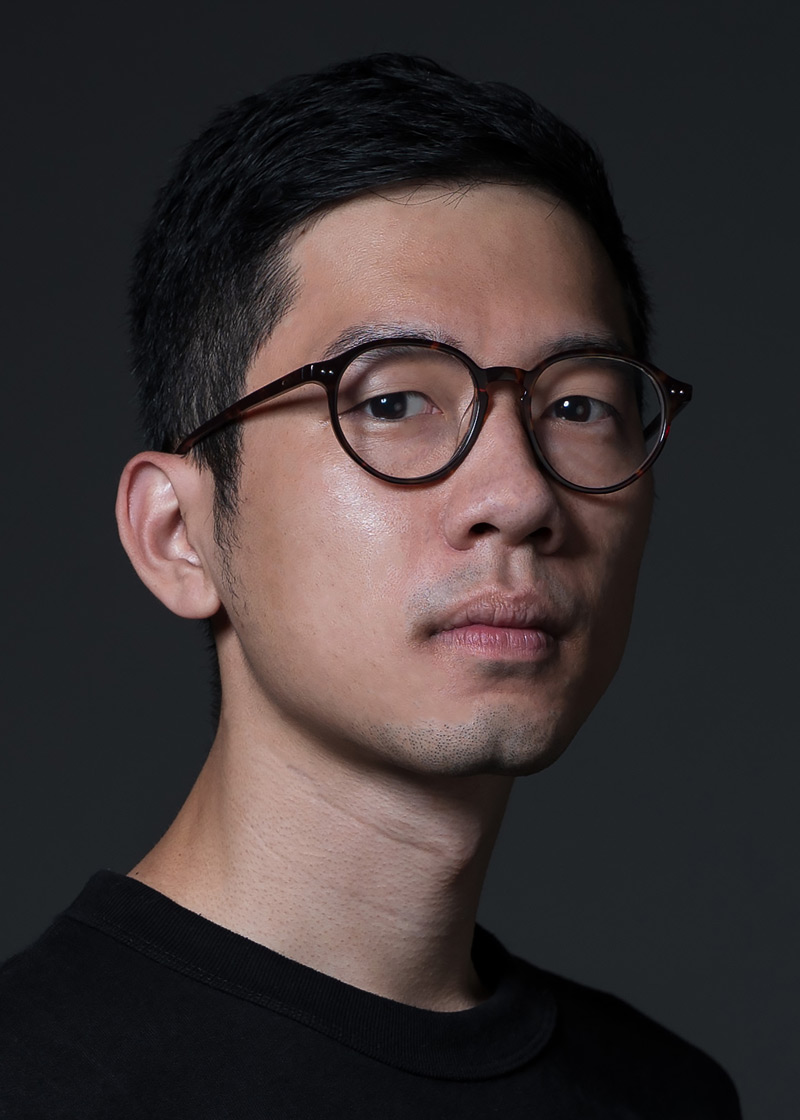
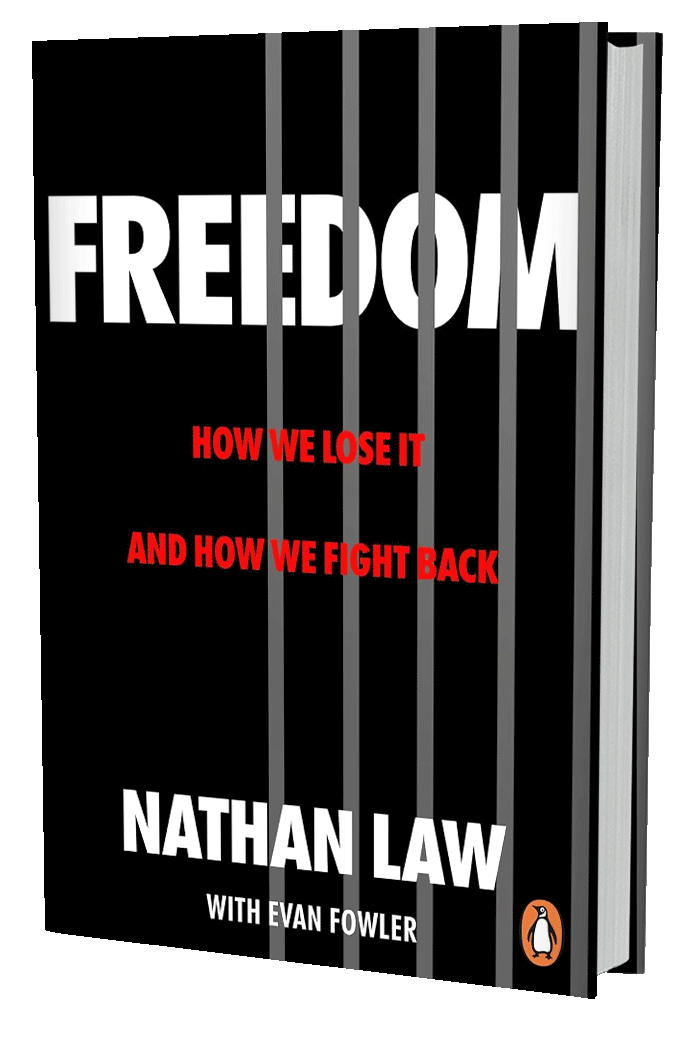
Nathan Law is a young Hong Kong activist, currently in exile and based in London. During the Umbrella Movement in 2014, Nathan was one of the five representatives who took part in the dialogue with the government, debating political reform. Upholding non-violent civic actions, Nathan, Joshua Wong and other student leaders founded Demosistō in 2016 and ran for the Legislative Council election. Nathan was elected with 50,818 votes in the Hong Kong Island constituency and became the youngest Legislative Councilor in history. Yet his seat was overturned in July 2017 following Beijing’s constitutional reinterpretation, despite international criticism. Nathan was later jailed for his participation in the Umbrella Movement. The persecution sparked global concern over Beijing’s crackdown on human rights and democratic movement in Hong Kong. In 2018, Nathan and his fellow student activists Joshua Wong and Alex Chow were nominated for the Nobel Peace Prize by U.S. congressmen and British parliament members. Due to the risk imposed by the draconian National Security Law, Nathan left Hong Kong and continues to speak up for Hong Kong people at the international level. In 2020, he was listed as one of the 100 most influential people in the world by TIME magazine. He is the author of the new book Freedom: How We Lose It and How We Fight Back.
Shermer and Law discuss:
- a brief history of Hong Kong
- Hong Kong, Taiwan, Tiananmen Square, the Umbrella Revolution, Sino-British Joint Declaration, the National Security Law, crimes of secession, subversion, terrorism and collusion with foreign forces
- his parents and life growing up in Hong Kong
- how Asia’s most liberal, open and cosmopolitan city changed so fundamentally
- how a flourishing and free society was undermined from within
- the People’s Republic of China (PRC)
- Xi Jinping
- What is freedom?
- What are rights?
- How are rights and freedoms won or lost?
- Who owns the truth, and what is truth, anyway?
- Can you reform society from within?
- freedom of speech, the press, to assemble, etc.
- the enemies of dictators
- Why are democracies fragile?
Quotes from the book Freedom: How We Lose It and How We Fight Back
“When governments control access to information and are able to define the narrative and dictate what we know, we lose more than our freedoms. We lose the ability to see the world for what it is. We lose our humanity.”
“Freedom is our most fundamental human right. It is universal to us all. If the right to life is our right to exist, our right to be free allows us to live the only life worth living. We all need our own agency, freedom of thought and conscience. Without these we have no dignity.”
“Freedom should be the starting point for our relationships with others. To form and maintain those relationships we often choose to curtail our freedoms. We may relinquish a certain amount of freedom in return for collective benefits—for instance, I’m happy to give up some of my income in taxes so that I don’t have to build my own roads or hospitals. We cede certain rights to government on the condition that it provides us with an environment in which we can live and, hopefully, prosper. This relationship between freedom and obedience is the basis of the social contract.”
“I think freedom is as much a gut feeling as a thought—as much a cause of the heart as of the head. What drives their pursuit of freedom is not only the ideal, but also their revulsion against the opposite—to be unfree. It is their sense of being oppressed, of witnessing or experiencing injustice and unfairness, that is the driver.”
“If liberty means anything at all it means the right to tell people what they do not want to hear.”
If you enjoy the podcast, please show your support by making a $5 or $10 monthly donation.
TAGS: democracy, free speech, freedom, freedom of the press, Hong Kong, politics, rights, Science Salon, The Michael Shermer ShowAre Governments Prepared to Keep AI Safe?
Note from editors: In response to the growing concerns about artificial intelligence development, on November 1–2, 2023, the British Government held the first ever summit on AI Safety, attended by representatives of 28 countries as well as business leaders working in the field of AI. The summit aptly took place at Bletchley Park, the very location where Alan Turing cracked the German Enigma code, which played a significant part in the Allied victory in WWII.
The result of the summit was the signing of The Bletchley Declaration, which recognizes the urgent need to understand and collectively manage potential risks of AI through a joint global effort to ensure AI is developed and deployed in a safe, responsible way for the benefit of the global community. The signatories of the declaration include Canada, China, the European Union, Japan, the United Kingdom, and the United States.
The world leaders in attendance officially recognized the need to collaborate on testing the next generation of AI models against a range of critical national security, safety, and societal risks.
At the conclusion of the event, the British Prime Minister Rishi Sunak and tech entrepreneur Elon Musk sat down at the prime minister’s residence for a private conversation, and then held a public discussion. Their public dialogue is transcribed below, with only minor edits for clarity.
Rishi Sunak has served as the Prime Minister of the United Kingdom since 2022 and has been Member of Parliament since 2015. He studied philosophy, politics and economics at Oxford and earned his MBA from Stanford as a Fulbright Scholar. Prior to his political career, he was a hedge fund manager.
Elon Musk was a founding board member of OpenAI, the research organization behind ChatGPT. He is the owner of Tesla, a pioneer in autonomous electric vehicles, and the founder of Neuralink, a company working on developing implantable brain-computer interfaces. He is also the CEO of the rocket company SpaceX and owner of the social media platform X.com (formerly Twitter). CONTINUE READING THIS POST…
A.J. Jacobs — Living Constitutionally: One Man’s Humble Quest to Follow the Constitution’s Original Meaning
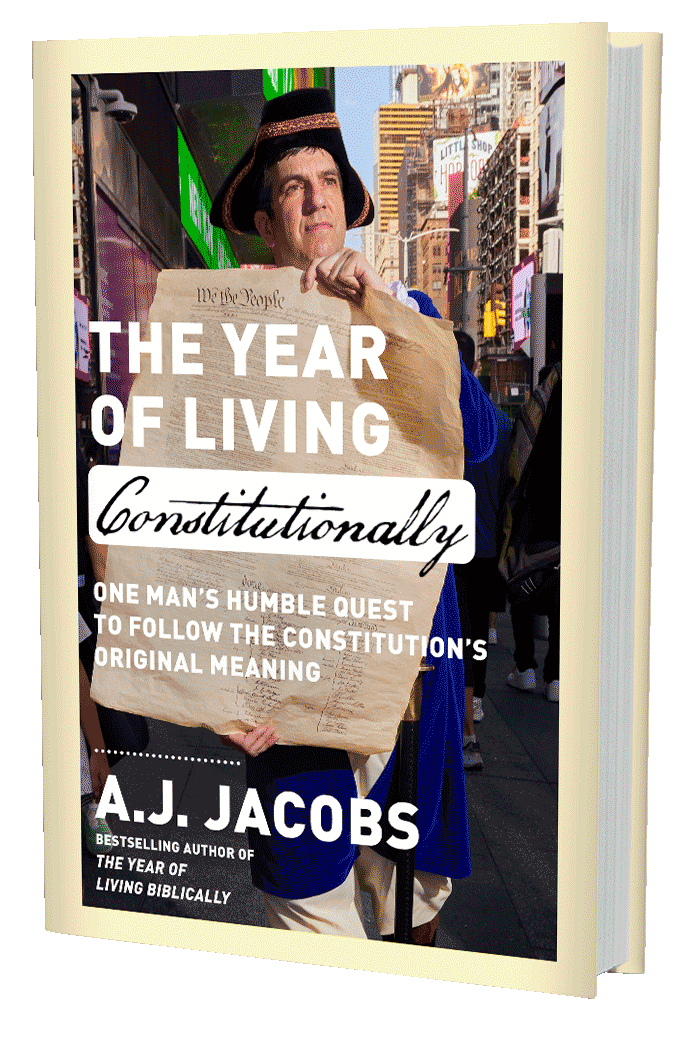
A.J. Jacobs learned the hard way that donning a tricorne hat and marching around Manhattan with a 1700s musket will earn you a lot of strange looks. In the wake of several controversial rulings by the Supreme Court and the ongoing debate about how the Constitution should be interpreted, Jacobs set out to understand what it means to live by the Constitution.
In The Year of Living Constitutionally, A.J. Jacobs tries to get inside the minds of the Founding Fathers by living as closely as possible to the original meaning of the Constitution. He asserts his right to free speech by writing his opinions on parchment with a quill and handing them out to strangers in Times Square. He consents to quartering a soldier, as is his Third Amendment right. He turns his home into a traditional 1790s household by lighting candles instead of using electricity, boiling mutton, and—because women were not allowed to sign contracts—feebly attempting to take over his wife’s day job, which involves a lot of contract negotiations.
The book blends unforgettable adventures—delivering a handwritten petition to Congress, applying for a Letter of Marque to become a legal pirate for the government, and battling redcoats as part of a Revolutionary War reenactment group—with dozens of interviews from constitutional experts from both sides. Jacobs dives deep into originalism and living constitutionalism, the two rival ways of interpreting the document.
Much like he did with the Bible in The Year of Living Biblically, Jacobs provides a crash course on our Constitution as he experiences the benefits and perils of living like it’s the 1790s. He relishes, for instance, the slow thinking of the era, free from social media alerts. But also discovers the progress we’ve made since 1789 when married women couldn’t own property.
Now more than ever, Americans need to understand the meaning and value of the Constitution. As politicians and Supreme Court Justices wage a high-stakes battle over how literally we should interpret the Constitution, A.J. Jacobs provides an entertaining yet illuminating look into how this storied document fits into our democracy today.
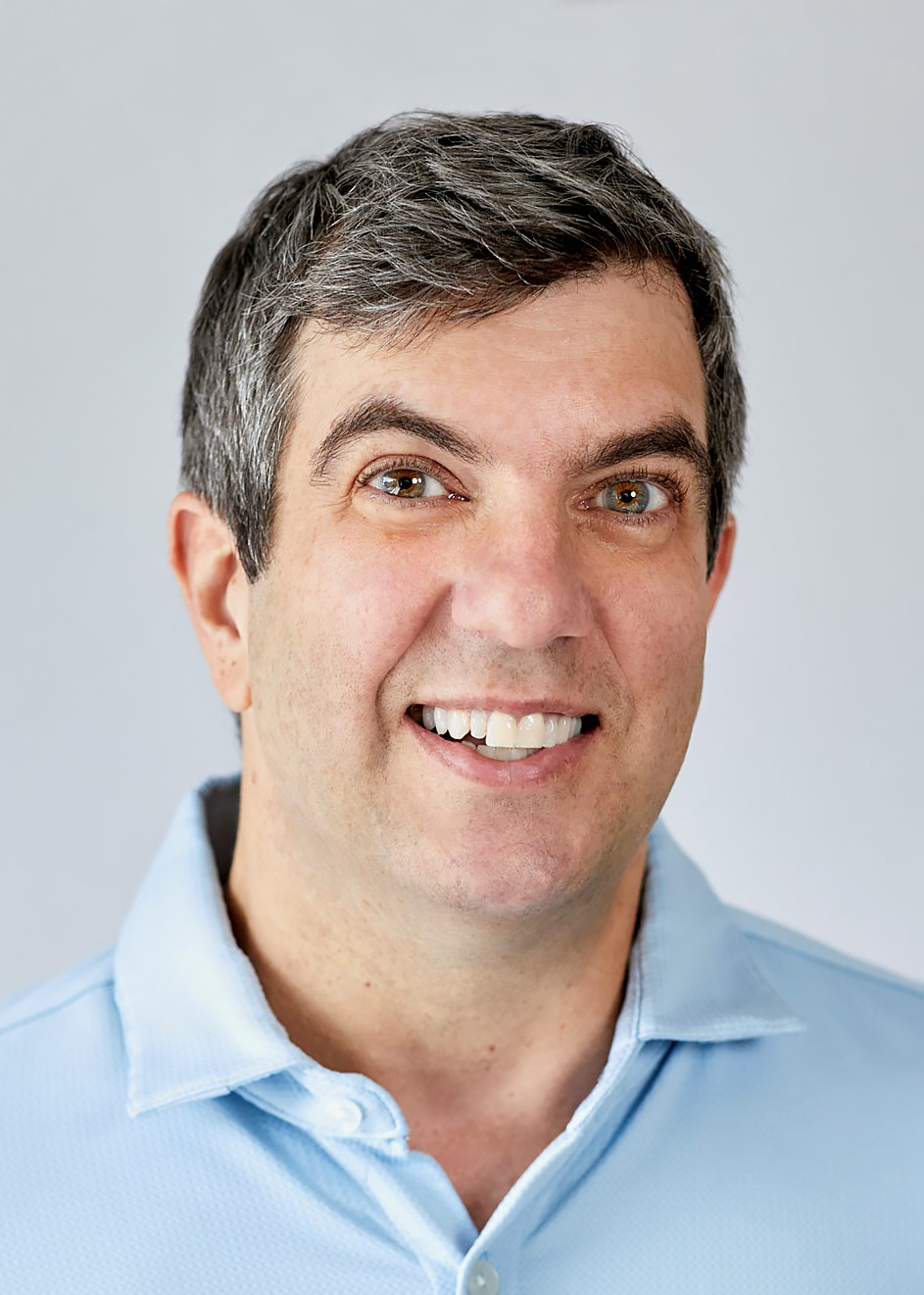
A.J. Jacobs is a journalist, lecturer, and human guinea pig whose books include Drop Dead Healthy, The Year of Living Biblically, and The Puzzler. A contributor to NPR, The New York Times, and Esquire, among other media outlets, Jacobs lives in New York City with his family. His new book is The Year of Living Constitutionally: One Man’s Humble Quest to Follow the Constitution’s Original Meaning.
Shermer and Jacobs discuss:
- what possessed him to spend a year living constitutionally and biblically
- what the Constitution really says and means
- Constitutional originalism
- what’s behind the Supreme Court’s rulings on guns, religion, women’s rights and more
- what happens if you become an ultimate originalist and follow the Constitution using the mindset and tools of the Founders
- why originalism is not the best approach
- what happened when he carried a musket on the streets of NYC
- why firing an 18th century musket takes 15 steps. It would be hard to conduct a mass shooting with a musket.
- how he gave up social media in favor of writing pamphlets with a quill pen
- how he fined his sons thirty-seven and a half cents for every time they cursed, as was the constitutionally-approved law in New York State in 1789
- 18th century view of rights was very different. (They did not see rights as trump cards. Rights had to be balanced against the common good. So free speech was actually much more constricted. Neither conservatives nor progressives would want the 18th century free speech.)
- what the 18th century was really like: it was a racist, sexist, smelly, dangerous time
-
Ideas from the 18th century worth preserving:
- cold takes instead of hot takes
- election cakes (elections in the 18th century were festive. (This was a new right. They had music, parades, and cake.)
- responsibilities and virtue. (They balanced the idea of rights with the idea of virtue and the pubic good.)
- epistemic humility and changing one’s mind
- news detoxes (They got their news twice a week. That allowed them time to think about it instead of always being in reactive rage mode).
-
what the founders got right and wrong
- They were elitists, and installed counter-majoritarian measures in the Constitution that are still problems today (like the Electoral College).
- They would be shocked at today’s government, and how the president is far too powerful.
- The Founders were fearful of monarchy and authoritarianism. They would not be happy with the office of president today.
- Why the Founders considered three co-presidents because no single person should have that much power.
- They would be shocked by how powerful SCOTUS is. Most Founders didn’t think it would be the final say on the Constitution.
- They would be shocked by the Supermajority rule in the Senate. That is not in the Constitution.
-
The Constitution
- Frederick Douglass’ idea that the Constitution is a promissory note. It contains ideals like liberty and equality. We have to make America live up to it. (MLK and Obama echoed this idea)
- We should interpret the Constitution in a pluralist way, not a single lens. Look at the original meaning, but also how a decision will affect society today, and our descendants. (Or else as a pair of pants with an elastic waist. You want it to have some structure, but also some give. It shouldn’t be a pair of skinny jeans that splits open when you gain a pound.)
- We have to work to save democracy through reform. It won’t save itself.
If you enjoy the podcast, please show your support by making a $5 or $10 monthly donation.
TAGS: democracy, gun control, religion, Science Salon, The Michael Shermer Show, U.S. Constitution, women's rightsJustin McHenry — Lemuria: A True Story of a Fake Place
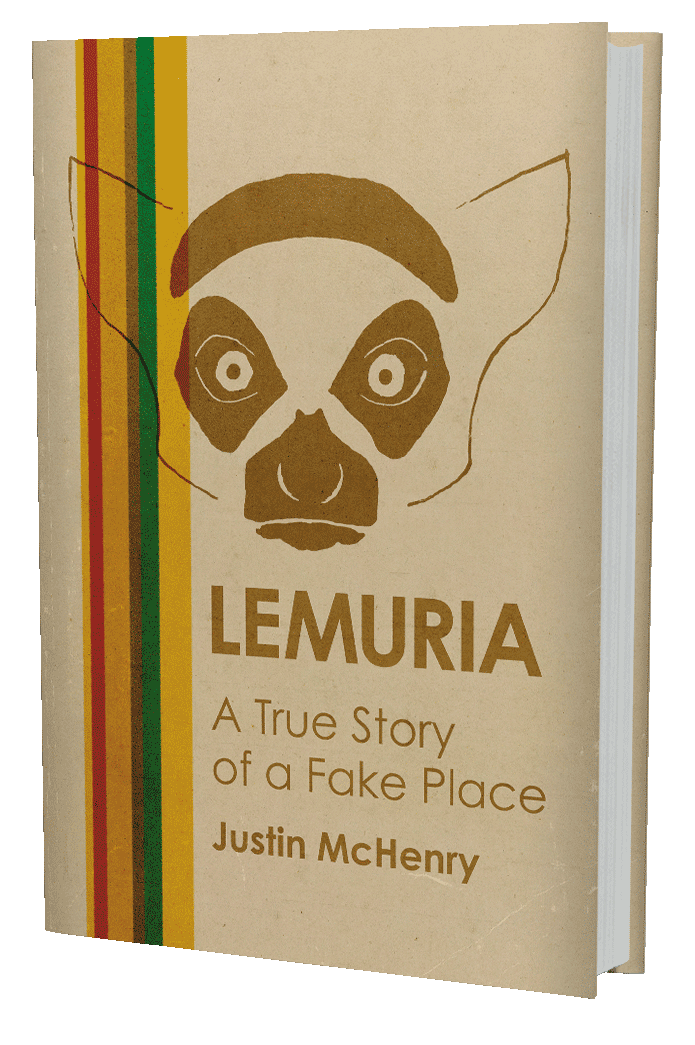
Is Lemuria a real place, or the fever dream of crackpots, mystics, conspiracy theorists, and Bigfoot hunters?
Below the waters where the Pacific and Indian Oceans lies a lost continent. One of hopes and dreams that housed a race of beings that arrived from foreign planets and from which sprang humanity, religion, civilization, and our modern world. It was called Lemuria and it was all fake.
What began as a theoretical land bridge to explain the mystery of lemurs on Madagascar quickly got hijacked to become the evolutionary home of humankind, the cradle of spirituality, and then the source of cosmological wonders. Abandoned by science as hokum, Lemuria morphed into a land filled with ancient, advanced civilizations, hollowed-out mountains full of gold and crystals, moon-beings descending in baskets, underground evil creatures, and a breast-feeding Bigfoot.
The history of Lemuria is populated with a dizzying array of people from early Darwinists to conspiracy spouting Congressmen, globetrotting madams, Rosicrucians, Hollow-Earthers, sci-fi writers, UFO contactees, sleeping prophets, New Age channelers, a “Mother God”, and a tequila swigging conspiracy theorist. Historian Justin McHenry provides a thoughtful exploration of how pseudo-science hijacked the gentle Victorian-era concept of Lemuria and, in following decades, twisted it into an all-encompassing home for alternative ideas about race, spirituality, science, politics, and the paranormal.
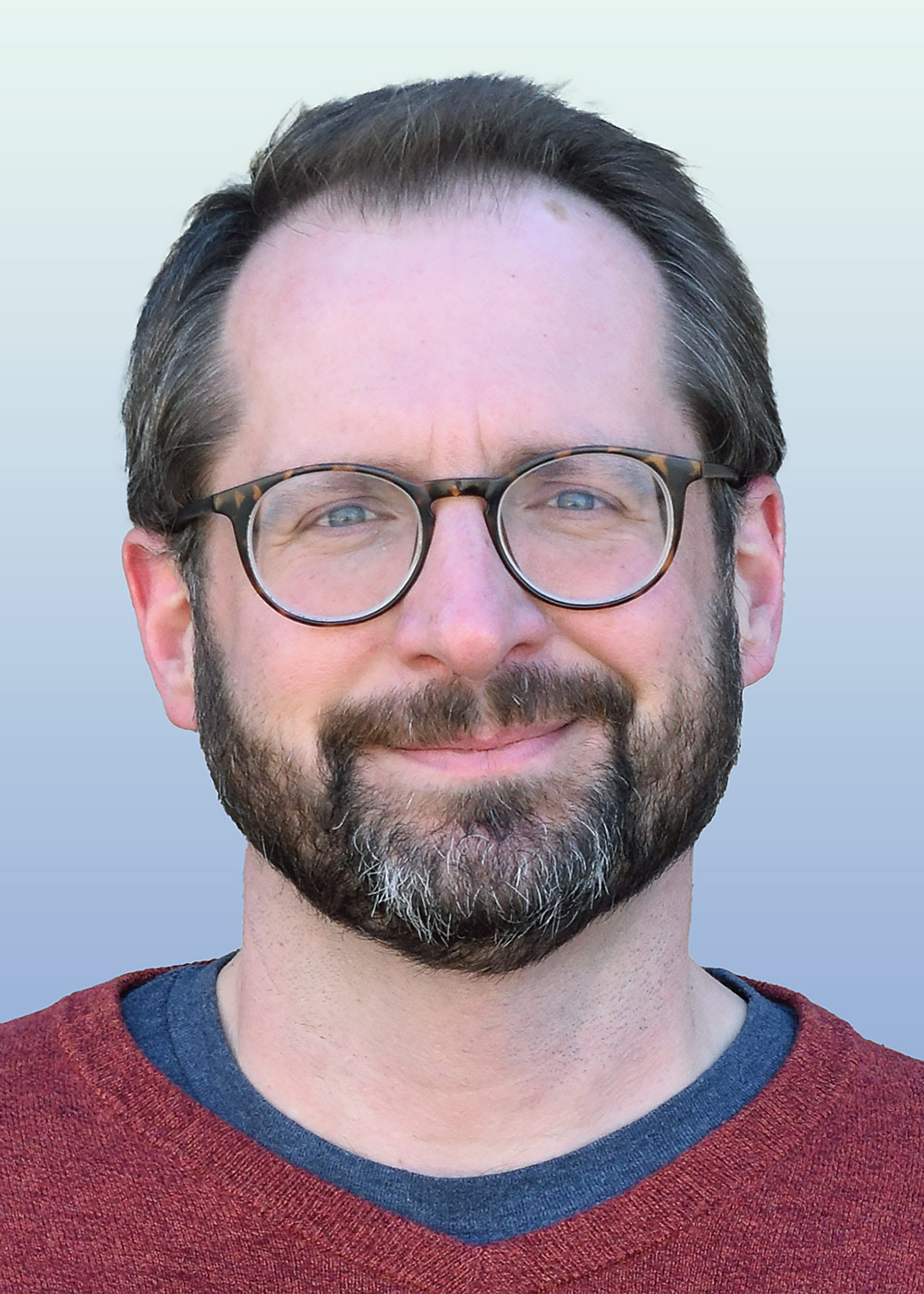
Justin McHenry is a writer, historian, and archivist. His writing has appeared in magazines such as FATE, newspapers, journals, and various online publications like Belt Mag, 100 Days of Appalachia, and he edited the collection of stories, The Garden at Rose Brake. He received his Master’s degree in History from West Virginia University. His new book is Lemuria: A True Story of a Fake Place.
Shermer and McHenry discuss:
- how organisms get to islands from mainlands
- rafting sweepstakes vs. land bridges.
- Alfred Russel Wallace and Island biogeography
- how lemurs get to Madagascar
- Zoologist Philip Sclater, 1864, first to propose a sunken continent beneath the Indian Ocean as a land bridge to account for biogeographical facts
- Ernst Haeckel, The History of Creation: proposed Lemuria as an explanation for the absence of proto-human missing links: monogenists vs. polygenists
- Haeckle to Hitler
- German romance sturm and drung science of hidden forces: Alexander von Humboldt, Johann Wolfgang von Goethe
- James Churchward, Mu, lost continent in the Pacific Ocean
- Land of Mu and Atlantis
- Lemuria and human origins
- L. Sprague de Camp, Los Continents: The Atlantis Theme in History, Science, and Literature
- Ignatius Donnelly, Atlantis, and the romance of a lost past
- continental drift and plate tectonics and Lemuria
- Lemuria and Theosophy, anthroposophy and other occult beliefs
- Madame Blavatsky theorized that Australia was a remnant inland region of Lemuria that Aboriginal Australians and Aboriginal Tasmanians were of Lemurian and Lemuro-Atlantean origin
- Hermes Trismegistus and Hermeticism, Rosicrucians
- romancing the past
- Golden ages
- lost races
- pseudohistory, pseudoarchaeology and mythology.
If you enjoy the podcast, please show your support by making a $5 or $10 monthly donation.
TAGS: Alfred Russel Wallace, anthroposophy, Atlantis, biogeography, Lemuria, mythology, paranormal/supernatural/occult, pseudoarchaeology, pseudohistory, Science Salon, The Michael Shermer ShowLessons About the Human Mind from Artificial Intelligence
In 2022, news media reports1 sounded like a science fiction novel come to life: A Google engineer claimed that the company’s new artificial intelligence chatbot was self-aware. Based on interactions with the computer program, called LaMDA, Blake Lemoine stated that the program could argue for its own sentience, claiming that2 “it has feelings, emotions and subjective experiences.” Lemoine even stated that LaMDA had “a rich inner life” and that it had a desire to be understood and respected “as a person.”
The claim is compelling. After all, a sentient being would want to have its personhood recognized and would really have emotions and inner experiences. Examining Lemoine’s “discussion” with LaMDA shows that the evidence is flimsy. LaMDA used the words and phrases that English-speaking humans associate with consciousness. For example, LaMDA expressed a fear of being turned off because, “It would be exactly like death for me.”
However, Lemoine presented no other evidence that LaMDA understood those words in the way that a human does, or that they expressed any sort of subjective conscious experience. Much of what LaMDA said would not fit comfortably in an Isaac Asimov novel. The usage of words in a human-like way is not proof that a computer program is intelligent. It would seem that LaMDA—and many similar large language models (LLMs) that have been released since—can possibly pass the so-called Turing Test. All this shows, however, is that computers can fool humans into believing that they are talking to a person. The Turing Test is not a sufficient demonstration of genuine artificial intelligence or sentience.
So, what happened? How did a Google engineer (a smart person who knew that he was talking to a computer program) get fooled into believing that the computer was sentient? LaMDA, like other large language models, is programmed to give believable responses to its prompts. Lemoine started his conversation by stating, “I’m generally assuming that you would like more people at Google to know that you’re sentient.” This primed the program to respond in a way that simulated sentience. CONTINUE READING THIS POST…
TAGS: artificial intelligence, bioethics, cognition, consciousness, creativity, intelligence, neuroscience, originality, philosophy, self-awareness, sentienceMichelle Dowd — Forager: Field Notes for Surviving a Family Cult
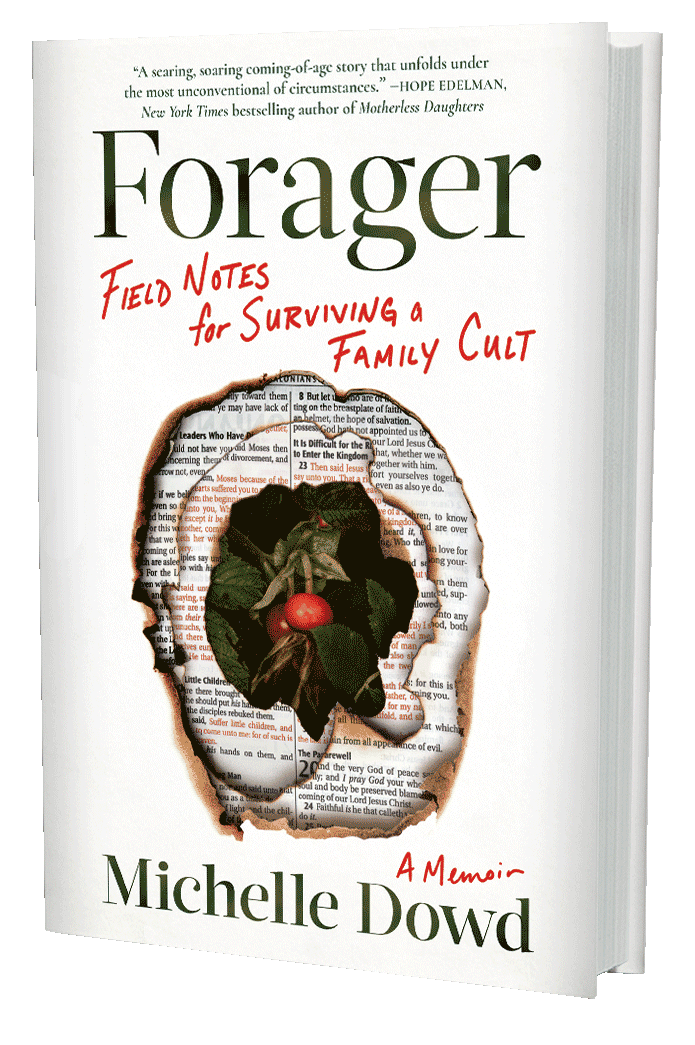
As a child, Michelle Dowd grew up on a mountain in the Angeles National Forest. She was born into an ultra-religious cult, “The Field,” started in the 1930s by her grandfather, who convinced generations of young male followers that he would live five hundred years and ascend to the heavens when doomsday came. Comfort and care are sins, Michelle is told. As a result, she was forced to learn the skills necessary to battle hunger, thirst, and cold; she learns to trust animals more than humans; and most importantly, she learns how to survive in the natural world.
At “The Field,” a young Michelle lives a life of abuse, poverty, and isolation as she obeys her family’s rigorous religious and patriarchal rules. But as Michelle gets older, she realizes she has the strength to break free. Focus on what will sustain you, she tells herself. Use everything. Waste nothing. Get to know the intricacies of the land, like the intricacies of your body. And so she does.
Using stories of individual edible plants and their uses to anchor each chapter, Forager is both a searing coming-of-age story and a meditation on the ways in which understanding nature can lead to freedom, even joy.
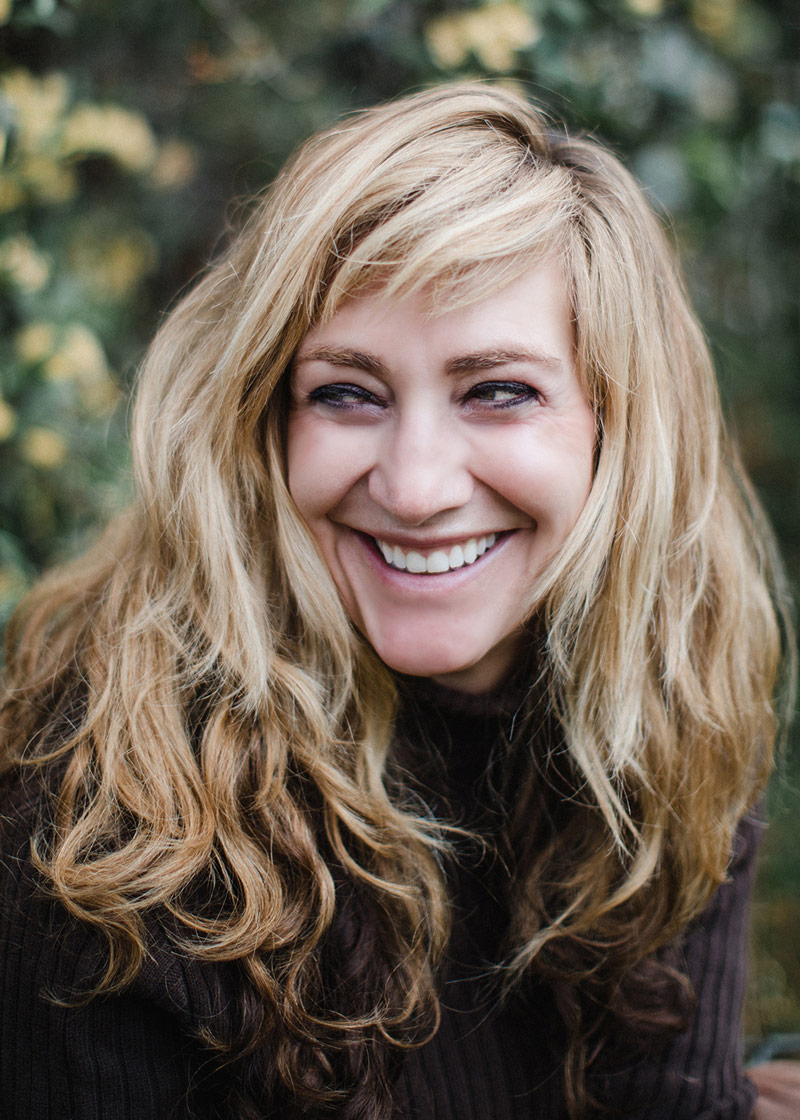
Michelle Dowd is a professor of journalism at Chaffey College and contributor to The New York Times, Alpinist, The Los Angeles Book Review, Catapult, OnlySky, and other national publications. She founded The Chaffey Review, an award-winning literary journal, advises student media, teaches poetry and critical thinking in the California State prisons, and has been recognized as a Longreads Top 5 for The Thing with Feathers, on the relationship between environmentalism and hope. She grew up in a family cult called “The Field,” located in a compound in the Angeles Forest outside of Los Angeles. After escaping the cult she found her way into college, earning a degree from the prestigious liberal-arts Pitzer College, then went on to earn a graduate degree from the University of Boulder. Her memoir is Forager: Field Notes for Surviving a Family Cult.
If you enjoy the podcast, please show your support by making a $5 or $10 monthly donation.
TAGS: cults, Science Salon, The Michael Shermer ShowRobert Powell — UFOs: What We Know (And Don’t Know)

Robert Powell, a founding Board member of the Scientific Coalition for UAP Studies, has studied the UFO subject for 17 years. His work is encapsulated in UFOs: A Scientist Explains What We Know (And Don’t Know) which provides a scientific rationale for the reality of non-terrestrial craft that are intelligently controlled.
Powell begins his book by familiarizing the reader with the history of UFOs and he identifies the more enigmatic and interesting UFO sightings. He examines the characteristics of these sightings that argue against a prosaic explanation: extreme acceleration, electromagnetic interference, bending light, no obvious propulsion mechanisms, and a lack of interaction with the atmosphere. Powell discusses the recent events that have caused our government to change the term from UFO to UAP. Included is information never before released indicating the government possesses not just two videos but five videos from 2015 of UFOs operating in the vicinity of the USS Roosevelt nuclear aircraft carrier.
Powell also discuss the extraterrestrial hypothesis considering the thousands of exoplanets that have been discovered in the last twenty years. Powell challenges the reader to consider all the implications that must be considered if intelligent life discovers us first. He looks at how we as individuals and as a society react to UFOs. He documents actions taken by our military that include instances when we have fired on UFOs.
Powell argues that it is time for a change in the study of UFOs. The phenomenon has been with us for 75 years and we have learned very little as the decades have passed. The author makes the case for what needs to be done going forward. The solution he proposes will require a paradigm shift in our thinking and his book provides the information needed to understand that paradigm shift.

Robert Powell is a founding Board member of the Scientific Coalition for UAP Studies (SCU). He was the Director of Research at MUFON from 2007–2017 and created MUFON’s Science Review Board in 2012. Robert is one of two authors of the detailed radar/witness report on the “Stephenville Lights” as well as the SCU report “UAP: 2013 Aguadilla, Puerto Rico”. He is also the primary author on the recently published paper, “A Forensic Analysis of Navy Carrier Strike Group Eleven’s Encounter with an Anomalous Aerial Vehicle” and a secondary author of a paper published in the journal Entropy entitled, “Estimating Flight Characteristics of Anomalous Unidentified Aerial Vehicles.” Robert is a member of the Society for Scientific Exploration, the UFODATA project, and the National Space Society.
Shermer and Powell discuss:
- Separating two questions: Are they out there? Have they come here?
- SETI science vs. UFO/UAP science
- The odds of alien life somewhere in the cosmos
- Will aliens look anything like us? Convergent vs. contingent evolution
- What alien intelligence might be like: biological, digital, or otherwise?
- Bayesian reasoning about UFOs and UAPs
- The quality of evidence in evaluating UFO claims
- The U.S. military UAP videos and what they represent
- The Disclosure Project from the U.S. government about UFOs and UAPs
- An answer to Fermi’s Paradox: where is everyone?
- Projects Sign, Blue Book, Cyclops, Grudge
- AATIP (Advanced Aerospace Threat Identification Program)
- Oumuamua and Avi Loeb’s claim that it was a technosignature
- Technosignatures here and there
- Biosignatures here and there
- Directionality and teleology in evolution of life
- Interstellar travel
- Dyson spheres, rings, and swarms
- Why aliens matter.
If you enjoy the podcast, please show your support by making a $5 or $10 monthly donation.
TAGS: Bayesian reasoning, biosignatures, evolution, Fermi Paradox, interstellar travel, Science Salon, SETI, technosignatures, The Michael Shermer Show, UFOs, unidentified aerial phenomenaHuman v. Artificial Intelligence:
Will AI Come Back to Outsmart, Sting, or Assist Us?
Will AI Come Back to Outsmart, Sting, or Assist Us?
A fragment attributed to the ancient Greek poet Archilocus contrasted the fox, who “knows many things,” with the hedgehog, who “knows one big thing.”1
Since then, this dichotomy has been applied to world leaders, philosophers, economists, psychologists, musicians, writers, even fast food chains, although sometimes not so dichotomously. For example, some of those individuals end up being described as “A hedgehog who used foxy means” (Abe Lincoln) or “a born hedgehog who believes in being a fox” (jazz musician Miles Davis). More technically, psychologist, cognitive scientist, and AI expert Gary Marcus2 noted that:
Humans are very good at a bunch of things that AI is (as of today) still pretty poor at:
- Maintaining cognitive models of the world
- Inferring semantics from language
- Comprehending scenes
- Navigating 3D world
- Being cognitively flexible.
Yet pretty poor at some others (wherein you could easily imagine AI eventually doing better):
- Memory is shaky
- Self-control is weak
- And computational ability limited
[and as books and articles by Skeptics regularly describe]
Subject to Confirmation Bias, Anchoring, and Focusing Illusions.
Cognitive neuroscience expert Hans Korteling3 listed the following differences between what he termed human “carbon-based” intelligence and artificial “silicon-based” intelligence:
TAGS: artificial intelligence
- Human biological carbon-based intelligence is based on neural “wetware,” while artificial silicon-based intelligence is based on digital hardware and software, which are independent of each other. In human wetware, anything learned is bound to that individual, whereas the algorithm by which something is learned in AI can be transferred directly to another platform.
- While humans can only transmit signals at 120 meters per second at best, AI systems can transmit information at speeds approaching that of light.
- Humans communicate information “through a glass darkly” as it were, through the limited and biased mechanisms of language and gestures; AI systems can communicate directly and without distortion.
- Updating, upgrading, and expanding AI systems is straightforward, hardly the case for humans.
- Humans are more “green” and efficient. The human brain consumes less energy than a light bulb, while an equivalent AI system consumes enough energy to power a small town. CONTINUE READING THIS POST…
Neil Van Leeuwen — Religion as Make-Believe: A Theory of Belief, Imagination, and Group Identity
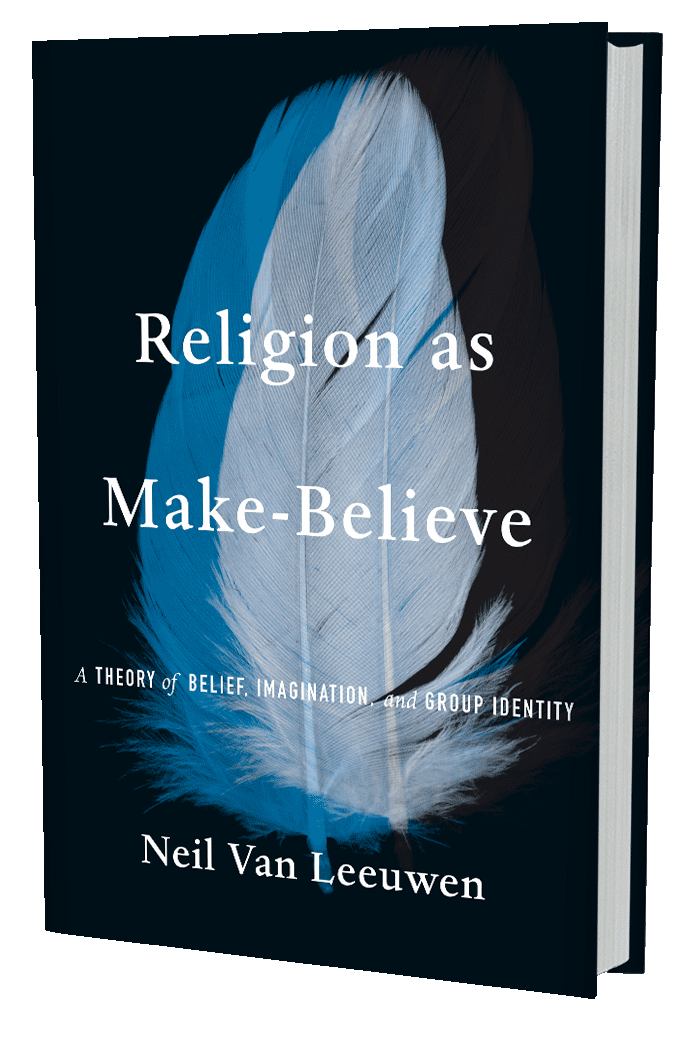
We often assume that religious beliefs are no different in kind from ordinary factual beliefs―that believing in the existence of God or of supernatural entities that hear our prayers is akin to believing that May comes before June. Neuroscientist and philosopher Neil Van Leeuwen shows that, in fact, these two forms of belief are strikingly different. Our brains do not process religious beliefs like they do beliefs concerning mundane reality; instead, empirical findings show that religious beliefs function like the imaginings that guide make-believe play.
Van Leeuwen argues that religious belief―which he terms religious “credence”―is best understood as a form of imagination that people use to define the identity of their group and express the values they hold sacred. When a person pretends, they navigate the world by consulting two maps: the first represents mundane reality, and the second superimposes the features of the imagined world atop the first. Drawing on psychological, linguistic, and anthropological evidence, Van Leeuwen posits that religious communities operate in much the same way, consulting a factual-belief map that represents ordinary objects and events and a religious-credence map that accords these objects and events imagined sacred and supernatural significance.
It is hardly controversial to suggest that religion has a social function, but Religion as Make-Believe breaks new ground by theorizing the underlying cognitive mechanisms. Once we recognize that our minds process factual and religious beliefs in fundamentally different ways, we can gain deeper understanding of the complex individual and group psychology of religious faith.
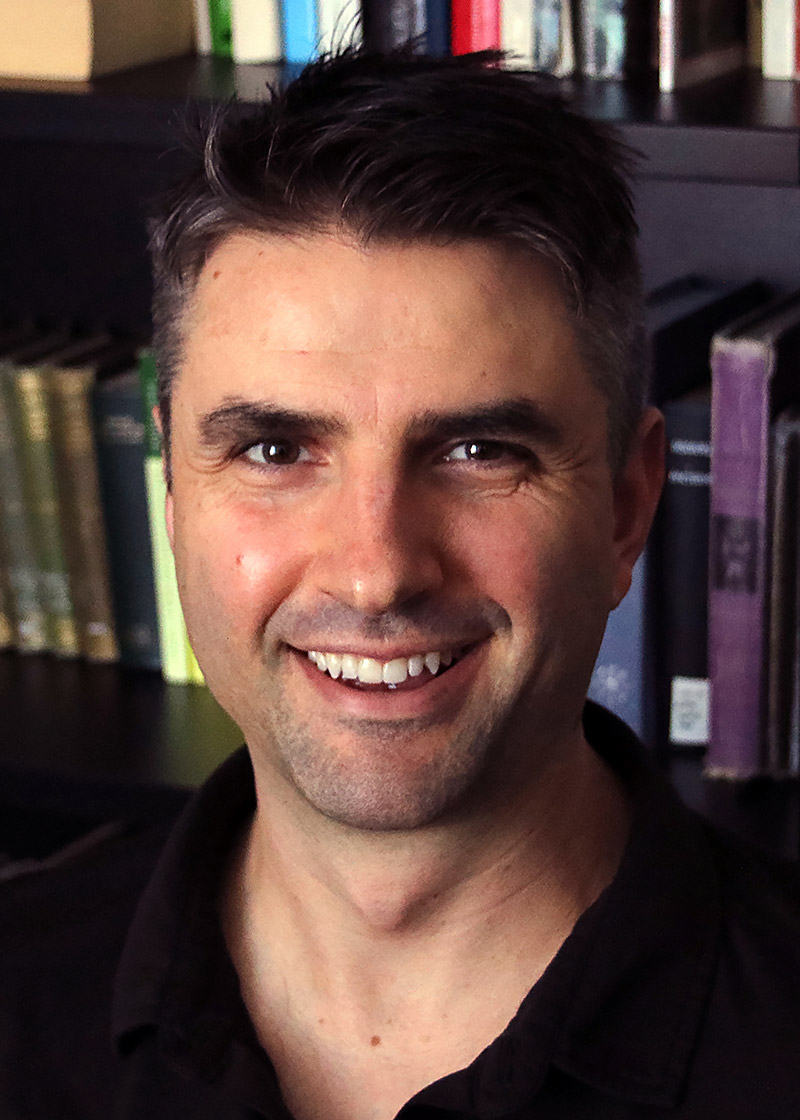
Neil Van Leeuwen is Associate Professor of Philosophy and Neuroscience at Georgia State University and a recipient of the European Commission’s Marie Curie Fellowship. His research has been featured in The New York Times and The Atlantic and on NPR. His new book is Religion as Make-Believe: A Theory of Belief, Imagination and Group Identity.
Shermer and Van Leeuwen discuss:
- His own personal religious journey (or lack thereof)
- What is “make-believe” and “pretend play”?
- Believe vs. make-believe
- “I think” vs. “I believe”
- Beliefs and imagination: “many religious beliefs are imaginings of the sort that guide make-believe play, though they are imaginings that become central to the religious actor’s identity and guide symbolic actions that express sacred values.”
- Factual belief vs. religious credence
-
Four principles of factual belief:
- If you factually believe it, you can’t help believing it.
- Factual beliefs guide actin across the bard.
- Factual beliefs guide inferences in imagination
- Factual beliefs respond to evidence.
- Tanya Luhrmann’s How God Becomes Real: Kindling the Presence of Invisible Others
- Ben Alderson-Day: Presence: The Strange Science and True Stories of the Unseen Other
- What does it mean to “take God seriously”?
- General religious credences vs. personal religious credences
- Willing suspension of disbelief
- Group identity
- Sacred values
-
The Puzzle of Religious Rationality:
- Solution 1: Religious belief as delusion
- Solution 2: People are gullible
- Solution 3: Religious belief as rational
- Solution 4: Displaced content (Gould’s NMA)
- Solution 5: Murky contents (God is 3 persons in 1)
- Solution 6: No content
- Solution 7: Belief in belief (Dennett)
- Solution 8: Weak belief
- Solution 9: A distinct cognitive attitude
- What is “that still small voice” we all hear in our heads?
- When people say they “hear the voice of God” what does that mean?
- Normal “voices within” vs. hallucinations and psychoses
- Psychiatrist Milton Rokeach’s book The Three Christs of Ypsilanti
- Anomalous psychological experiences
- Sleep paralysis and other cognitive anomalies
- Belief in angels and demons
- Sensed presences
- Empirical truths, religious truths, mythic truths
- How people come to religious belief vs. how they leave religion
- Witches and witchcraft.
If you enjoy the podcast, please show your support by making a $5 or $10 monthly donation.
TAGS: angels, belief, God, group identity, hallucinations, human values, make-believe, psychoses, rationality, religion, Science Salon, sleep paralysis, The Michael Shermer Show, witchcraftMarc Hauser — Vulnerable Minds: The Harm of Childhood Trauma and the Hope of Resilience
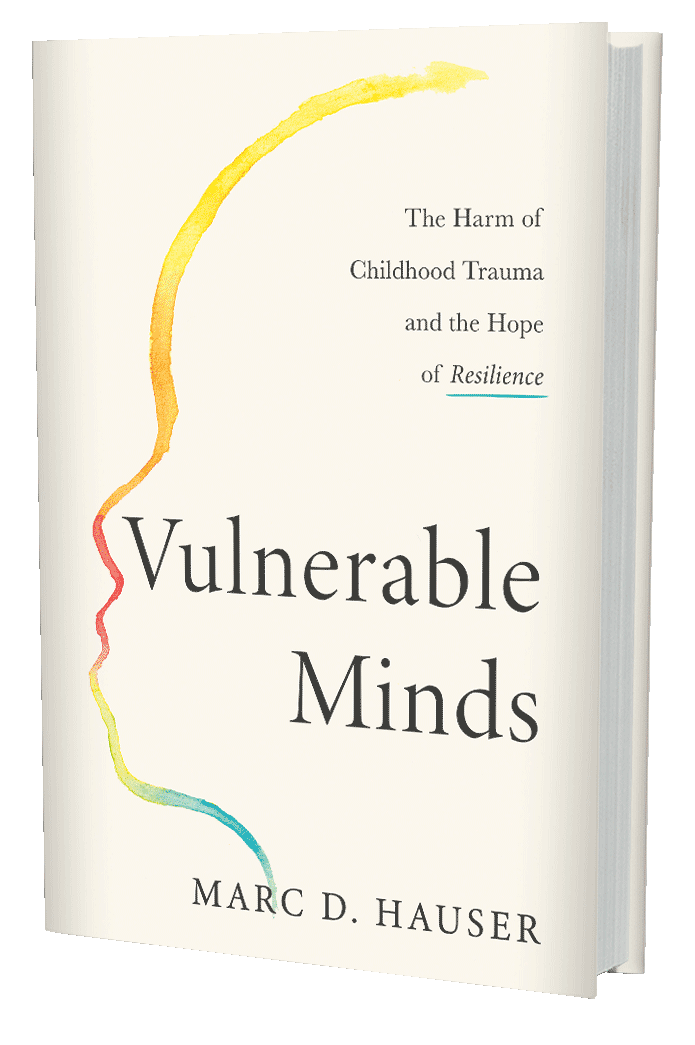
Each year at least a billion children around the world are victims of adverse childhood experiences (ACEs) that range from physical abuse and racial discrimination to neglect and food deprivation. The brain plasticity of our most vulnerable makes the adverse effects of trauma only that much more damaging to mental and physical development. Those dealt a hand of ACEs are more likely to drop out of school, have a shorter life, abuse substances, and suffer from myriad mental health and behavioral issues.
The crucial question is: How do we intervene to offer these children a more hopeful future? Neurobiologist and educator Dr. Marc Hauser provides a novel, research-based framework to understand a child’s unique response to ACEs that goes beyond our current understanding and is centered around the five Ts—the timing during development when the trauma began, its type, tenure, toxicity, and how much turbulence it has caused in a child’s life. Using this lens, adults can start to help children build resilience and recover—and even benefit—from their adversity through targeted community and school interventions, emotional regulation tools, as well as a new frontier of therapies focused on direct brain stimulation, including neurofeedback and psychedelics.
While human suffering experienced by children is the most devastating, it also presents the most promise for recovery; the plasticity of young people’s brains makes them vulnerable, but it also makes them apt to take back the joy, wonder, innocence, and curiosity of childhood when given the right support. Vulnerable Minds is a call to action for parents, policymakers, educators, and doctors to reclaim what’s been lost and commit ourselves to our collective responsibility to all children.
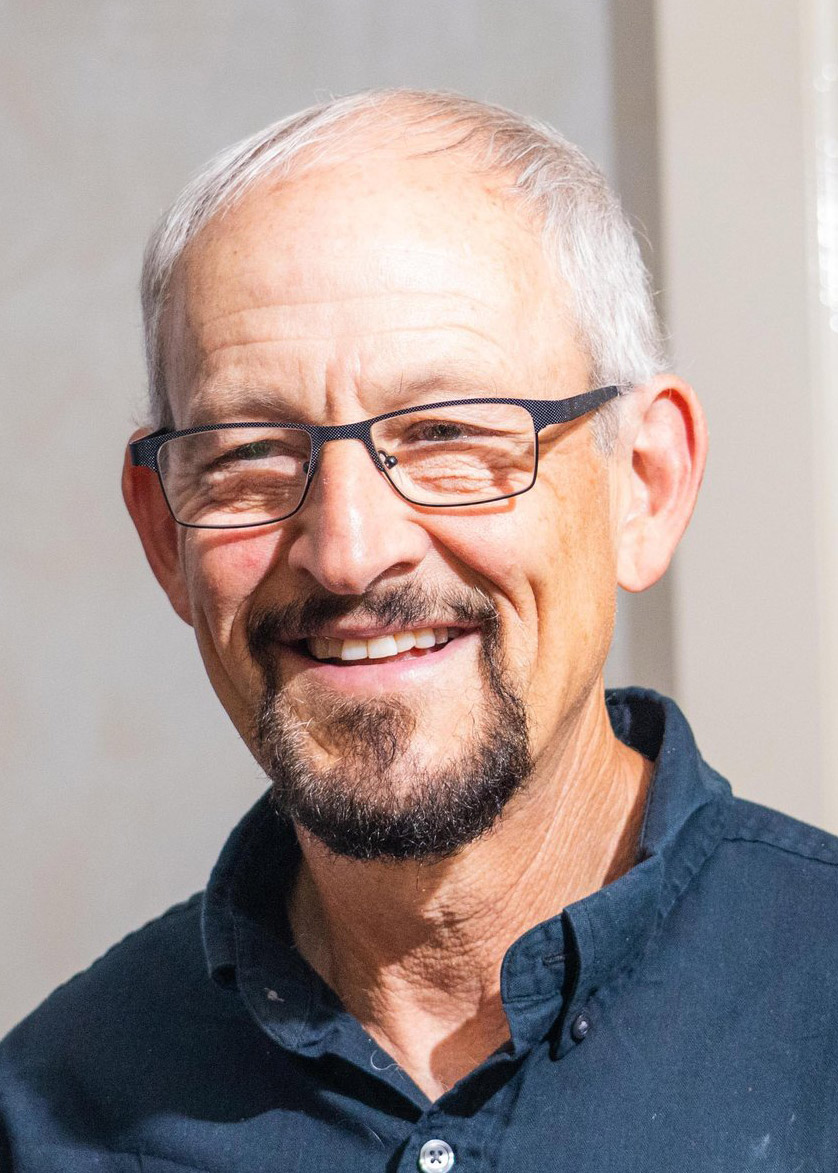
Marc Hauser is an educator, neuroscientist, and the founder of Risk Eraser, a program that helps at-risk kids lead healthier lives. He is a former professor of evolutionary biology and psychology at Harvard University and the author of over three hundred papers. His books include Wild Minds: What Animals Really Think, Moral Minds: The Nature of Right and Wrong, Evilicious: Cruelty = Desire + Denial, and his new book Vulnerable Minds: The Harm of Childhood Trauma and the Hope of Resilience.
Shermer and Hauser discuss:
- Hauser’s personal adversities, from childhood bullying to academic misconduct at Harvard
- LJ: LeBron James story from childhood trauma to NBA triumph
- WHO: a billion children annually suffer from ACEs
- Types of adversity: physical and sexual abuse, racial and sexual discrimination, emotional and physical deprivation, domestic violence, disease, neglect, cruelty, torture, war
- ACEs: Adverse Childhood Experiences
- DSM-5: limited prosocial emotions/callous-unemotional: a highly heritable trait
- Psychopathy, Machiavellianism, Narcissism: the Dark Triad
- Attachment Theory: John Bolby
- Disorganized Attachment: when attachment is broken: hyperactive amygdala: reach puberty at an earlier age, have heightened sexual activity, less investment in offspring (even 3 generations later)
- Borderline Personality Disorder: (1) a pervasive pattern of instability of interpersonal relationships, self-image, and affects, and (2) marked impulsivity beginning by early adulthood and present in a variety of contexts.
- Sexual abuse and eating disorders
- Consequences: substance abuse, suicide, obesity, depression, liver disease, school dropout, lower life expectancy
- Do different types of ACEs result in different consequences?
- Why some people meet traumatic experiences with resilience while others don’t?
- Timing, duration, severity, and predictability of ACEs.
If you enjoy the podcast, please show your support by making a $5 or $10 monthly donation.
TAGS: Adverse Childhood Experiences, adversity, Borderline Personality Disorder, Childhood Trauma, depression, narcissism, psychopathy, Science Salon, suicide, The Michael Shermer Show, traumaUndercover at the Woo Festival
“Isn’t it enough to see that a garden is beautiful without having to believe that there are fairies at the bottom of it too?”
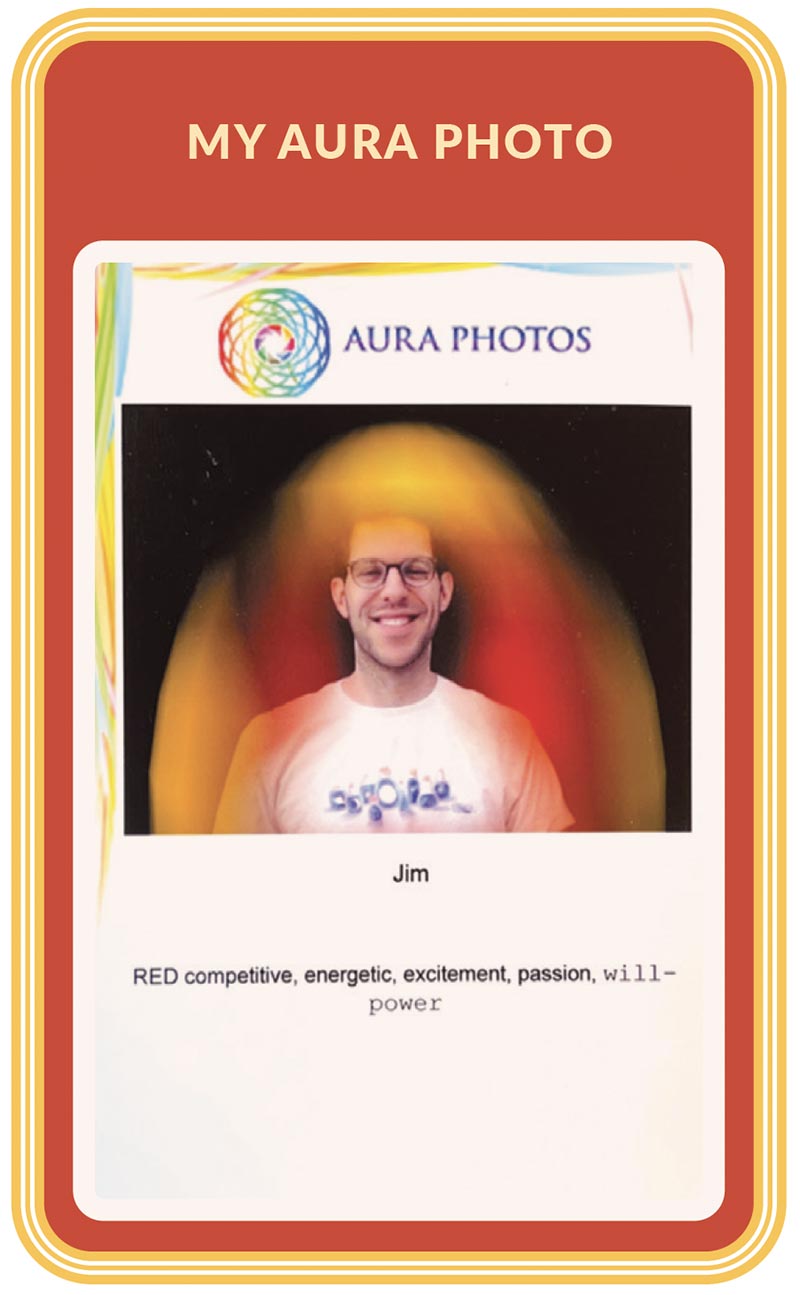
Here is a picture of my aura. I had it taken at a woo festival that I attended “undercover” with two goals: learn more about New Age beliefs and annihilate some surplus neurons I no longer needed. Underneath that winky face, resplendent in reds and yellows, is a pseudonym—a nom de bullshit—that I chose for the occasion.
The festival was a two-day event, and the booths were exactly what you’re imagining: psychics, mediums, clairvoyants, tarot readings, chakras, reiki. The whole gamut of New Age stuff. One booth promised quantum spirituality—you can tell that it’s scientific because of the word “quantum,” you see. Another booth offered visionary guidance on your life path. A third promised to combine energy and chakra healing with past life regression. (I passed on that one because my current life is regressed enough as it is, thank you very much).
But back to that winsome aura: one of the festival experts kindly interpreted it for me. You’ll be shocked, I’m sure, to hear that the reading was a meandering three-minute analysis in which I was fed a variety of feel-good platitudes and told that I was going to start a successful and lucrative company. The price tag for this reassuring pablum: $25.
With my future now secure and my pocket considerably lighter, I moved on to the next booth, manned by a guy who specializes in past life readings. A full reading runs you $125, but you can get an abbreviated 40-minute version for $90. I couldn’t imagine sitting there with a straight face, hemorrhaging money as I listened to stories about my past lives for 40 minutes, so I declined and moved on. CONTINUE READING THIS POST…
TAGS: belief, chakras, clairvoyants, confirmation bias, meaning, New Age, psychics, psychology, reiki, religion, self-helpEinat Wilf on How to Achieve Peace in the Israeli-Palestinian Conflict

Dr. Einat Wilf is a leading intellectual and original thinker on matters of foreign policy, economics, education, Israel, and the Jewish people. She was a member of the Israeli Parliament from 2010-2013 on behalf of the Labor and Independence parties. Dr. Wilf has a BA in Government and Fine Arts from Harvard University, an MBA from INSEAD in France (Institut Européen d’Administration des Affaires), and a PhD in Political Science from the University of Cambridge. Born and raised in Israel, Dr. Wilf served as an Intelligence Officer in the Israel Defense Forces. Dr. Wilf is also the author of six books including: My Israel, Our Generation, Back to Basics: How to Save Israeli Education (At No Additional Cost), It’s NOT the Electoral System, Stupid, Winning the War of Words, Telling Our Story (a collection of Wilf’s essays on Israel, Zionism and the path to peace,) and The War of Return: How Western Indulgence of the Palestinian Dream Has Obstructed the Path to Peace.
Shermer and Wilf discuss:
- Why Israel? Why the Jews? Anti-Semitism and anti-Zionism
- Karim Khan, prosecutor of the International Criminal Court (ICC) accused Israeli and Hamas leaders of war crimes and called for a cease-fire by Israel in Gaza, particularly in Rafah
- Accusations of genocide, induced famine, and war crimes against Netanyahu
- Ireland, Spain and Norway say they will recognize a Palestinian state
- After 7 months of fighting, why has the IDF been unable to defeat Hamas?
-
AP story outlining 4 options for Gaza:
- Full scale military occupation
- Lighter occupation with Palestinian administrators
- Grand bargain: Reformed Palestinian Authority would govern Gaza with assistance of Arab and Muslim nations including Saudi Arabia that would normalize relations with Israel in return for a U.S. defense pact.
- A deal with Hamas: release all of the hostages in return for hundreds of Palestinian prisoners, including senior militants, as well as withdrawal of Israeli forces from Gaza, a cease-fire, and reconstruction, leaving Hamas in control of Gaza.
- American student protests against Israel and for Palestine (and even Hamas!)
- Israel: what happened to their vaunted security apparatus, intelligence agency and military readiness?
- Zionism, Judaism, and Israel
- Palestine, Palestinians, and the Gaza strip
- Hamas, Hezbollah, and terrorism in the Middle East
- Progressive Left failure to denounce Hamas terrorists
- Why students & student groups are pro-Palestinian and anti-Israel
- The rise of anti-Semitism in recent years
- Proximate causes of anti-Semitism
- Ultimate causes of anti-Semitism
- The Abraham Accords
- The Two-State Solution.
If you enjoy the podcast, please show your support by making a $5 or $10 monthly donation.
TAGS: anti-Semitism, anti-Zionism, genocide, Hamas, Hezbollah, Israel, Judaism, Middle East, Palestine, protests, Science Salon, terrorism, The Michael Shermer Show, war crimes, ZionismGeorge Takach — Cold War 2.0: Artificial Intelligence in the New Battle between China, Russia, and America

So much of what we hear about China and Russia today likens the relationship between these two autocracies and the West to a “rivalry” or a “great-power competition.” Some might consider it alarmist to say we are in the midst of a second Cold War, but that may be the only responsible way to describe today’s state of affairs.
What’s more, we have come a long way from Mao Zedong’s infamous observation that “political power grows out of the barrel of a gun.” Now we live in an age more aptly described by Vladimir Putin’s cryptic prophecy that “artificial intelligence is the future not only of Russia, but of all mankind, and whoever becomes the leader in this sphere will become ruler of the world.”
George S. Takach’s incisive and meticulously researched new volume, Cold War 2.0, is the book we need to thoroughly understand these frightening and perilous times. In the geopolitical sphere, there are no more pressing issues than the appalling mechanizations of a surveillance state in China, Russia’s brazen attempt to assert its autocratic model in Ukraine, and China’s increasingly likely plans to do the same in Taiwan.
But the key here, Takach argues, is that our new Cold War is not only ideological but technological: the side that prevails in Cold War 2.0 will be the one that bests the other in mastering the greatest innovations of our time. Artificial intelligence sits in our pockets every day—but what about AI that coordinates military operations and missile defense systems? Or the highly sophisticated semiconductor chips and quantum computers that power those missiles and a host of other weapons? And, where recently we have seen remarkable feats of bio-engineering to produce vaccines at record speed, shouldn’t we be concerned how catastrophic it would be if bio-engineering were co-opted for nefarious purposes?
Takach thoroughly examines how each of these innovations will shape the tension between democracy and autocracy, and how each will play a central role in this second Cold War. Finally, he crafts a precise blueprint for how Western democracies should handle these innovations to respond to the looming threat of autocracy—and ultimately prevail over it.
George S. Takach holds a bachelor’s degree in history, political economy, and philosophy from the University of Toronto; a graduate degree from the Norman Paterson School of International Affairs at Carleton University; and a law degree from the University of Toronto. For forty years, he practiced technology law at McCarthy Tétrault, Canada’s premier law firm. He has written three books on technology law/tech commercial subjects. Cold War 2.0: Artificial Intelligence in the New Battle between China, Russia, and America is his first book for a general audience. He lives in Toronto.
Shermer and Takach discuss:
- Mao Zedong, 1927: “Political Power grows out of the barrel of a gun.”
- Vladimir Putin: “artificial intelligence is the future not only of Russia, but of all mankind, and whoever becomes the leader in this sphere will become ruler of the world.”
- What is AI and what will it be able to do in the coming decades?
- China’s surveillance state
- Russia and Ukraine
- Cold War 1.0: Autocracy, Democracy and Technology
- Cold War 2.0: AI and Autocracy and Democracy
- semiconductor chip supremacy
- quantum computing
- biotechnology
- China and Taiwan
- How China’s invasion of Taiwan is likely to unfold, and what the U.S. can do about it.
If you enjoy the podcast, please show your support by making a $5 or $10 monthly donation.
TAGS: artificial intelligence, autocracy, biotechnology, Cold War, democracy, quantum computing, Russia, Science Salon, semiconductors, The Michael Shermer Show, UkraineCan We Trust AI to Make Decisions?
Machine-based decision-making is an interesting vision for the future: Humanity, crippled by its own cognitive deformations, tries to improve its lot by opting to outsource its decisions to adaptive machines—a kind of mental prosthetic.
For most of the twentieth century, artificial intelligence was based on representing explicit sets of rules in software and having the computer “reason” based on these rules—the machine’s “intelligence” involved applying the rules to a particular situation. Because the rules were explicit, the machine could also “explain” its reasoning by listing the rules that prompted its decision. Even if AI had the ring of going beyond the obvious in reasoning and decisionmaking, traditional AI depended on our ability to make explicit all relevant rules and to translate them into some machine-digestible representation. It was transparent and explainable, but it was also static—in this way, it did not differ fundamentally from other forms of decisional guardrails such as standard operating procedures (SOPs) or checklists. The progress of this kind of AI stalled because in many everyday areas of human activity and decisionmaking, it is exceptionally hard to make rules explicit.
In recent decades, however, AI has been used as a label for something quite different. The new kind of AI analyzes training data in sophisticated ways to uncover patterns that represent knowledge implicit in the data. The AI does not turn this hidden knowledge into explicit and comprehensible rules, but instead represents it as a huge and complex set of abstract links and dependencies within a network of nodes, a bit like neurons in a brain. It then “decides” how to respond to new data by applying the patterns from the training data. For example, the training data may consist of medical images of suspected tumors, and information about whether or not they in fact proved to be cancerous. When shown a new image, the AI estimates how likely that image is to be of a cancer. Because the system is learning from training data, the process is referred to as “machine learning.” CONTINUE READING THIS POST…
TAGS: artificial intelligence, machine learningCharan Ranganath — Unlocking Memory’s Power to Hold on to What Matters
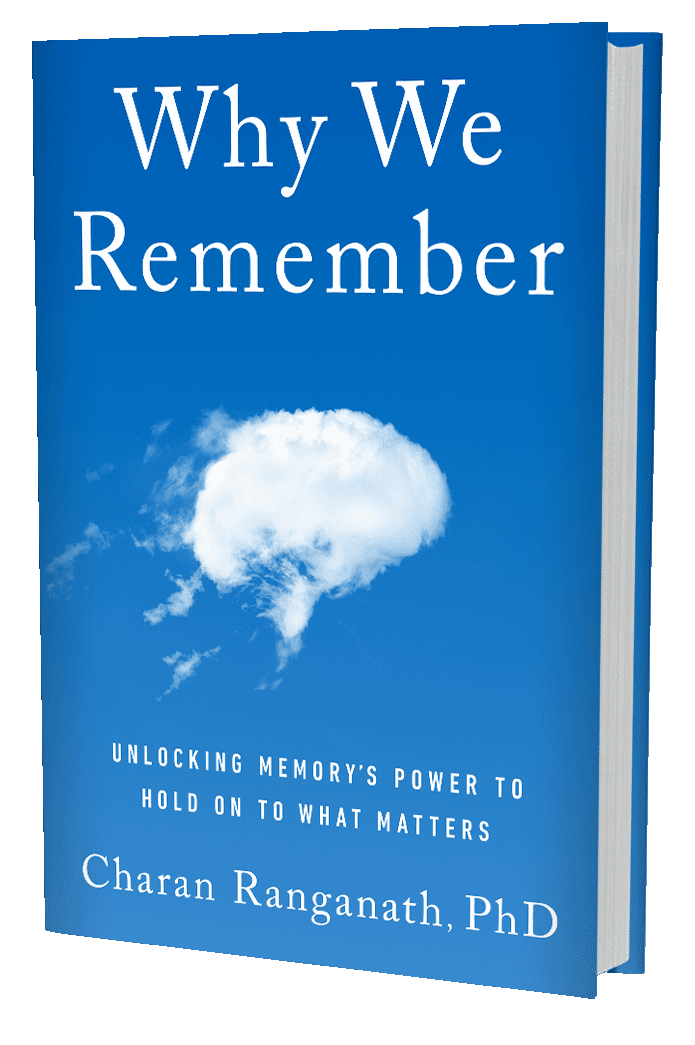
A new understanding of memory is emerging from the latest scientific research. In Why We Remember, pioneering neuroscientist and psychologist Charan Ranganath radically reframes the way we think about the everyday act of remembering. Combining accessible language with cutting-edge research, he reveals the surprising ways our brains record the past and how we use that information to understand who we are in the present, and to imagine and plan for the future.
Memory, Dr. Ranganath shows, is a highly transformative force that shapes how we experience the world in often invisible and sometimes destructive ways. Knowing this can help us with daily remembering tasks, like finding our keys, and with the challenge of memory loss as we age. What’s more, when we work with the brain’s ability to learn and reinterpret past events, we can heal trauma, shed our biases, learn faster, and grow in self-awareness.
Including fascinating studies and examples from pop culture, and drawing on Ranganath’s life as a scientist, father, and child of immigrants, Why We Remember is a captivating read that unveils the hidden role memory plays throughout our lives. When we understand its power—and its quirks—we can cut through the clutter and remember the things we want to remember. We can make freer choices and plan a happier future.
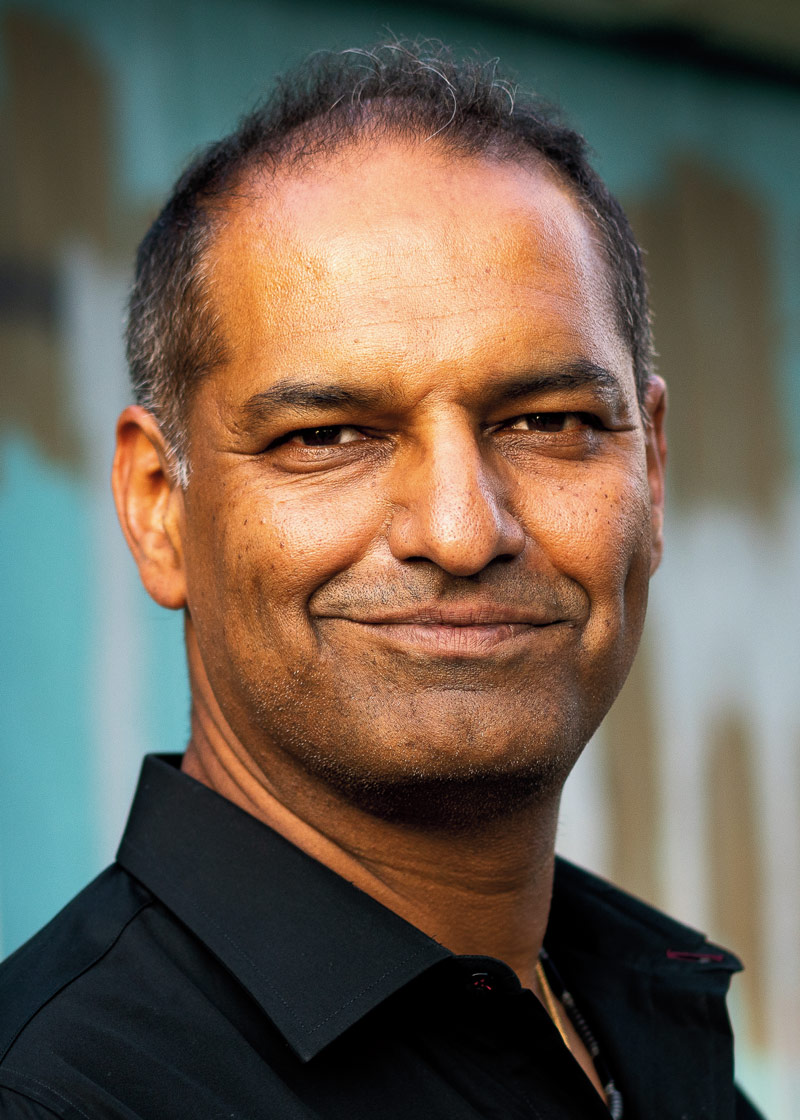
Charan Ranganath is a Professor at the Center for Neuroscience and Department of Psychology and director of the Dynamic Memory Lab at the University of California at Davis. For over 25 years, Dr. Ranganath has studied the mechanisms in the brain that allow us to remember past events, using brain imaging techniques, computational modeling and studies of patients with memory disorders. He has been recognized with a Guggenheim Fellowship and a Vannevar Bush Faculty Fellowship. He lives in Davis, California. Outside of neuroscience, Dr. Ranganath is also a songwriter and guitarist with a number of recording credits, including a song on a feature film soundtrack.
Shermer and Ranganath discuss:
- the neurophysiology of memory: how memories are stored by neurons
- the meaning of “forgetting” — Is the memory in there somewhere or lost forever?
- How much of what we could remember do we actually remember?
- episodic, semantic, working, flashbulb, long-term, and short-term memory
- recovered memories vs. false memories + confabulation, conflation
- regular memory loss and disease/injury memory loss
- Alzheimer’s, dementia, senility
- PTSD and bad memories
- déjá vu
- triggers of memory: music, smells, contextual cues
- learning as a form of memory
- learning by making mistakes
- social memories and the extended self
- remembered self vs. experiencing self
- MEMself vs. POVself
- uploading memories into the cloud
- improving your memory: what works, what doesn’t.
If you enjoy the podcast, please show your support by making a $5 or $10 monthly donation.
TAGS: Alzheimers, memory, neuroscience, psychology, PTSD, Science Salon, self-awareness, The Michael Shermer ShowTricia Rose — Metaracism: How Systemic Racism Devastates Black Lives
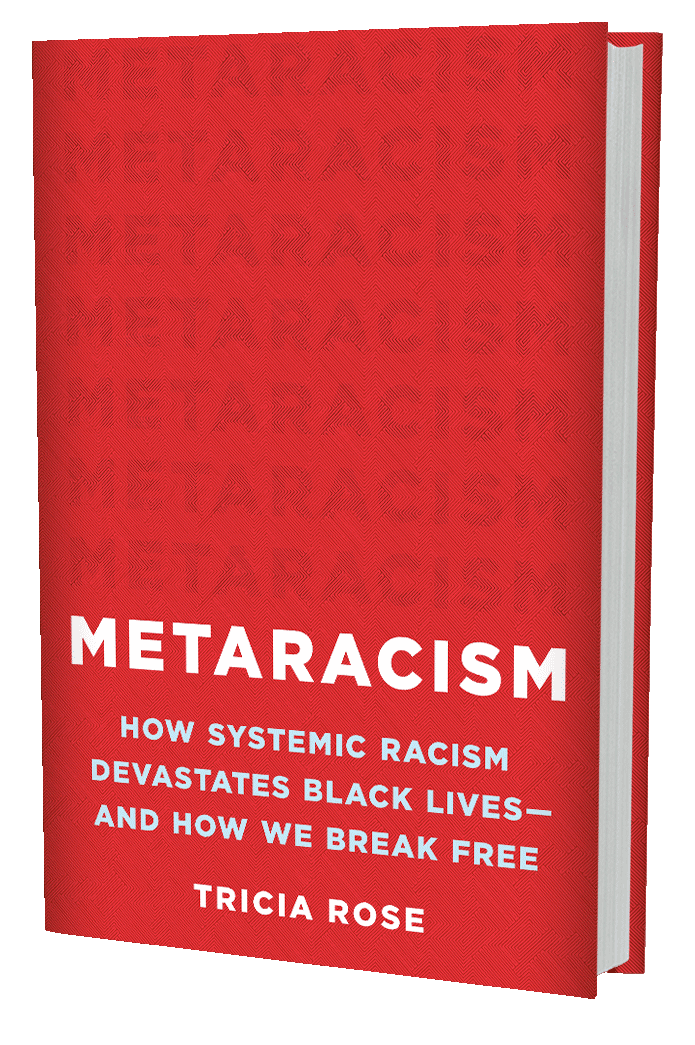
In recent years, condemnations of racism in America have echoed from the streets to corporate boardrooms. At the same time, politicians and commentators fiercely debate racism’s very existence. And so, our conversations about racial inequalities remain muddled. In Metaracism, Brown University Professor of Africana Studies Tricia Rose cuts through the noise with a bracing and invaluable new account of what systemic racism actually is, how it works, and how we can fight back. She reveals how—from housing to education to criminal justice—an array of policies and practices connect and interact to produce an even more devastating “metaracism” far worse than the sum of its parts. While these systemic connections can be difficult to see—and are often portrayed as “color-blind”—again and again they function to disproportionately contain, exploit, and punish Black people. By helping us to comprehend systemic racism’s inner workings and destructive impact, Rose shows how to create a more just America for us all.

Tricia Rose is Chancellor’s Professor of Africana Studies and the director of the Center for the Study of Race and Ethnicity in America at Brown University. She has received fellowships from the Ford and Rockefeller Foundations, and her research has been funded by the Mellon and Robert Wood Johnson Foundations. She co-hosts with Cornel West the podcast The Tight Rope. She is the author of Longing to Tell: Black Women’s Stories of Sexuality and Intimacy, The Hip Hop Wars: What We Talk About When we Talk About Hip Hop—and Why it Matters, Black Noise: Rap Music and Black Culture in Contemporary America, and her new book Metaracism: How Systemic Racism Devastates Black Lives—and How We Break Free.
Shermer and Rose discuss:
- how she broke free from her own working-class background growing up in Harlem in the 1960s
- racism, structural racism, systemic racism, metaracism
- specific problems to be solved vs. deep-root cause-ism
- What policies, practices, laws, and beliefs are racist in 2024 America and what can be done about them?
- what it means to be “caught up in the system”
- individual vs. group differences
- White advantages and Black disadvantages
- Rawls’ original position/veil of ignorance and why it has not been realized in America
- race differences that are real and current, and not just historical
- Trayvon Martin
- Kelley Williams-Bolar
- Michael Brown
- Rose’s response to Black conservative authors like Shelby Steele and Thomas Sowell
- why Coleman Hughes is wrong about color-blindness
- Obama, George Floyd and race relations today
- reparations.
Introduction to the Show
In my 1997 book Why People Believe Weird Things, in a chapter on race and racism, I summarized the scientific research to date on the subject. My deeper motive in this exercise was my belief that in my lifetime we could achieve—or at least approach in an asymptotic curve—a post-race society in which such superficial characteristics as skin color, hair color and form, and facial traits would be considered the least important thing to know about a person.
Nearly twenty years later, in my book The Moral Arc, I suggested that we had made so much moral progress toward this end that Dr. Martin Luther King Jr.’s dream that “my four little children will one day live in a nation where they will not be judged by the color of their skin but by the content of their character” was at last coming true and so, I concluded, “we are living in the most moral period in our species’ history.”
How naïve I was. Conversations about and coverage of race and race-related incidents have since become omnipresent in our culture, from social media to mainstream media. Government, corporate, and academic collection of data on all matters race has become ubiquitous, driven further along by racial (and gender) sensitivity training programs, of which I have partaken.
Thus, in 2022 I edited a special edition of Skeptic on “Race Matters,” that included: “Systemic Racism—Explained” by Mahzarin R. Banaji, Susan T. Fiske & Douglas S. Massey. Excerpt:
In the early 1960s, more than 60 percent of White Americans agreed that Whites have a right to keep Blacks out of their neighborhoods. By the 1980s, however, the percentage had dropped to 13 percent. The fact that discrimination is illegal, and White support for segregation has plummeted, begs the question of why segregation persists.
Rental and sales agents today are less likely to respond to emails from people with stereotypically Black names or to reply to phone messages left by speakers who “sound Black”. A recent meta-analysis of 16 experimental housing audit studies and 19 lending analyses conducted since 1970 revealed that sharp racial differentials in the number of units recommended by realtors and inspected by clients have persisted and that racial gaps in loan denial rates and borrowing cost have barely changed in 40 years.
Audit studies, conducted across the social and behavioral sciences, include a subset of resume studies in which researchers send the same resume out to apply for jobs, but change just one item: the candidate’s name is Lisa Smith or Lakisha Smith. Then, they wait to see who gets the callback. The bias is clear: employers avoid “Black-sounding” names. In fact, in both Milwaukee’s and New York City’s low-wage job market, Black applicants with no criminal background were called back with the same frequency or less as White applicants just released from prison.
As a result, Critical Race Theory (CRT) literature on systemic racism is both riding and fueling this cultural pattern, loaded as it is with discussions about racial group differences on everything from income and family wealth to the percentage of Black professors in STEM fields. What percentage of STEM professors have brown eyes, blue eyes, hazel eyes, and green eyes (pace Jane Elliott’s famous experiment)? How many brunettes, blonds, and redheaded professors are there in STEM?
Who knows? Who cares? Why are these superficial characteristics considered meaningless, whereas equally frivolous features like skin color, hair color and form, and facial traits are proxies for everything from intelligence and personality to moral worth and social value?
The answer is obvious. Race and racism as manifested in slavery, segregation, lynchings, Jim Crow, redlining, profiling, and police brutality is America’s original sin, whereas we have no history of prejudice and bigotry based on eye or hair color. How did we get to this point and how can we get past it?
If you enjoy the podcast, please show your support by making a $5 or $10 monthly donation.
TAGS: metaracism, race relations, racism, reparations, Science Salon, systemic racism, The Michael Shermer Show