Ernest Scheyder — The Global Battle to Power Our Lives
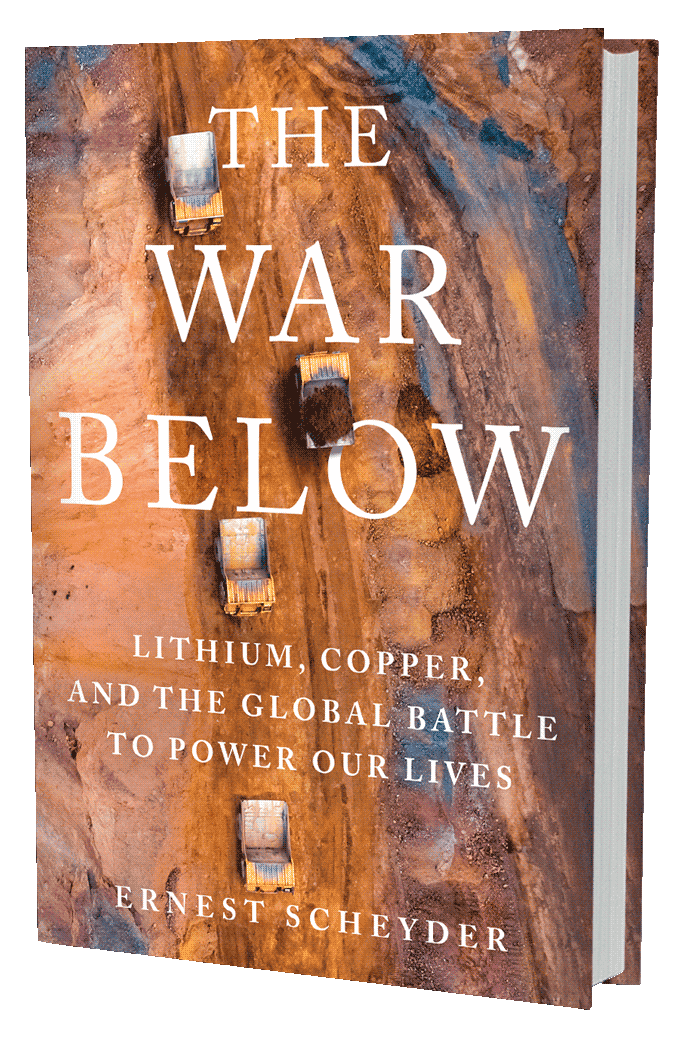
A new economic war for critical minerals has begun, and The War Below is an urgent dispatch from its front lines. To build electric vehicles, solar panels, cell phones, and millions of other devices means the world must dig more mines to extract lithium, copper, and other vital building blocks. But mines are deeply unpopular, even as they have a role to play in fighting climate change and powering crucial technologies. These tensions have sparked a worldwide reckoning over the sourcing of necessary materials, and no one understands the complexities of these issues better than Ernest Scheyder, whose exclusive access to sites around the globe has allowed him to gain unparalleled insights into a future without fossil fuels.
The War Below reveals the explosive brawl among industry titans, conservationists, community groups, policymakers, and many others over whether some places are too special to mine or whether the habitats of rare plants, sensitive ecosystems, Indigenous holy sites, and other places should be dug up for their riches.
With vivid and engaging writing, Scheyder shows the human toll of this war and explains why recycling and other newer technologies have struggled to gain widespread use. He also expertly chronicles Washington’s attempts to wean itself off supplies from China, the global leader in mineral production and processing. The War Below paints a powerfully honest and nuanced picture of what is at stake in this new fight for energy independence, revealing how America and the rest of the world’s hunt for the “new oil” directly affects us all.
Ernest Scheyder is a senior correspondent for Reuters, covering the green energy transition and the minerals that undergird it. He previously covered the US shale oil revolution, politics, and the environment, and held roles at the Associated Press and the Bangor Daily News. A native of Maine, Scheyder is a graduate of the University of Maine and Columbia Journalism School. Visit his website at ErnestScheyder.com and follow him on Twitter @ErnestScheyder.
Shermer and Scheyder discuss:
- how, as a Reuters reporter, Scheyder came to this issue
- rare earth metals
- lithium and copper
- aluminum and other precious metals
- How much rare earth metals will we need by 2050, 2100, and beyond?
- How do lithium-ion batteries work compared to lead-acid? What are the alternatives?
- How crucial are these technologies necessary to combat climate change?
- Will EVs completely replace all other automobiles?
- Can renewables completely replace fossil fuels without nuclear?
- recycling electronic waste
- how mining works in the U.S., China, Chile, Russia, elsewhere
- types of mines: hard-rock vs. soft-rock, open-pit vs. deep earth
- public vs. private ownership of mines (Bureau of Mines)
- what companies like Apple and Tesla are doing about the coming problem
- Native American rights to land containing valuable mines
- third world labor exploitation
- electric leaf blowers and weed wackers.
If you enjoy the podcast, please show your support by making a $5 or $10 monthly donation.
TAGS: copper, electric vehicles, energy, lithiun, minerals, mining, recycling, renewable energy, Science Salon, technology, The Michael Shermer ShowLegalization of Marijuana and Violent Crime in the Nicest Place in America
Throughout most of the last century, both political Right1 and Left2 were unified, a rare occurrence in itself, in their opposition to the decriminalization of marijuana. By 2023, public opinion had shifted. Most Americans now support legalization for medical and recreational use,3 and this support extends across the political divide. Nearly two-thirds of the electorate supports legalization, making it one of the least divisive issues in the country.4 At this writing, 23 states have legalized recreational marijuana, along with Washington, DC, and Guam.5
The third that opposes legalization remains, though, and there are reasoned arguments against legalization. Significant research establishing the adverse effects of marijuana consumption exists, noting its correlation with neurophysical decline,6 cognitive impairment,7 highway deaths,8 lower educational attainment,9 addiction,10 and other adverse health effects.11 Within the last decade, correlations have been found between both distal and proximal drug use (including the use of marijuana) and sexual aggression.12

Buchanan, Michigan (Callie Lipkin / Gallery Stock), “The Nicest Place in America (2020)”
There are also reasonable arguments against legalization based on the burdens it is claimed it would produce on society: the tax revenue received from the longstanding legal sale of alcohol and tobacco pales in comparison to the costs of healthcare for the individuals who consume them.13 So some argue marijuana legalization would only further increase the costs to the taxpayer. CONTINUE READING THIS POST…
TAGS: assault, cannabis, crime, data, decriminalization, drugs, homicide, legalization, marijuana, politics, robbery, violencePaul Offit — Deciphering Covid Myths and Navigating Our Post-Pandemic World
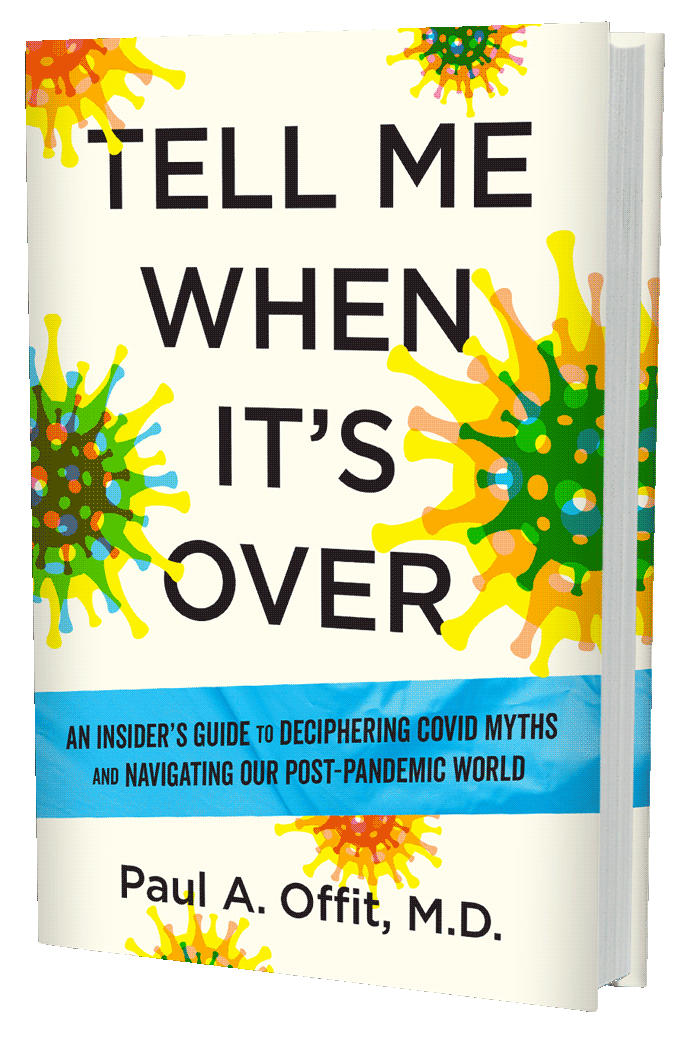
Four years on, Covid is clearly here to stay. So what do we do now? Drawing on his expertise as one of the world’s top virologists, Dr. Paul Offit helps weary readers address that crucial question in this brief, definitive guide.
As a member of the FDA Vaccine Advisory Committee and a former member of the Advisory Committee for Immunization Practices to the CDC, Offit has been in the room for the creation of policies that have affected hundreds of millions of people. In these pages, he marshals the power of hindsight to offer a fascinating frontline look at where we were, where we are, and where we’re heading in the now-permanent fight against the disease.
Accompanied by a companion website populated with breaking news and relevant commentary, this book contains everything you need to know to navigate Covid going forward. Offit addresses fundamental issues like boosters, immunity induced by natural infection, and what it means to be fully vaccinated. He explores the dueling origin stories of the disease, tracing today’s strident anti-vax rhetoric to twelve online sources and tracking the fallout. He breaks down long Covid—what it is, and what the known treatments are. And he looks to the future, revealing whether we can make a better vaccine, whether it should be mandated, and providing a crucial list of fourteen takeaways to eradicate further spread.
Paul A. Offit, M.D. is the Director of the Vaccine Education Center at the Children’s Hospital of Philadelphia and the Maurice R. Hilleman Professor of Vaccinology and Professor of Pediatrics at the University of Pennsylvania. He has appeared on The Today Show, Good Morning America, CBS This Morning, 60 Minutes, and many other programs. Offit has published more than 170 papers in medical and scientific journals in the areas of rotavirus-specific immune responses and vaccine safety. He is also the co-inventor of the rotavirus vaccine, RotaTeq, recommended for universal use in infants by the CDC and WHO. In 2021 he was awarded the Edward Jenner Lifetime Achievement Award in Vaccinology from the 15th Vaccine Congress. He is the author of numerous books including: Do You Believe in Magic?: Vitamins, Supplements and All things Natural; Vaccinated: From Cowpox to mRNA, the Remarkable Story of Vaccines; Deadly Choices: How the Anti-Vaccine Movement Threatens Us All; You Bet Your Life: From Blood Transfusion to Mass Vaccination, the Long and Risky History of Medical Innovation; and Pandora’s Lab: Seven Stories of Science Gone Wrong. His new book is Tell Me When It’s Over: An Expert’s Guide to Deciphering Covid Myths and Navigating Our Post-Pandemic World.
Shermer and Offit discuss:
- How do you know that the Covid-19 vaccines are not the 8th story of science gone wrong, or part of the long and risky history of medical innovation?
- Loss of trust in medical and scientific institutions (Anthony Fauci, Francis Collins)
- Overall assessment of what went right and wrong with the Covid-19 pandemic
- Pandemic vs. epidemic
- Influenza caused 800,000 hospitalizations & 60,000 deaths
- Testing, masking, social isolation
- Mandates vs. recommendations
- Is the cure worse than the disease?
- Closing of schools, restaurants, salons, parks, beaches, hiking trails, etc.
- The cost to the economy of the shut downs
- The cost to the education of children of the shut downs
- Comparative method: which countries and states did better or worse?
- Viral: The Search for the Origin of Covid-19 by Alina Chan and Matt Ridley
- Lab Leak hypothesis vs. Zoonomic hypothesis
- Living with SARS-CoV-2 and its variants
- Vaccines and autism
- RFK, Jr. and his conspiracy theories
- Debating anti-vaxxers (Rogan and elsewhere)
- Treatments: hydroxychloroquine, ivermectin, remdesivir, Vitamin D, Paxlovid, Tamiflu, retroviral medicines, monoclonal antibodies, convalescent plasma
- High risk vs. low risk groups; age, sex, race, pregnancy, weight, preconditions, immune compromised
- Myocarditis, Robert Malone, mRNA vaccines, Joe Rogan, RFKJ, Peter Hotez, Del Bigtree
- Spike protein made by Covid vaccines: toxic? (the spike protein the mRNA vaccines make cannot fuse to our cells. Normally, SARS-CoV-2 attaches to cells via the spike protein, then enters cells through a process called fusion….p. 107
- Stanford professor Jay Bhattacharya censored for signing the Great Barrington Declaration (“focused protection” of the people most at risk): Wall Street Journal OpEd: “Is the Coronavirus as Deadly as They Say?”, which argued there was little evidence to support shelter-in-place orders and quarantines In March 2021, Bhattacharya called the Covid-19 lockdowns the “biggest public health mistake we’ve ever made” and argued that “The harm to people is catastrophic”. Blacklisted by Twitter.
How civilization might change:
- Medical: Coronavirus is here to stay—herd immunity naturally and through vaccines
- Personal and Public Health: handshakes, hugs, and other human contact; masks, social distancing, hygiene
- Economics and Business
- Travel, conferences, meetings
- Marriage, dating, sex, and home life
- Entertainment, vacations, bars and restaurants
- Education and schools
- Politics and society (and a better understanding of freedom and why it is restricted).
If you enjoy the podcast, please show your support by making a $5 or $10 monthly donation.
TAGS: anti-vaxxers, COVID-19, economics, immunization, influenza, medicine, mRNA vaccines, myths, pandemic, politics, SARS-CoV-2, science, Science Salon, The Michael Shermer Show, trust, vaccines, virologyRob Henderson — Foster Care, Family, and Social Class
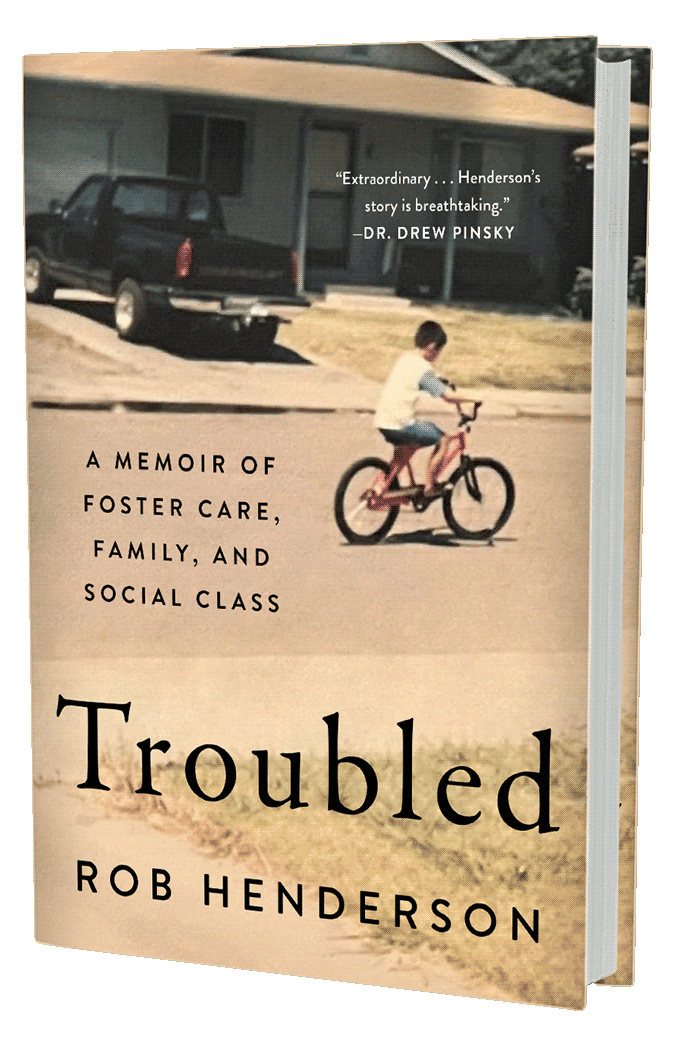
In this raw coming-of-age memoir, in the vein of The Short and Tragic Life of Robert Peace, The Other Wes Moore, and Someone Has Led This Child to Believe, Rob Henderson vividly recounts growing up in foster care, enlisting in the US Air Force, attending elite universities, and pioneering the concept of “luxury beliefs” — ideas and opinions that confer status on the upper class while inflicting costs on the less fortunate.
Rob Henderson was born to a drug-addicted mother and a father he never met, ultimately shuttling between ten different foster homes in California. When he was adopted into a loving family, he hoped that life would finally be stable and safe. Divorce, tragedy, poverty, and violence marked his adolescent and teen years, propelling Henderson to join the military upon completing high school.
An unflinching portrait of shattered families, desperation, and determination, Troubled recounts Henderson’s expectation-defying young life and juxtaposes his story with those of his friends who wound up incarcerated or killed. He retreads the steps and missteps he took to escape the drama and disorder of his youth. As he navigates the peaks and valleys of social class, Henderson finds that he remains on the outside looking in. His greatest achievements — a military career, an undergraduate education from Yale, a PhD from Cambridge — feel like hollow measures of success. He argues that stability at home is more important than external accomplishments, and he illustrates the ways the most privileged among us benefit from a set of social standards that actively harm the most vulnerable.
Rob Henderson grew up in foster homes in Los Angeles and the rural town of Red Bluff, California. He joined the US Air Force at the age of seventeen. Once described as “self-made” by the New York Times, Rob subsequently received a BS from Yale University and a PhD in psychology from St. Catharine’s College, Cambridge. His writing has appeared in the New York Times, Wall Street Journal, Boston Globe, and more. His weekly newsletter is sent to more than forty thousand subscribers. Learn more at RobKHenderson.com. His new book is Troubled: A Memoir of Foster Care, Family, and Social Class.
Shermer and Henderson discuss:
- Autobiographies and memoirs and the hindsight bias
- Memoirs: Tara Westover, Educated; Amber Scorah, Leaving the Witness; J.D. Vance, Hillbilly Elegy; Yeonmi Park, In Order to Live: A North Korean Girl’s Journey to Freedom
- Genes, Environment, and Luck/Contingency
- Childhood: drug-addicted mother, absence father, 10 different foster homes
- 60% of boys in foster care are later incarcerated; 3% graduate from college
- Marriage, divorce and childhood outcomes; one parent vs. two
- Poverty, welfare programs, and social safety nets
- The trouble with boys and men: competitiveness, risk taking, and violence, “the young male syndrome, Margo Wilson and Martin Daly
- Alcohol, drugs, depression
- Choice: top 1% of educational attainment or top 1% of childhood instability
- Luxury beliefs of educated elites
- College education vs. having a parent who cares enough to make sure you get to class
- Wealthy but unstable home vs. low-income but stable home
- How many who wield the most influence in society only pay lip service to inequality
- What it was like in the military
- What it was like at Yale
- What it was like at Cambridge
- What does it mean to be “self-made”?
- Steven Pinker’s How the Mind Works
- Jonathan Haidt’s lecture on the telos of universities
- Nicolas Christakas and Yale’s privileged students
- Jordan Peterson
- The Coddling and Canceling of the American Mind
- Self-Help books
- Warrior-Scholar Project.
If you enjoy the podcast, please show your support by making a $5 or $10 monthly donation.
TAGS: addiction, belief, coddling, contingency, depression, education, foster care, genetics, hindsight bias, luck, memoir, poverty, privilege, Science Salon, self help, social class, The Michael Shermer Show, violenceWho Should You Trust?
Why Appeals to Scientific Consensus Are Often Uncompelling
Why Appeals to Scientific Consensus Are Often Uncompelling
The public is frequently told to “trust the science,” and then ridiculed for holding any views that differ from what is reported to be the scientific consensus. Should non-experts then naively accept the authorized narrative, or are there good reasons to be skeptical?
Is sugar-free gum good for your teeth?
When we’re told that four out of five dentists recommend sugarless gum, we assume that five dentists independently examined the evidence and four of them concluded that chewing gum is good for your dental health. However, those dentists aren’t examining completely independent evidence. They sat through the same lectures in dental school, they have ready access to the same studies, they go to the same conventions, and they talk to each other, so we should worry about correlated errors.
Even worse, most dentists may have never even read a study about chewing gum, let alone conducted one of their own. Suppose they heard that most dentists recommend sugarless gum; they might well figure those other dentists are probably doing so for good reason, and so they would recommend it too. In other words, the dentists are following the herd mentality and just going along to get along. Perhaps most dentists believe chewing gum is good for dental health because they believe that most other dentists believe this, even though few if any of them have any good, independent reason to think this is true.
Herding can be a rational behavior. It would not be a good use of time or money for every dentist to conduct an independent study to assess the evidence and determine whether sugarless gum is good for dental health. However, herding can lead an entire scientific community to converge on the wrong answer, and they typically won’t know whether they’ve converged on the right or the wrong answer. CONTINUE READING THIS POST…
TAGS: biases, correlation and causation, empiricism, evidence, herding, interpretation, narrative, scientific consensus, selective reporting, trust, uncertaintySandro Galea — How US Public Health Has Strayed From Its Liberal Roots

The Covid-19 response was a crucible of politics and public health—a volatile combination that produced predictably bad results. As scientific expertise became entangled with political motivations, the public-health establishment found itself mired in political encampment.
It was, as Sandro Galea argues, a crisis of liberalism: a retreat from the principles of free speech, open debate, and the pursuit of knowledge through reasoned inquiry that should inform the work of public health.
Across fifty essays, Within Reason chronicles how public health became enmeshed in the insidious social trends that accelerated under Covid-19. Galea challenges this intellectual drift towards intolerance and absolutism while showing how similar regressions from reason undermined social progress during earlier eras. Within Reason builds an incisive case for a return to critical, open inquiry as a guiding principle for the future public health we want—and a future we must work to protect.
Shermer and Galea discuss: his immigrant experience in the U.S. coming from Malta • why he left practicing medicine for public health • public health vs. private health • mask/vaccine recommendations vs. mandates • the case against moralism in public health • Medicare for all, UBI, generous social safety net, reparation for slavery, liberal immigration policies, commonsense gun safety reform • public health and: race, class, sex/gender • moralizing and public health.
Dr. Sandro Galea is a physician, epidemiologist, author and the Robert A. Knox Professor at Boston University School of Public Health. He previously held academic and leadership positions at Columbia University, the University of Michigan, and the New York Academy of Medicine. He has published more than 1000 scientific journal articles, 75 chapters, and 24 books, and his research has been featured extensively in current periodicals and newspapers. Galea holds a medical degree from the University of Toronto and graduate degrees from Harvard University and Columbia University. Dr. Galea was named one of Time magazine’s epidemiology innovators and has been listed as one of the “World’s Most Influential Scientific Minds.” He is past chair of the board of the Association of Schools and Programs of Public Health and past president of the Society for Epidemiologic Research and of the Interdisciplinary Association for Population Health Science. He is an elected member of the National Academy of Medicine and the American Epidemiological Society. He is the author of The Contagion Next Time and Well: What We Need to Talk About When We Talk About Health. His new book is Within Reason: A Liberal Public Health for an Illiberal Time.
Shermer and Galea discuss:
- his immigrant experience in the U.S. coming from Malta
- why he left practicing medicine for public health
- What is public health?
- public health vs. private health
- mask recommendations vs. mandates
- vaccine recommendations vs. mandates
- the case against moralism in public health
- Galea’s progressive views: Medicare for all, UBI, generous social safety net, reparation for slavery, liberal immigration policies, commonsense gun safety reform
- public health/healthcare and: race, class, sex/gender
- moralizing and public health.
Show Notes
Stigma: smoking: “We can now plausibly say the choice to smoke or not smoke is, in a sense, a choice between right and wrong. The same was to some extent true of COVID-19. We did know that wearing masks and limiting our physical interaction would reduce the spread of the disease. Taking these steps was—there’s no getting around it—a matter of personal responsibility, a moral consideration, and it was right for us to acknowledge this.”
Working remotely adversely affected the poor over the rich, as did closing schools, restaurants, etc. “If we ignore the populations whose lives are shaped by conditions different from those that shape our own, we are acting contrary to the spirit of liberalism. COVID provided many examples of how such conditions create gaps in the lived experience of populations. We know, for example, that there is a clear link between income quartile and ability to physically distance by working remotely. Data from the Bureau of Labor Statistics has shown that 62 percent of earners in the top twenty-fifth quartile were able to work remotely, compared with just 9 percent of those in the bottom twenty-fifth. In stigmatizing those who do not adhere to physical distancing protocols, we risk targeting those with the least personal control over whether they do so.”
At a fundamental level, it would be characterized by social and economic justice. By economic justice, I mean a world where economic systems are geared toward fairness rather than the inequality that currently benefits the well-off few at the expense of the less well-off many. By social justice, I mean a world where no one is unfairly held back by characteristics of identity—whether race, sexual orientation, or gender.
John Hopkins University DEI Office, Diversity Word of the Month
“Privilege is a set of unearned benefits given to people who are in a specific social group. Privilege operates on personal, interpersonal, cultural and institutional levels, and it provides advantages and favors to members of dominant groups at the expense of members of other groups. In the United States, privilege is granted to people who have membership in one or more of these social identity groups: White people, able-bodied people, heterosexuals, cisgender people, males, Christians, middle or own class people, middle-aged people, English-speaking people. Privilege is characteristically invisible to people who have it. People in dominant groups often believe they have earned the privileges they enjoy or that everyone could have access to these privileges if only they worked to earn them. In fact, privileges are unearned and are granted to people in the dominant groups whether they want those privileges or not, and regardless of their stated intent.”
Galea: “To answer every challenge with a call for complete upheaval of all that came before is to be neither serious nor effective as a movement. We may not want to use the language of overthrow when pragmatic reform is called for, just as we may not want to talk about incremental reform when our speech might support something bolder. If we continually cry “revolution” when we really need basic, commonsense reforms, we are liable to drive otherwise sympathetic partners out of our coalition. We also risk being taken less seriously when systemic change really is necessary, with our calls for bold action falling on ears that have long since ceased to listen.”
Great Barrington Declaration
It claimed harmful COVID-19 lockdowns could be avoided via the fringe notion of “focused protection”, by which those most at risk could purportedly be kept safe while society otherwise took no steps to prevent infection.
5 Obstacles to a Full Restoration of Public Health Liberal Ideals
- Science/public health have become politicized
- We have forgotten our roots (free speech and thought, reasoned methodology, pursuit of truth)
- We have become poor at weighing trade-offs
- Media feedback loops have become the new peer review
- We have prioritized the cultivation of influence over the pursuit of truth.
If you enjoy the podcast, please show your support by making a $5 or $10 monthly donation.
TAGS: COVID-19, immunization, Medicare, medicine, morality, pandemic, private healthcare, public healthcare, Science Salon, The Michael Shermer Show, UBI, vaccinationRonald Lindsay on How the Left’s Dogmas on Race and Equity Harm Liberal Democracy and Invigorate Christian Nationalism
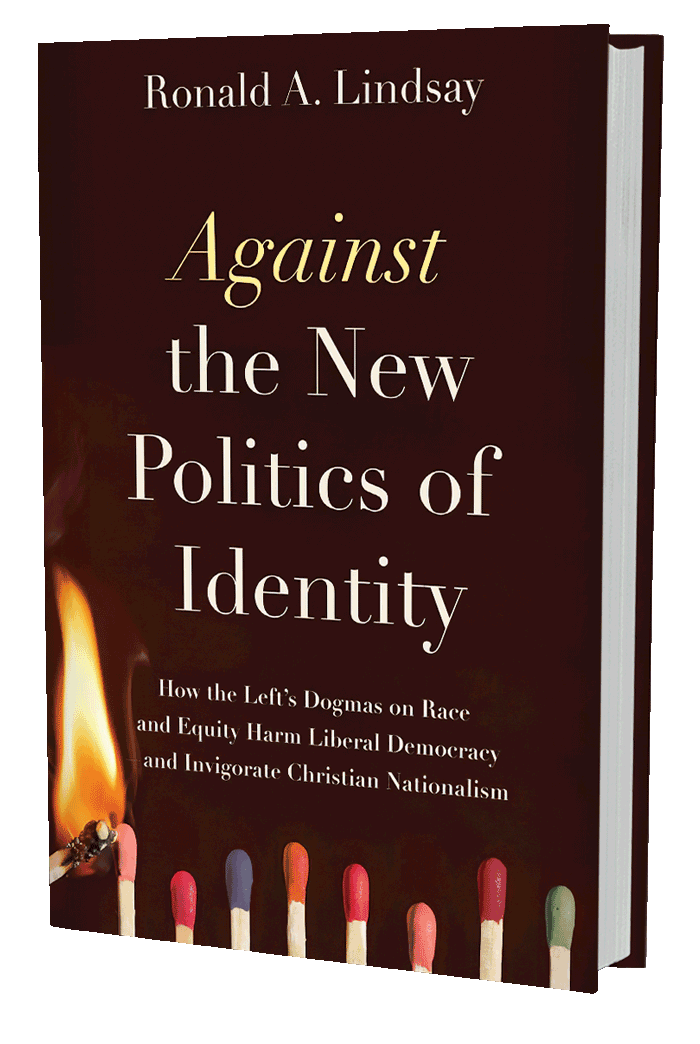
In Against the New Politics of Identity, philosopher Ronald A. Lindsay offers a sustained criticism of the far-reaching cultural transformation occurring across much of the West by which individuals are defined primarily by their group identity, such as race, ethnicity, gender identity, and sexual orientation. Driven largely by the political Left, this transformation has led to the wholesale grouping of individuals into oppressed and oppressor classes in both theory and practice. He warns that the push for identity politics on the Left predictably elicits a parallel reaction from the Right, including the Right’s own version of identity politics in the form of Christian nationalism. As Lindsay makes clear, the symbiotic relationship that has formed between these two political poles risks producing even deeper threats to Enlightenment values and Western democracy. If we are to preserve a liberal democracy in which the rights of individuals are respected, he concludes, the dogmas of identity politics must be challenged and refuted. Against the New Politics of Identity offers a principled path for doing so.
Dr. Ronald Lindsay, a philosopher (PhD, Georgetown University) and lawyer (JD, University of Virginia) is the author of The Necessity of Secularism and Future Bioethics. Although his non-fiction works focus on different topics, two threads unite them: Lindsay’s gift for thinking critically about accepted narratives and his strong commitment to individual rights, whether it’s the right to assisted dying, the right to religious freedom, or the right of individuals to be judged on their own merit, as opposed to their group identity. In addition to his books, Lindsay has also written numerous philosophical and legal essays, including the entry on Euthanasia in the International Encyclopedia of Ethics. In his spare time, Lindsay plays baseball—baseball, not softball. The good news is he maintains a batting average near .300; the bad news is his fielding average is not much higher. A native of Boston, Ron Lindsay currently lives in Loudoun County, Virginia with his wife, Debra, where their presence is usually tolerated by their cat. His new book is: Against the New Politics of Identity: How the Left’s Dogmas on Race and Equity Harm Liberal Democracy and Invigorate Christian Nationalism.
Shermer and Lindsay discuss:
- Who is worse, the Left or the Right?
- Critical Race Theory (CRT)
- Diversity, Equity and Inclusion (DEI)
- identity politics: identity or politics?
- overt racism vs. systemic racism
- liberalism vs. illiberalism
- What is progressive? What is woke?
- What are the true motives of woke progressive leftists?
- How widespread is the problem of woke ideology?
- standpoint epistemology
- equality vs. equity
- race and class
- cancel culture on the political Left and Right
- Christian nationalism and its agenda
- abortion
- Why do Blacks make less money, own fewer and lower quality homes, work in less prestigious jobs, hold fewer seats in the Senate and House of Representatives, run fewer Fortune 500 companies, etc.?
Show Notes From the Skeptic article “Systemic Racism—Explained”
The article, by Mahzarin R. Banaji, Susan T. Fiske & Douglas S. Massey, appeared in Skeptic 27.3.
Race is baked into the history of the U.S. going back to colonial times and continuing through early independence when slavery was quietly written into the nation’s Constitution. Although the 13th, 14th, and 15th Amendments to the Constitution ended slavery and granted due process, equal protection, and voting rights to the formerly enslaved, efforts to combat systemic racism in the U.S. faltered when Reconstruction collapsed in the disputed election of 1876, which triggered the withdrawal of federal troops from the South.
From 1876 to 1900, 90 percent of all African Americans lived in the South and were subject to the dictates of the repressive Jim Crow system; 83 percent lived in poor rural areas, occupying ramshackle dwellings clustered in small settlements in or near the plantations where they worked.
Between 1900 and 1970, millions of African Americans left the rural South in search of better lives in industrializing cities throughout the nation. As a result of this migration, by 1970 nearly half of all African Americans had come to live outside the South, 90 percent in urban areas. It was during this period of Black urbanization that the ghetto emerged as a structural feature of American urbanism, making Black residential segregation into the linchpin of a new system of racial stratification that prevailed throughout the U.S. irrespective of region.
In 1924, the National Association of Real Estate Brokers adopted a code of ethics stating that “a Realtor should never be instrumental in introducing into a neighborhood a character of property or occupancy, members of any race or nationality, or any individuals whose presence will clearly be detrimental to property values in that neighborhood”
Redlining through the 1960s…
By 1970, high levels of Black residential segregation were universal throughout metropolitan America. As of 1970, 61 percent of Black Americans living in US metropolitan areas lived under hypersegregation, a circumstance unique to Americans. Although in theory, segregation should have withered away after the Civil Rights Era, it has not.
In 2010, the average index of Black–White segregation remained high and a third of all Black metropolitan residents continued to live in hypersegregated areas. This reality prevails despite the outlawing of racial discrimination in housing (the 1968 Fair Housing Act) and lending (the 1974 Equal Credit Opportunity Act and the 1977 Community Reinvestment Act).
In the early 1960s, more than 60 percent of White Americans agreed that Whites have a right to keep Blacks out of their neighborhoods. By the 1980s the percentage had dropped to 13 percent.
Although overt discrimination in housing and lending has clearly declined in response to legislation, covert discrimination continues. Rental and sales agents today are less likely to respond to emails from people with stereotypically Black names or to reply to phone messages left by speakers who “sound Black.” A recent meta-analysis of 16 experimental housing audit studies and 19 lending analyses conducted since 1970 revealed that sharp racial differentials in the number of units recommended by realtors and inspected by clients have persisted and that racial gaps in loan denial rates and borrowing cost have barely changed in 40 years.
Audit studies, conducted across the social and behavioral sciences, include a subset of resume studies in which researchers send the same resume out to apply for jobs, but change just one item: the candidate’s name is Lisa Smith or Lakisha Smith. Then, they wait to see who gets the callback. The bias is clear: employers avoid “Black-sounding” names.
No other group in the history of the U.S. has ever experienced such intense residential segregation in so many areas and over such a long period of time.
If you enjoy the podcast, please show your support by making a $5 or $10 monthly donation.
TAGS: abortion, cancel culture, Christian nationalism, critical race theory, democracy, diversity, equality, equity, ethnicity, gender identity, identity politics, illiberalism, inclusion, liberalism, political extremism, race, Science Salon, sexual orientation, systemic racism, The Michael Shermer Show, wokenessAutism’s Cult of Redemption:
My Adventure Searching for Help for My Son’s Autism Diagnosis in the World of Alternative Medicine & Anti-Vaxxers
My Adventure Searching for Help for My Son’s Autism Diagnosis in the World of Alternative Medicine & Anti-Vaxxers
A pediatric neurologist at Boston Children’s Hospital diagnosed my son, Misha, with autism spectrum disorder at age three. At Massachusetts General Hospital, another pediatric neurologist answered my call for a second opinion only to rebuff my hope for a different one. “I did not find him to be very receptive to testing,” the expert sighed. Both neurologists observed that Misha didn’t respond to their request to identify colors, body parts, or animals, that he averted his eyes from theirs, that he pawed their examination table when he didn’t flap his arms. Autism, the doctors said, constituted a lifelong condition. Medical science didn’t understand its causes or cures, and scarcely comprehended the limits of its woes.
How could the neurologists deduce such a bleak judgment from 90 minutes in the bell jar of their examination rooms? If they knew so little about autism, then how could they gavel down a life sentence? I remembered reading somewhere that a properly trained neurologist ought to be able to argue both for and against any single diagnosis in a stepwise process of elimination. I opened the Diagnostic and Statistical Manual of Mental Disorders (DSM), leafed to the entry under autism, and plucked out of its basket several inculpating symptoms. Aggrieved, I sought out the Handbook of Differential Diagnosis, a companion volume, and underlined an admonitory passage: “Clinicians typically decide on the diagnosis within the first five minutes of meeting the patient and then spend the rest of the time during their evaluation interpreting (and often misinterpreting) elicited information through this diagnostic bias.” Now what?
As an educated citizen of progressive Cambridge, Massachusetts, I consumed large volumes of such second-hand, semi-digested information. I felt that I should, and believed that I could, develop my own, independent judgment about Misha’s condition. I would do my own research, and I would draw my own conclusions based on what I learned.
These virtues turned out to be constituent features of my error. My skepticism and sense of responsibility blended with my stubbornness as I struggled to evaluate a welter of “holistic” attitudes about medicine and health. Several fixed ideas confronted me. Autism, I read, is neither the psychopathology listed in the DSM nor the organic twist of disease supposed by neurologists. Autism, these alternative sources explained, is one among an epidemic of preventable chronic illnesses that American children contract from toxins in the environment. Holistic therapy, according to another, contains the requisite resources. Vitamin therapy, homeopathy, and antifungal treatment could heal children like Misha of their injuries. CONTINUE READING THIS POST…
TAGS: alternative medicine, Andrew Wakefield, anti-vaxxers, autism, biochemistry, charlatans, chronic illness, education, homeopathy, homotoxicology, immunology, naturopathy, neurological disorders, psychiatric diagnosisSeth Stephens-Davidowitz — What Determines Who Succeeds in the NBA?
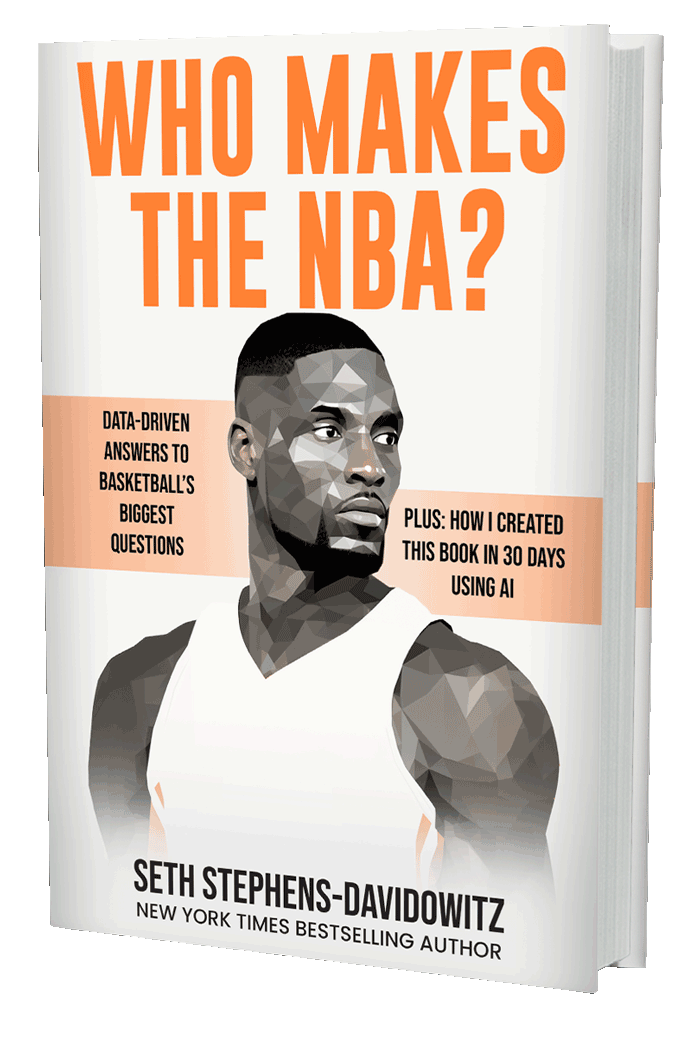
Former Google data scientist and bestselling author of Everybody Lies Seth Stephens-Davidowitz turns his analytic skills to the NBA.
Seth Stephens-Davidowitz is a contributing op-ed writer for the New York Times, a lecturer at The Wharton School, and a former Google data scientist. He received a BA from Stanford and a PhD from Harvard. He is the author of Everybody Lies: Big Data, New Data, and What the Internet Can Tell Us About Who We Really Are and Don’t Trust Your Gut: Using Data to Get What You Really Want in Life.
Shermer and Stephens-Davidowitz discuss:
- how he used AI to help write this book
- players systematically undervalued in the draft
- Are clutch shooters born or made?
- the percent of 7-footers in the NBA
- why tall NBA players are worse athletes than short NBA players
- the greatest NBA players adjusted for height
- names as proxies for success (or not)
- why some countries produce so many more NBA players than others
- who would be the best NBA player of all time if every player were the same height
- What percent genetic is basketball talent? And how does this compare to other sports?
- What advantages do NBA player fathers pass on to their sons?
- How much do NBA coaches matter and what do they do?
- Will any time win 11 NBA titles like Bill Russell’s Celtics did?
- why no one hits .400 in baseball any more
- Six sigma in sports and life
- nature/nurture in sports and life
- In a population of 8 billion today compared to centuries past, where are all the Mozarts, Beethovens, Da Vincis, Newtons, Darwins, etc.?
- the Moneyball revolution in sports
- how to apply the moneyball system in life
- What makes people happy?
- How much do good looks matter?
- How much does height and competent faces influence elections?
If you enjoy the podcast, please show your support by making a $5 or $10 monthly donation.
TAGS: artificial intelligence, genetics, happiness, heredity, nature versus nurture, NBA, Science Salon, sports, The Michael Shermer ShowJessica Schleider — How to Build Meaningful Moments that Can Transform Your Mental Health
If you’ve ever wanted mental health support but haven’t been able to get it, you are not alone.
In fact, you’re part of the more than 50% of adults and more than 75% of young people worldwide with unmet psychological needs. Maybe you’ve faced months-long waiting lists, or you’re not sure if your problems are ‘bad enough’ to merit treatment? Maybe you tried therapy but stopped due to costs or time constraints? Perhaps you just don’t know where to start looking? The fact is, there are infinite reasons why mental health treatment is hard to get. There’s an urgent need for new ideas and pathways to help people heal.
Little Treatments, Big Effects integrates cutting-edge psychological science, lived experience narratives and practical self-help activities to introduce a new type of therapeutic experience to audiences worldwide: single-session interventions. Its chapters unpack why systemic change in mental healthcare is necessary; the science behind how single-session interventions make it possible; how others have created ‘meaningful moments’ in their recovery journeys (and how you can, too); and how single-session interventions could transform the mental healthcare system into one that’s accessible to all.
Jessica L. Schleider, Ph.D. is an American psychologist, author, and an associate professor of Medical Social Sciences at Northwestern University. She is the lab director of the Lab for Scalable Mental Health. She completed her PhD in Clinical Psychology at Harvard University and her Doctoral Internship in Clinical and Community Psychology at Yale School of Medicine. She has received numerous scientific awards for her work in this area and her work is frequently featured in major media outlets (Wall Street Journal, The Atlantic, Washington Post). In 2020, she was selected as one of Forbes Magazine’s ‘30 Under 30’ in Healthcare. She has developed six evidence-based, single-session mental health programmes, which have served more than 40,000 people to date. She is the author of The Growth Mindset Workbook for Teens and co-editor of the Oxford Guide to Brief and Low Intensity Interventions for Children and Young People. Her new book is Little Treatments, Big Effects: How to Build Meaningful Moments That Can Transform Your Mental Health.
Shermer and Schleider discuss:
- her own experience with mental illness in an eating disorder
- 80% of people meet criteria for a mental illness at some point in their life
- What is the goal of therapy?
- navigating therapy modalities, access, payments, insurance, etc
- What prevents people from getting the mental health help they need?
- a brief history of asylums, institutions, deinstitutionalization and othering of mental healthcare
- disease model of mental illness
- What are outcome measures to test different therapies? “Works”?
- traditional therapy vs. single-session interventions
- growth mindset: personality, academic performance and personal outcomes can be changed if we treat setbacks as opportunities to grow and improve
- Cognitive Behavior Therapy (CBT)
- You don’t have to feel ready for recovery to take steps towards it.
- mental health issues that can be addressed through single session interventions: eating disorders, anxiety disorders, depression, suicidality, ADHD, substance/alcohol use disorder, OCD, self-injury
- difference between goals and values (wellness/health, family, compassion/helping, wisdom/education, relationships/kinship, joy/pleasure, spirituality/religion, perseverance, independence, community
- action brings change.
If you enjoy the podcast, please show your support by making a $5 or $10 monthly donation.
TAGS: ADHD, alcoholism, anxiety, cognitive behavior therapy, depression, disease, eating disorders, growth mindset, health, mental health, psychology, Science Salon, The Michael Shermer Show, therapyYour Microbiome & Your Health:
Prebiotics and Postbiotics — The Good, the Bad, and the Bugly
Prebiotics and Postbiotics — The Good, the Bad, and the Bugly
The human colon may represent the most biodense ecosystem in the world. Though many may believe that our stool is primarily made up of undigested food, about 75 percent is pure bacteria—trillions and trillions, in fact, about half a trillion bacteria per teaspoon.
Do we get anything from these trillions of tenants taking up residence in our colon, or are they just squatting? They pay rent by boosting our immune system, making vitamins for us, improving our digestion, and balancing our hormones. We house and feed them, and they maintain and protect their house, our body. Prebiotics are what feed good bacteria. Probiotics are the good bacteria themselves. And postbiotics are what our bacteria make.
Our gut bacteria are known as a “forgotten organ,” as metabolically active as our liver and weighing as much as one of our kidneys. They may control as many as one in ten metabolites in our bloodstream. Each one of us has about 23,000 genes, but our gut bacteria, collectively, have about three million. About half of the cells in our body are not human. We are, in effect, a superorganism, a kind of “human-microbe hybrid.”
Having coevolved with us and our ancestors for millions of years, the relationship we have with our gut flora is so tightly knit as to affect most of our physiological functions. Yet our microbiome is probably the most adaptable component of our body. Gut bugs like Escherichia coli (E. coli) can divide every twenty minutes. The more than ten trillion bugs we churn out every day can therefore rapidly respond to changing life conditions. Every meal, we have the opportunity to nudge them in the right direction. CONTINUE READING THIS POST…
TAGS: aging, antibiotics, bacteria, centenarians, digestion, dysbiosis, fiber, gut biome, health, human longevity, immune system, immunology, inflammation, microbiome, postbiotics, prebiotics, probioticsKatherine Brodsky — How to Find and Free Your Voice in the Age of Outrage
As a society we are self-censoring at record rates. Say the wrong thing at the wrong moment to the wrong person and the consequences can be dire. Think that everyone should be treated equally regardless of race? You’re a racist who needs to be kicked out of the online forum that you started. Believe there are biological differences between men and women? You’re a sexist who should be fired with cause. Argue that people should be able to speak freely within the bounds of the law? You’re a fascist who should be removed from your position of authority. When the truth is no defense and nuance is seen as an attack, self-censorship is a rational choice. Yet, our silence comes with a price. When we are too fearful to speak openly and honestly, we deprive ourselves of the ability to build genuine relationships, we yield all cultural and political power to those with opposing views, and we lose our ability to challenge ideas or change minds, even our own.
In No Apologies, Katherine Brodsky argues that it’s time for principled individuals to hit the unmute button and resist the authoritarians among us who name, shame, and punish. Recognizing that speaking authentically is easier said than done, she spent two years researching and interviewing those who have been subjected to public harassment and abuse for daring to transgress the new orthodoxy or criticize a new taboo. While she found that some of these individuals navigated the outrage mob better than others, and some suffered worse personal and professional effects than others, all of the individuals with whom she spoke remain unapologetic over their choice to express themselves authentically. In sharing their stories, which span the arts, education, journalism, and science, Brodsky uncovers lessons for all of us in the silenced majority to push back against the dangerous illiberalism of the vocal minority that tolerates no dissent— and to find and free our own voices.
Katherine Brodsky is a journalist, author, essayist and commentator who has been taking an especially keen interest in emerging technologies and their impact on society. She has contributed to publications such as Variety, the Washington Post, WIRED, The Guardian, Esquire, Newsweek, Mashable, and many others. Over the years she has interviewed a diverse range of intriguing personalities including numerous Oscar, Emmy, Tony, Pulitzer, and Nobel Prize winners and nominees—including the Dalai Lama.
Shermer and Brodsky discuss:
- What it’s like growing up Jewish in the Soviet Union and Israel
- Why the Jews
- Why liberals (or progressives) no longer defend free speech
- Cancel culture: data and anecdotes
- Is Cancel Culture an imagined moral panic?
- Cancel Culture on the political Left
- Cancel Culture on the political Right
- Social media and Cancel Culture
- Free speech law vs. free speech norms
- Pluralistic Ignorance and the spiral of silence
- Solutions to cancel culture
- Identity politics
- Cancel culture, witch crazes, and virtue signaling
- Free speech, hate speech and slippery slopes
- How to stand up to cancel culture.
If you enjoy the podcast, please show your support by making a $5 or $10 monthly donation.
TAGS: cancel culture, censorship, free speech, identity politics, moral panic, pluralistic ignorance, politics, Science Salon, self-censorship, social media, The Michael Shermer Show, virtue signaling, witch crazeBrian Klaas — Fluke: Chance, Chaos, and Why Everything We Do Matters
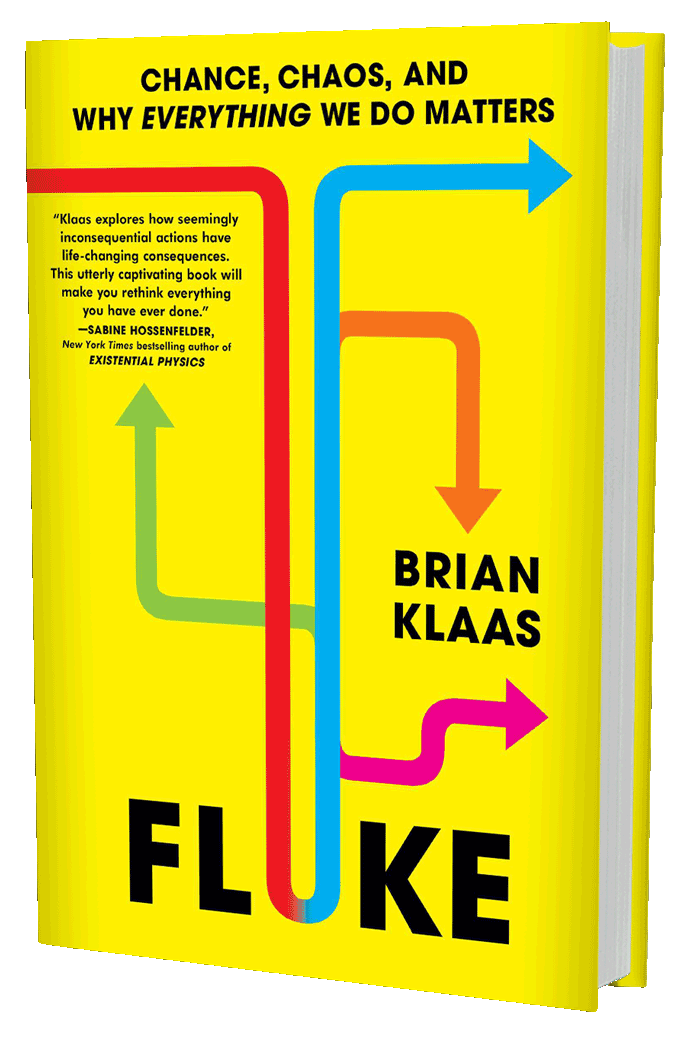
If you could rewind your life to the very beginning and then press play, would everything turn out the same? Or could making an accidental phone call or missing an exit off the highway change not just your life, but history itself? And would you remain blind to the radically different possible world you unknowingly left behind?
In Fluke, myth-shattering social scientist Brian Klaas dives deeply into the phenomenon of random chance and the chaos it can sow, taking aim at most people’s neat and tidy storybook version of reality. The book’s argument is that we willfully ignore a bewildering truth: but for a few small changes, our lives—and our societies—could be radically different.
Offering an entirely new lens, Fluke explores how our world really works, driven by strange interactions and apparently random events. How did one couple’s vacation cause 100,000 people to die? Does our decision to hit the snooze button in the morning radically alter the trajectory of our lives? And has the evolution of humans been inevitable or are we simply the product of a series of freak accidents?
Drawing on social science, chaos theory, history, evolutionary biology, and philosophy, Klaas provides a brilliantly fresh look at why things happen—all while providing mind-bending lessons on how we can live smarter, be happier, and lead more fulfilling lives.
Brian Klaas grew up in Minnesota, earned his DPhil at Oxford, and is now a professor of global politics at University College London. He is a regular contributor for The Washington Post and The Atlantic, host of the award-winning Power Corrupts podcast, and frequent guest on national television. Klaas has conducted field research across the globe, interviewing despots, CEOs, torture victims, dissidents, cult leaders, criminals, and everyday power abusers. He has also advised major politicians and organizations including NATO, the European Union, and Amnesty International. His previous book, for which he appears on this podcast, was Corruptible: Who Gets Power and How it Changes Us. His new book is Fluke: Chance, Chaos and Why Everything We Do Matters. You can find him at BrianPKlaas.com and on X @brianklaas.
Shermer and Klaas discuss:
- contingency and necessity/convergence
- chance and randomness
- complexity and chaos theory
- Jorge Luis Borges “The Garden of Forking Paths”
- self-organized criticality
- limits of probability in a complex, ever-changing world
- frequency- vs. belief-type probability
- ceteris paribus, or “all else being equal” but things are never equal
- economic forecasting
- free will, determinism, and compatibilism
- Holy Grail of Causality
- Easy Problem of Social Research and the Hard Problem of Social Research
- Was the original theory wrong, or did the world change?
- When Clinton lost, Silver pointed to his model as a defense: 71.4 percent isn’t 100 percent! There was nearly a 30 percent chance of Clinton losing in the model, so the model wasn’t wrong—it was just something that would happen nearly a third of the time!
- Special Order 191 and the turning point of the Civil War
- Implicit in the baby Hitler thought experiment is the idea that without Hitler the Nazis wouldn’t rise to power in Germany, World War II wouldn’t happen, and the Holocaust would be avoided. It therefore assumes that Hitler was the sole, or at least the crucial, cause of those events. Many historians would take issue with that viewpoint, arguing that those cataclysms were all but inevitable. Hitler might have affected some outcomes, they’d say, but not the overall trajectory of events. The Nazis, the war, and the genocide were due to larger factors than just one man.
- weak-link problem
- complex world defined by tipping points, feedback loops, increasing returns, lock-in, emergence, and self-organized criticality
- QWERTY and path dependency, Betamax vs. VHS, cassette v. CD v. streaming.
If you enjoy the podcast, please show your support by making a $5 or $10 monthly donation.
TAGS: causality, chaos theory, choice, compatibilism, convergence, determinism, fluke, free will, necessity, probability, randomness, Science Salon, self-organized criticality, statistics, The Michael Shermer Show, weak-link problemLeonardo da Vinci & Albert Einstein:
Could the Renaissance Genius Have Grasped the Foundational Concepts of General Relativity?
Could the Renaissance Genius Have Grasped the Foundational Concepts of General Relativity?
Leonardo da Vinci was a man of many talents. He was one of the few individuals to have made contributions to both the arts and science. His work extends to civil engineering, chemistry, geology, geometry, hydrodynamics, mathematics, mechanical engineering, optics, physics, pyrotechnics, warfare, and zoology.
Da Vinci was one of the best artists of his generation and many of his paintings are greatly admired today and command astronomical prices (his Salvator Mundi fetched the highest auction price ever). He was also an extraordinary illustrator, leaving thousands of manuscripts full of drawings of machines, fluid mechanics, humans, and many other topics. In addition, he was also a sculptor, architect, and more. As the type specimen of a Renaissance man, he put his mind to many different subjects, and he excelled at most of them. He was generally considered a genius by his contemporaries. In addition to all of this, he was described as a handsome and charming man, who was able to convince a whole room of the feasibility of something impossible.1 However, as it is sometimes said of promising but lazy children, some said that he would have been capable of even more accomplishments had he put his focus on them for longer and worked harder.
Revealingly, in his time, Leonardo was not considered to be at the same level as Michelangelo or even Raphael, perhaps because his notebooks were not published until much later. However, today many consider him superior to all his peers and—in a few extreme cases—some people fall into what we might call the “cult of Leonardo,” whose adherents believe that his genius was almost superhuman. CONTINUE READING THIS POST…
TAGS: acceleration, equivalence principle, Galileo, general relativity, gravity, Leonardo da Vinci, mathematics, Newton, strong equivalency, thought experimentChris Anderson — Infectious Generosity: The Ultimate Idea Worth Spreading
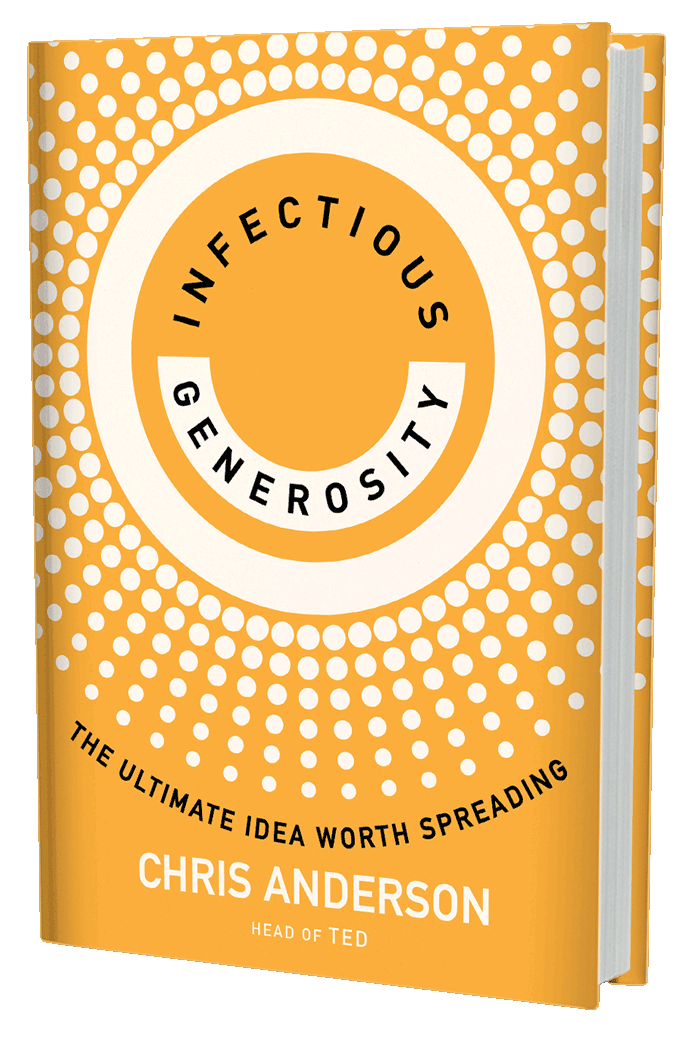
As head of TED, Chris Anderson has had a ringside view of the world’s boldest thinkers sharing their most uplifting ideas. Inspired by them, he believes that it’s within our grasp to turn outrage back into optimism. It all comes down to reimagining one of the most fundamental human virtues: generosity. What if generosity could become infectious generosity? Consider:
- how a London barber began offering haircuts to people experiencing homelessness—and catalyzed a movement
- how two anonymous donors gave $10,000 each to two hundred strangers and discovered that most recipients wanted to “pay it forward” with their own generous acts
- how TED itself transformed from a niche annual summit into a global beacon of ideas by giving away talks online, allowing millions access to free learning.
In telling these inspiring stories, Anderson has given us “the first page-turner ever written about human generosity” (Elizabeth Dunn). More important, he offers a playbook for how to embark on our own generous acts—whether gifts of money, time, talent, connection, or kindness—and to prime them, thanks to the Internet, to have self-replicating, even world-changing, impact.
Chris Anderson has been the curator of TED since 2001. His TED mantra—“ideas worth spreading”—continues to blossom on an international scale. He lives in New York City and London but was born in a remote village in Pakistan and spent his early years in India, Pakistan and Afghanistan, where his parents worked as medical missionaries. After boarding school in Bath, England, he went on to Oxford University, graduating in 1978 with a degree in philosophy, politics and economics. Chris then trained as a journalist, working in newspapers and radio, and founded Future Publishing that focused on specialist computer publications but eventually expanded into other areas such as cycling, music, video games, technology and design. He then built Imagine Media, publisher of Business 2.0 magazine and creator of the popular video game users website IGN, publishing some 150 magazines and websites and employed 2,000 people. This success allowed Chris’s nonprofit organization to acquire the TED Conference, then an annual meeting of luminaries in the fields of Technology, Entertainment and Design held in Monterey, California. He expanded the conference’s remit to cover all topics, and now has TED Fellows, the TED Prize, TEDx events, and the TED-Ed program offering free educational videos and tools to students and teachers. Astonishingly, TED talks have been translated into 100 languages and garner over 1 billion views a year. His new book is Infectious Generosity: The Ultimate Idea Worth Spreading.
Shermer and Anderson discuss:
- how his life turned out (genes, environment, luck)
- what makes TED successful while other platforms failed or stalled
- TED talks go public for free vs. paying customers
- power laws and giving: do 10% donate 90%?
- Amanda Parker gave away her music and asked people to pay: survival bias—how many people have tried this and failed?
- blogs, podcast, Substack … saturation markets
- changing business landscape of charging vs. giving away
- What makes things infectious?
- What is generosity? Idea vs. character trait—virtue ethics
- altruism and reciprocal altruism, reputation and self-reputation
- religion and morality: do we need an “eye in the sky” to be good?
- Can people be good without God?
- philanthropy: 2700 billionaires have more wealth than 120 poorest countries combined
- giving & philanthropy seems like a rich-person’s game. How can average people participate?
- incentivizing giving as a selfish act: why “pay it forward”?
- public vs. private solutions to social problems
- How can one person make a difference?
- The Mystery Experiment
- Ndugu Effect
- donor fatigue
- Giving What We Can.
If you enjoy the podcast, please show your support by making a $5 or $10 monthly donation.
TAGS: altruism, billionaires, charity, generosity, morality, philanthropy, reciprocal altruism, Science Salon, survival bias, The Michael Shermer Show, virtue ethicsEducational Testing and the War on Reality & Common Sense
The practice of discussing educational testing in the same sentence with the term “war” is not necessarily new or original.1 What may be new to readers, however, is to characterize current debates involving educational testing as involving a war against: (1) accurate perceptions about the way things really are (reality), and (2) sound judgment in practical matters (common sense).
Education, Testing, and the Real World
Education is compulsory in American society, and no one escapes testing—whether standardized or unstandardized—in their schooling experience, even before entering school. As newborns, infants are given Apgar scores to assess their overall health.2 When a child is ready to enter preschool, s/he may be assessed with a standardized test to determine school readiness in understanding basic concepts, cognitive and language development, and early academic achievement.
As children matriculate through the primary school years, they are required to pay attention to teacher lessons; resist natural impulses to fidget, talk out of turn, or bother one’s neighbor; complete worksheets quietly at one’s desk; complete and return homework assignments; and complete national or state-mandated standardized academic achievement tests that measure “what students know and can do.”3 In some cities, students must complete tests to determine eligibility for entrance into elite or specialty high schools,4 and students in some states must successfully complete tests in order to graduate high school.5 Well before students are scheduled to graduate, they have, until recently, been required to complete standardized college admissions tests in order for their applications to be competitive for colleges of their choice.6
Enter Basic Common Sense
When enough years are spent surrounded by age peers in schools, everyone—regardless of background, race, ethnicity, or socioeconomic status—intuitively understands that comparatively, some peers are intellectually smarter, other peers are roughly the same, and others are intellectually slower. These differences are most determinative of one’s overall level of academic achievement from kindergarten to high school graduation and beyond. Some pupils have a natural proclivity to be voracious readers and progress successfully through their academic programs much more quickly than others. They are able to grasp and understand difficult and abstract academic material more quickly, have a wide range of intellectual interests and hobbies, and are much more likely to be selected for admission to programs for the gifted and talented. These are generally the A and B students and tend to enroll in advanced foreign languages, trigonometry, pre-calculus, chemistry, and other advanced placement (AP) classes in high school. CONTINUE READING THIS POST…
TAGS: adversity, anti-testing, antiracism, correlation, cultural bias, education, inequality, privilege, racial diversity, racism, standardized testing, statisticsPaul Halpern — Extra dimensions, Other Worlds, and Parallel Universes
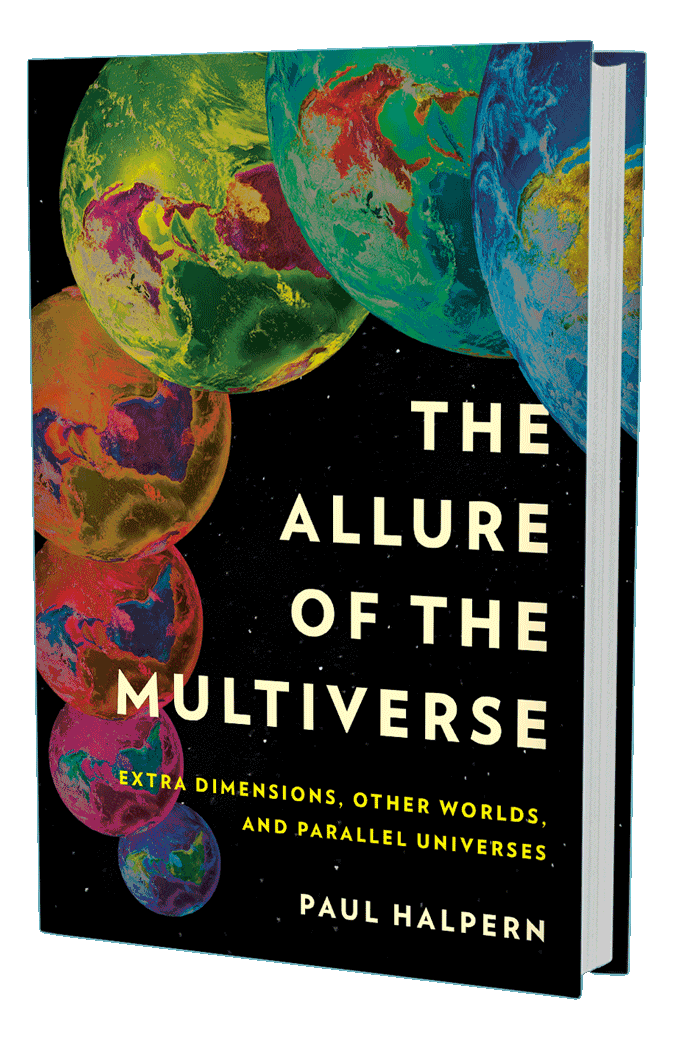
Our books, our movies—our imaginations—are obsessed with extra dimensions, alternate timelines, and the sense that all we see might not be all there is. In short, we can’t stop thinking about the multiverse. As it turns out, physicists are similarly captivated.
In The Allure of the Multiverse, physicist Paul Halpern tells the epic story of how science became besotted with the multiverse, and the controversies that ensued. The questions that brought scientists to this point are big and deep: Is reality such that anything can happen, must happen? How does quantum mechanics “choose” the outcomes of its apparently random processes? And why is the universe habitable? Each question quickly leads to the multiverse. Drawing on centuries of disputation and deep vision, from luminaries like Nietzsche, Einstein, and the creators of the Marvel Cinematic Universe, Halpern reveals the multiplicity of multiverses that scientists have imagined to make sense of our reality. Whether we live in one of many different possible universes, or simply the only one there is, might never be certain. But Halpern shows one thing for sure: how stimulating it can be to try to find out.
Dr. Paul Halpern is the author of 18 popular science books, exploring the subjects of space, time, higher dimensions, dark energy, dark matter, exoplanets, particle physics, and cosmology. The recipient of a Guggenheim Fellowship, a Fulbright Scholarship, and an Athenaeum Literary Award, he has contributed to Nature, Physics Today, Aeon, NOVA’s “The Nature of Reality” physics blog, and Forbes “Starts with a Bang!” He has appeared on numerous radio and television shows including “Future Quest,” “Science Friday,” “Radio Times,” “Coast to Coast AM,” “The Simpsons 20th Anniversary Special,” and C-SPAN’s “BookTV.” He appeared previously on the show for his book Synchronicity: The Epic Quest to Understand the Quantum Nature of Cause and Effect. His new book, The Allure of the Multiverse, describes the controversial history of higher dimensional and parallel universe schemes in science and culture. More information can be found at: allureofthemultiverse.com
Shermer and Halpern discuss:
- universe and multiverse meaning
- Is the multiverse science, metaphysics, or faith?
- theists claim the “multiverse” is just handwaving around the God answer
- types of multiverses
- many worlds interpretation of quantum mechanics?
- inflationary cosmology and eternal inflation
- Darwinian cosmology
- infinity and eternity
- multiple dimensions and the multiverse
- string theory and the multiverse
- cyclical universes and multiverses (the Big Bounce)
- Anthropic Principle (weak, strong, participatory)
- time travel and the multiverse
- sliding doors, contingency, and the multiverse.
If you enjoy the podcast, please show your support by making a $5 or $10 monthly donation.
TAGS: anthropic principle, contingency, eternity, extra dimensions, infinity, inflationary cosmology, multiverse, physics, quantum mechanics, reality, Science Salon, string theory, The Michael Shermer Show, time travelHow American Schools of Education Burked* Education in America’s Schools
Institutionalized experiments take a while to fail so fully as to be discredited. The 1917 Russian Revolution put its people “seventy years on the road to nowhere,” three generations of poverty, fear, and violence (as the news media, quoting protesters, declared in the regime’s last year).1 Poles who survived communism dismissed it as something that “looks good on paper.”
The situation with schools or colleges of education—a division within a university devoted to teaching its students to be teachers and school leaders, commonly called, “ed schools”—is not nearly so bad. While elite ed schools have been and often are steeped in the political/cultural ideology of the day, whatever that might be, non-elite ed schools are less radical. Most education professors at state universities bearing directional names, such as Southern Mississippi, North Texas, and Central Michigan—who train the bulk of teachers and principals—actually have worked in schools, an experience that tends to instill more pragmatism than ideology. Most educational leadership professors are former principals with backgrounds as athletic coaches, and accordingly less fans of Critical Theory than of the Friday Night Lights. Those with real-world experience have taught me the most about our schools.
Yet a skeptical examination of ed schools reveals a century-plus experiment that failed, harming millions of students, particularly the disadvantaged. The best education professors should go back to leading or teaching in schools rather than keeping afloat insular, often arrogant institutions. Especially as regards the teaching of reading, the failings of ed schools are painfully obvious and, unfortunately (and ironically), it is illiterate students who pay the price for their failure.
As the Chair in Leadership at the Department of Education Reform at the University of Alabama, it is my contention that American ed schools were bad from the beginning, spreading academic mediocrity and compliance mindsets that left K-12 educators ill-suited to resist the various deeply flawed fads and fallacies that came their way. Worse, long before the rest of higher education, ed schools succumbed to the lure of the big bottom line, focusing on raising revenue rather than mentoring young minds.
Yet you can’t replace something with nothing, so I will end my analysis with ideas about how we could have different and far better ed schools, in part by creating education markets, coupling school choice with varied alternatives for educator training and certification. CONTINUE READING THIS POST…
TAGS: education, education policy, educational reform, ideologyMichael Shellenberger Explains Government Censorship of Social Media
Michael Shellenberger explains the role of government agencies in social media censorship, his work on the Twitter files, and the differences between independent and mainstream journalism. PLUS: how to deal with the opioid epidemic, what we can do about homelessness, his take on January 6, George Floyd, UFOs and UAPs, and more. Recorded live in Santa Barbara, CA at the Skeptics Society 2023 conference.
If you enjoy the podcast, please show your support by making a $5 or $10 monthly donation.
TAGS: censorship, journalism, opioid epidemic, Science Salon, social media, The Michael Shermer Show, UFOs, unidentified aerial phenomenaWhy Education Policy and Practice Have Become Research-Free Zones
When you drive past any American school, you’ll see signs telling you to reduce your speed and declaring the area to be a “drug-free zone,” with draconian penalties for violators. While we can all agree on keeping drugs away from school children, drugs are not the only thing we keep out of schools. Unfortunately, when it comes to educational policy and practice, research findings have also found themselves banned from schools. Why is that?
The State of Education Research
Getting your measurements and calculations right matters immensely when building an airplane that is unlikely to crash or a building unlikely to collapse. In Turkey and Syria, when a 7.8 magnitude earthquake hit, outdated building methods contributed greatly to the death toll.1 Engineers and builders need to make sure that the evidence they bring to the table is factually correct. Once you leave the concrete world where accurate facts are prized—or at least clearly have consequences you can detect—things get a lot fuzzier. In the realm of social science, particularly education and policy research, it isn’t always clear to a policy maker, practitioner, or parent what constitutes good evidence, especially when experts disagree.
Does that mean that researchers in the social sciences and education don’t think they have accumulated important evidence? No. So, from the perspective of those who recognize the value of accumulated knowledge and research evidence, it’s confusing why those in education policy and practice don’t appear to listen to researchers or fail to use what is considered the “best evidence” to date on a particular topic. When he realized that most research doesn’t impact policy or practice, educational psychologist David Berliner lamented: “Once upon a time, early in my career, when the world seemed quite a bit simpler than it really is, I believed that my research, and that done by my fellow educational psychologists, would influence what happens in America’s classrooms and in teacher education. I believed in the model of research that famous researchers often espoused.”2 And that’s often the belief many graduate students from the social sciences initially hold, and that many distinguished scholars in their specific subfields still hold. Why?
Education is filled with fads and myths. Hot topics such as learning styles,3 multiple intelligences,4 grit,5 and mindset6 have, at best, only weak support, even though they continue to be trumpeted by the media and have become a part of the popular conversation. Though these are well-recognized examples, the history of education shows7, 8 that they are by no means exceptions. CONTINUE READING THIS POST…
TAGS: behavioral psychology, education policy, educational reform, evidence, fads, fallacies, intelligence, learning styles, myths, policy debate, policy reform, political polarization, politics, replication crisis, research, Research Practice Partnerships