The Skeptics Society & Skeptic magazine

Richard Paul

The Passing of a Critical Thinking Giant: Richard Paul (1937–2015)

Greg Hart | October 14, 2015

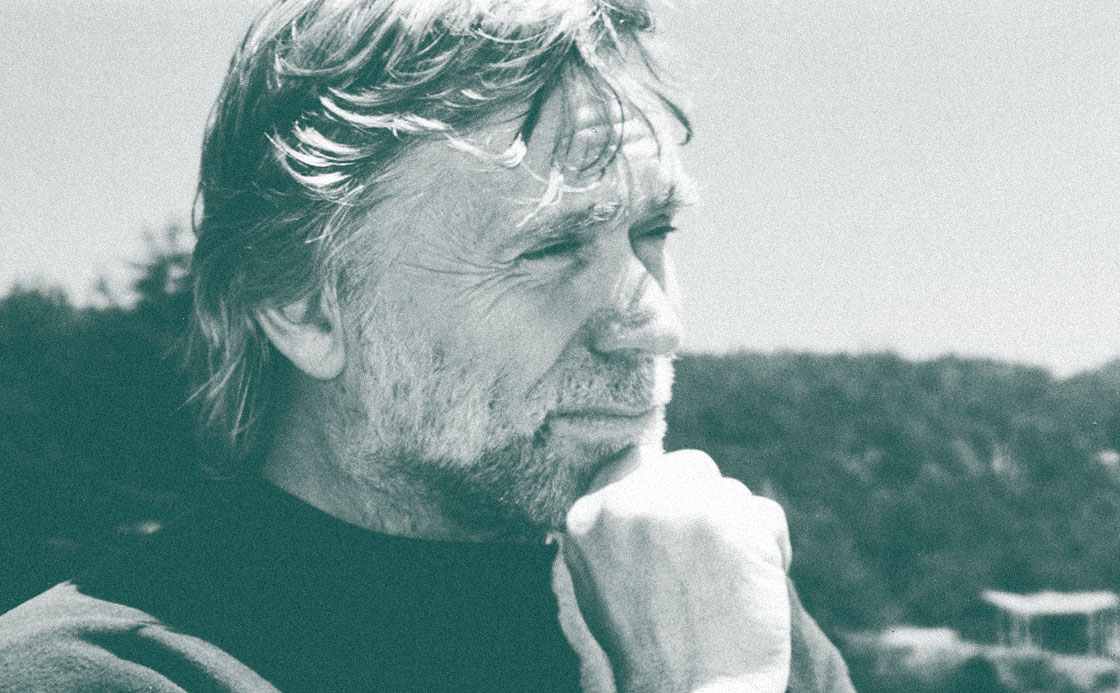
Greg Hart celebrates the life and memory of critical thinking giant Dr. Richard Paul (1937–2015) — the founder and iconic force behind the Foundation for Critical Thinking — who passed away on August 30, 2015 after a lengthy battle with Parkinson’s.


Ben Carson (photo by Gage Skidmore)

Brain Surgeon—or Brain Addled?

Donald Prothero | October 13, 2015

Neurosurgeon and Republican presidential candidate Ben Carson is skeptical of evolution and the big bang theory. In this article, Donald Prothero asks whether this is a reflection on education or religion.

The “God” Construct: A Testable Hypothesis for Unifying Science and Theology

Douglas J. Navarick | September 28, 2015

In this article from Skeptic magazine 20.3 (2015), California State University, Fullerton Psychology Professor Douglas J. Navarick presents the case that the current pattern of evidence for the origin of life is consistent with the interpretation that life started just once in one place and was not the result of random processes.

Photography by Ed Pastor, photo illustration by Pat Linse.

Fine-Tuning and the Multiverse

Victor J. Stenger | July 17, 2015

In this essay, as a follow-up to his book, The Fallacy of Fine-Tuning: Why the Universe Is Not Designed for Us (in which he showed that, based on our knowledge of this universe alone, divine fine-tuning claims are without merit), Victor J. Stenger brings the arguments up-to-date with a discussion of the eternal multiverse hypothesis. This article was published in Skeptic magazine issue 19.3 in 2014. Order this back issue.

Cow Tipping: The Most Urban of all Urban Legends

Pat Linse | July 1, 2015

In this article, written for children and first published in Junior Skeptic no. 5 (1999), Pat Linse discusses cow tipping: the most urban of all urban legends.

Top 10 Things to Know About Alternative Medicine

Skeptic | November 13, 2014

Harriet Hall M.D. discusses: alternative versus conventional medicine, flu fear mongering, chiropractic, vaccines and autism, placebo effect, diet, homeopathy, acupuncture, “natural remedies,” and detoxification… DOWNLOAD the free PDF

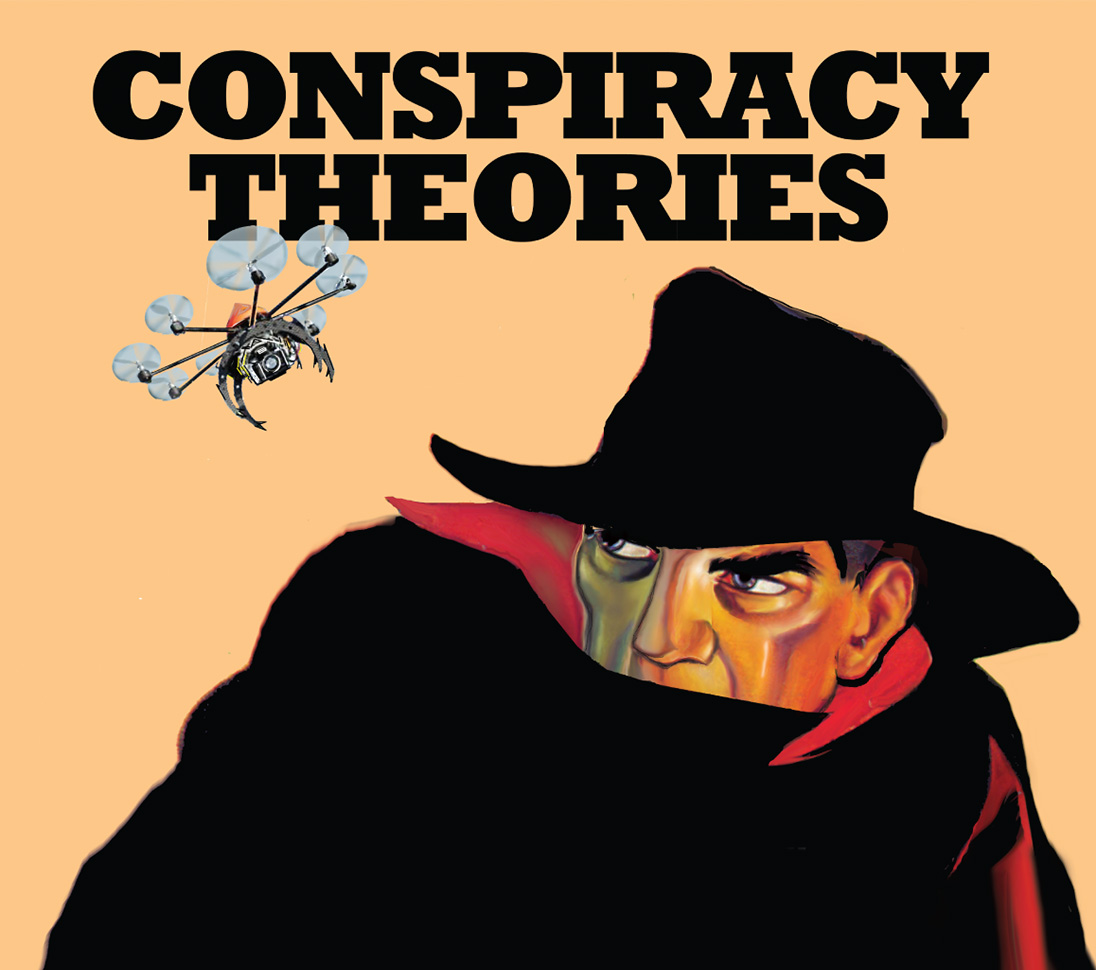
Conspiracy Theories: Who Believes Them, and Why? How Can You Determine if They are True or False?

Michael Shermer and Pat Linse | November 11, 2014

What is a conspiracy theory, why do people believe in them, and why do they tend to proliferate? Why does belief in one conspiracy correlate to belief in others? What are the triggers of belief, and how does group identity factor into it? How can one tell the difference between a true conspiracy and a false one? … Download the free PDF

Closer To Truth: Does Evil Refute God’s Existence?

Skeptic | July 4, 2014

Evil is a high hurdle for theists. Given the savagery of moral evil (what humans do to humans) and the horrors of natural evil (earthquakes, tsunamis, disease), how could an all-powerful and all-good God exist? Philosophers offer defenses (evil and God do not contradict) and theodicies (reasons why God allows evil). The problem is the sheer amount of evil. Robert Lawrence Kuhn interviews Michael Shermer, for CloserToTruth.com.

Top 10 Most Shared Articles of 2013

Skeptic | December 31, 2013

Here is a list of the top 10 most shared articles on skeptic.com from 2013.

JFK Conspiracy Theories at 50: How the Skeptics Got It Wrong and Why It Matters

David Reitzes | November 25, 2013

In this article from Skeptic Magazine issue 18.3 (2013), David Reitzes recounts some of the most durable myths and conspiracy theories surrounding JFK’s assassination, and reminds us that the job of a skeptic is to use critical thinking to properly assess the evidence, and to use our critical faculties to distinguish verifiable evidence from idle speculation, not to merely doubt for the sake of doubting.

The Science Behind Why People See Ghosts

Skeptic | November 20, 2013

Do you know someone who has had a mind altering experience? If so, you know how compelling they can be. A life can be changed or an entire religion founded on the basis of a single brain-generated hallucination. These phenomena are so powerful that throughout history seekers of knowledge have sought to induce them. They are one of the foundations of widespread belief in the paranormal. But as skeptics are well aware, accepting them as reality can be more than

Michael Shermer Reads Gettysburg Address

Skeptic | November 17, 2013

Michael Shermer commemorates, with his own personal reading, the 150th anniversary of U.S. President Abraham Lincoln’s Gettysburg Address — one of the most memorable speeches in America history, which Lincoln delivered on November 19, 1863.

Objectivity in Journalism: Should We Be Skeptical?

Alexandra Kitty | November 7, 2013

What is good journalism? The fundamentals of objective journalism have traditionally been the following: present the five Ws, get both sides of the story, and most important, keep your opinions to yourself. Journalistic fairness (i.e., getting both sides of the story) was created to ensure that journalists could present the news as neutrally as possible. But can it be done? In this article from Skeptic magazine 6.1, Alexandra Kitty examines the nature and challenges of journalistic objectivity.

Why People Believe Weird Things

Michael Shermer | October 3, 2013

In this 14-minute introduction to skepticism, Dr. Michael Shermer (Executive Director of the Skeptics Society) discusses why people believe weird things and elaborates on the power of belief systems. This lecture was delivered at the 2006 TED conference (Technology, Entertainment, Design) in Monterey, California.

Talking to the Dead: James Van Praagh Tested

Miklos Jako | July 26, 2013

James Van Praagh and other practitioners of so-called “channeling”—communicating with deceased people—have consistently avoided James Randi’s Million Dollar Challenge test to prove their psychic abilities. In this video, Miklos Jako, a knowledgeable layman, tests Van Praagh’s ability simply by having a session with him and analyzing what went on. The results, though not strictly scientific, are pretty conclusive, as well as entertaining.

Mr. Deity and the Flood

Skeptic | June 19, 2013

Mr. Deity discusses Noah’s flood with a geologist (Skeptic’s own Donald R. Prothero).

What happens after we die?

Skeptic | May 6, 2013

Michael Shermer discusses the belief in life after death.

The Sandy Hook Effect

Michael Shermer | May 3, 2013

On December 14, 2012, 20-year old Adam Lanza broke into Sandy Hook Elementary School in Newtown, CT, killing 20 children and six adults—and then himself—after first slaying his mother Nancy Lanza in their home. In this article from Skeptic magazine issue 18.1 (2013), Michael Shermer takes a look at why preventing highly improbable mass murders like that at Sandy Hook Elementary School is impossible, and discusses what social science research shows are the most reliable means to decreasing violence overall.

The Mass Murder Problem

David Hillshafer | May 2, 2013

Oklahoma City, Columbine, Virginia Tech, Sandy Hook. The list of mass murders in America grows and grows. Why? And what can we do about it? In this article, David Hillshafer has aggregated large amounts of data from reputable sources with an aim toward providing evidence-based suggestions for possible solutions.

James Randi on Quackery: and the Need for Science Education

Skeptic | January 24, 2013

James Randi addresses congressional representatives at the Rayburn Building, Washington, D.C., March 18th, 1999. This address appeared in Skeptic magazine volume 17, number 1 that year, in his regular column ’Twas Brillig….

PREVIOUS
 
NEXT
SKEPTIC • 3938 State St., Suite 101, Santa Barbara, CA, 93105-3114 • 1-805-576-9396 • Copyright © 1992–2024. All rights reserved • Privacy Policy