The Skeptics Society & Skeptic magazine

Benjamin Friedman — Religion and the Rise of Capitalism

In episode 162 of The Michael Shermer Show, Michael speaks with one of the nation’s preeminent experts on economic policy, Benjamin Friedman, about his new book Religion and the Rise of Capitalism — a major reassessment of the foundations of modern economic thinking that explores the profound influence of an until-now unrecognized force — religion.
Roy Richard Grinker — Nobody’s Normal: How Culture Created the Stigma of Mental Illness

For centuries, scientists and society cast moral judgments on anyone deemed mentally ill, confining many to asylums. In episode 161 of The Michael Shermer Show, Dr. Shermer speaks with anthropologist Dr. Roy Richard Grinker about his book Nobody’s Normal: How Culture Created the Stigma of Mental Illness which chronicles the progress and setbacks in the struggle against mental-illness stigma―from the 18th century, through America’s major wars, and into today’s high-tech economy.

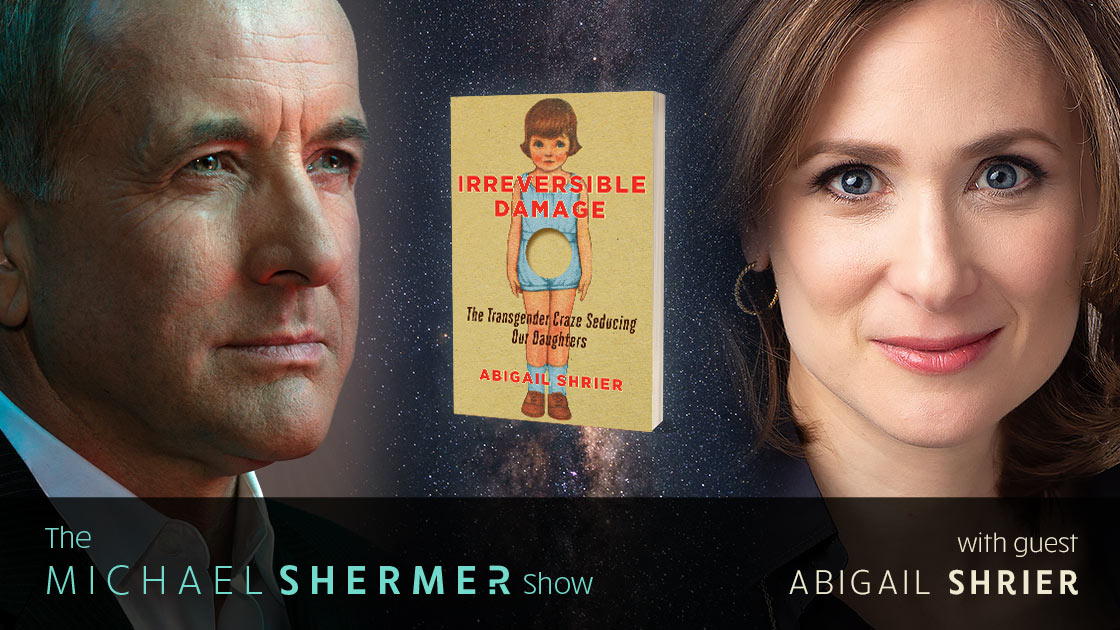
Abigail Shrier — Irreversible Damage: The Transgender Craze Seducing Our Daughters

Until just a few years ago, gender dysphoria — severe discomfort in one’s biological sex — was vanishingly rare (less than .01% of the population). In episode 160 Michael Shermer speaks with Abigail Shrier about her new book Irreversible Damage: The Transgender Craze Seducing Our Daughters in which she warns that this trend puts a generation of girls at risk.

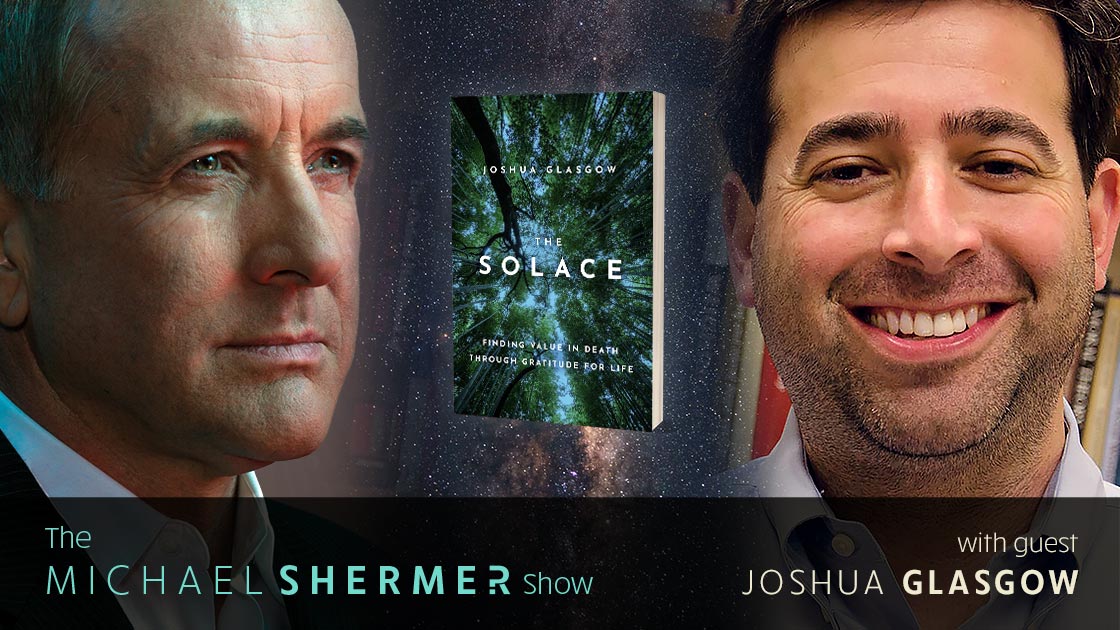
Joshua Glasgow — The Solace: Finding Value in Death Through Gratitude for Life

Shermer and Glasgow discuss: What does an atheist say to a dying person? • Ricky Gervais’ The Invention of Lying • being dead vs. dying • When is the “natural” time to die? • Is death worse for the young because they are losing more? • What would it really mean to live forever? • suicide • Does a terminus to life increase it’s meaning and value? • gratitude vs. solace.

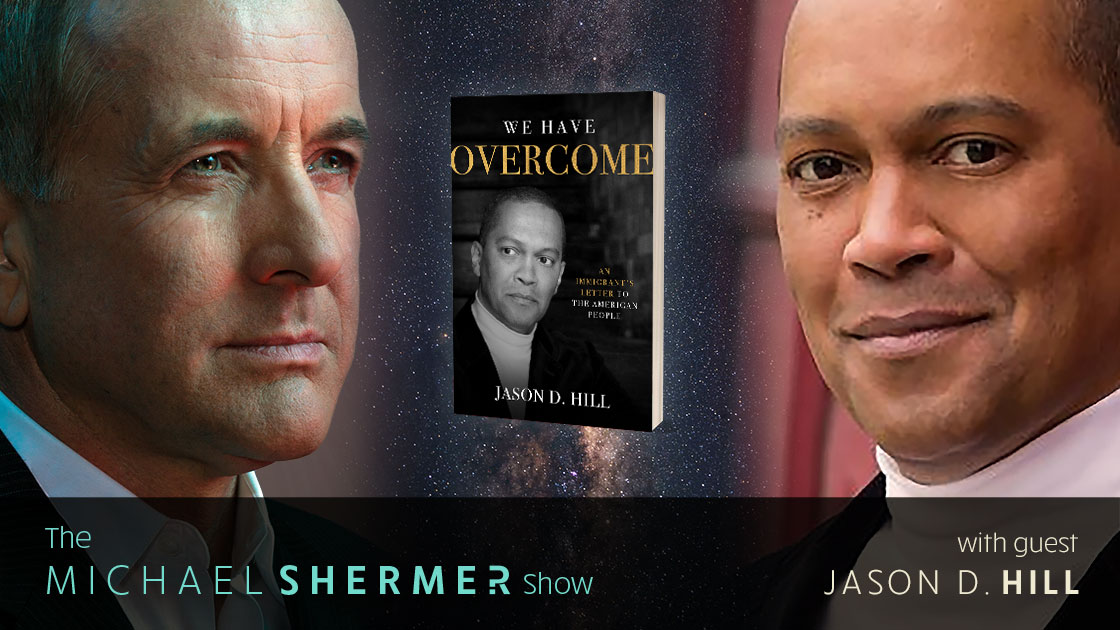
Jason D. Hill — We Have Overcome: An Immigrant’s Letter to The American People

In episode 158 Michael Shermer speaks with Jason D. Hill, a black immigrant from Jamaica, about his eloquent appreciation of the American Dream, and why his adopted nation remains the most noble experiment in enabling the pursuit of happiness.

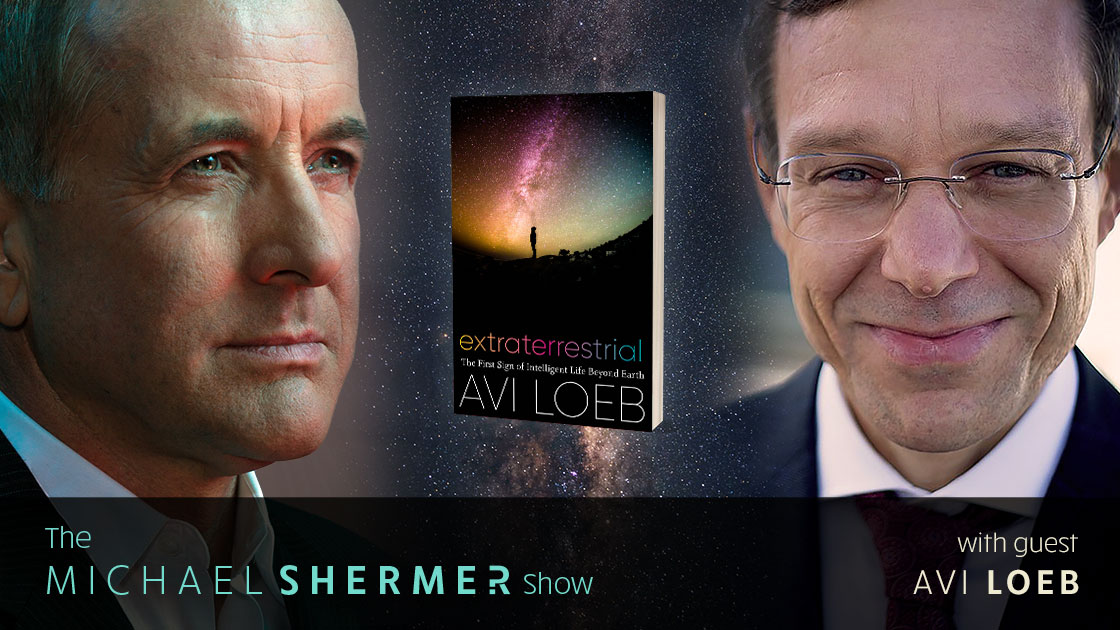
Avi Loeb — Extraterrestrial: The First Sign of Intelligent Life Beyond Earth

Shermer and Loeb discuss: anomalies in science and astronomy in particular • Galileo and Saturn • Signal Detection Theory • face on Mars • Is Oumuamua ETI in origin? • Intelligent Design • Carl Sagan and SETI • Law of Very Large Numbers • How many unknown knowns could account for Oumuamua? • Kip Thorne • gravitational waves • multiverse theory, and more…

Ayaan Hirsi Ali — Prey: Immigration, Islam, and the Erosion of Women’s Rights

Why are so few people talking about the eruption of sexual violence and harassment in Europe’s cities? In episode 156 of The Michael Shermer Show, Dr. Shermer speaks with Ayaan Hirsi Ali, a Somali-born women’s rights activist, free speech advocate and New York Times best selling author, about her new book Prey: Immigration, Islam, and the Erosion of Women’s Rights.

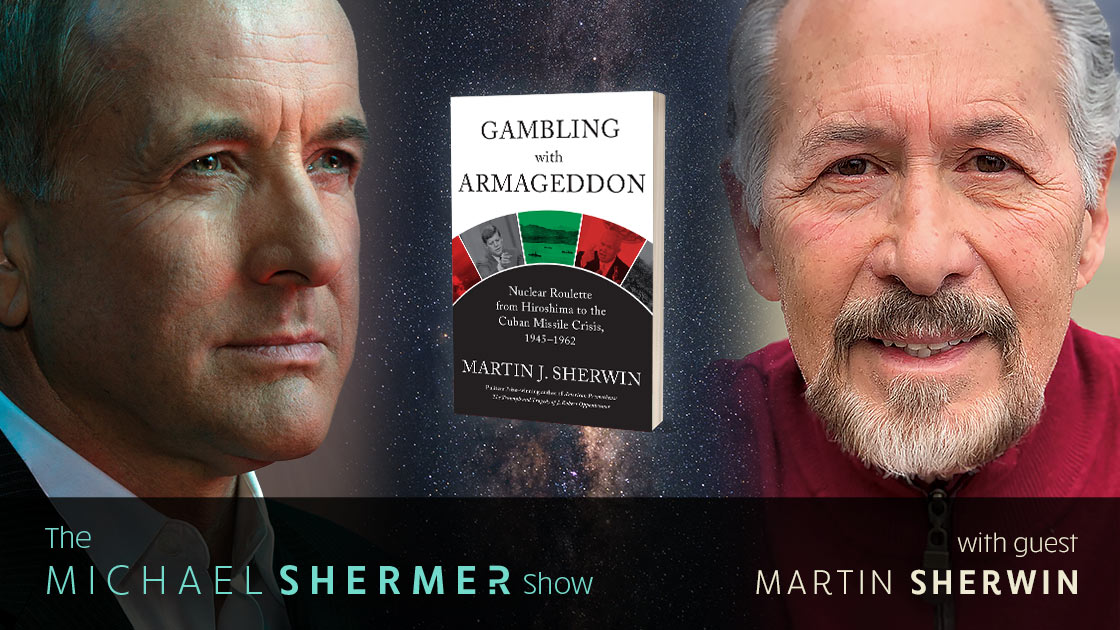
Martin Sherwin — Gambling with Armageddon: Nuclear Roulette from Hiroshima to The Cuban Missile Crisis, 1945–1962

In episode 155 of The Michael Shermer Show, Dr. Shermer speaks with Martin Sherwin, the Pulitzer Prize-winning author of American Prometheus: The Triumph and Tragedy of J. Robert Oppenheimer, about his new book Gambling with Armageddon, the definitive history of the Cuban Missile Crisis and its potential for nuclear holocaust, in a wider historical narrative of the Cold War — how such a crisis arose, and why at the very last possible moment it didn‘t happen.

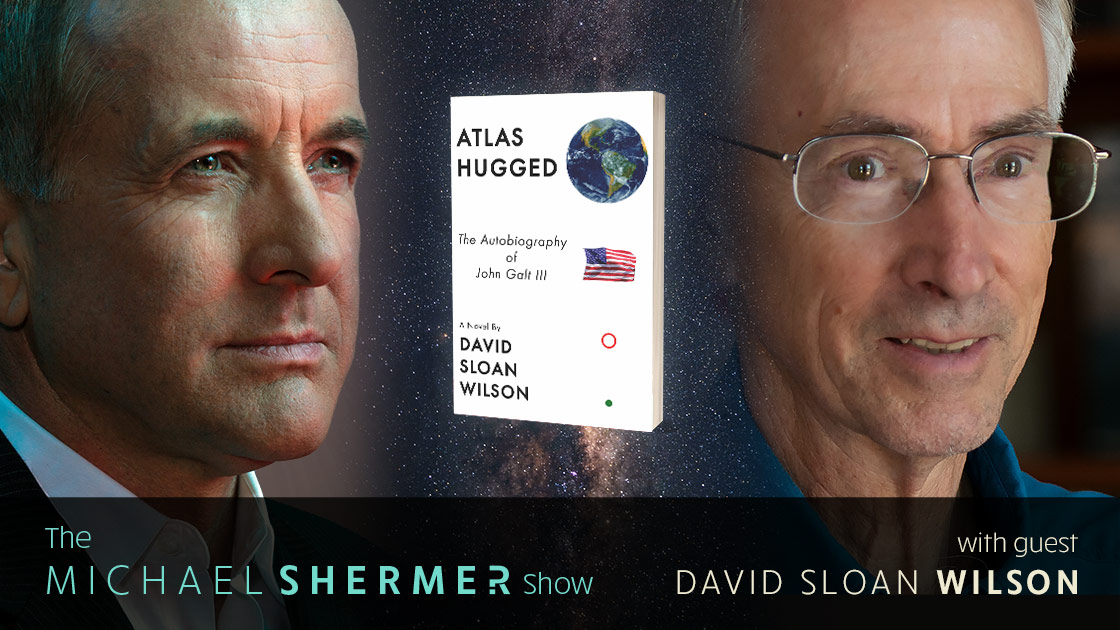
David Sloan Wilson — Atlas Hugged: The Autobiography of John Galt III

In episode 154 of The Michael Shermer Show, Michael speaks with renowned evolutionary theorist David Sloan Wilson about his new novel Atlas Hugged: The Autobiography of John Galt III — a devastating critique of Ayn Rand’s philosophy of Objectivism and its impact on the world.

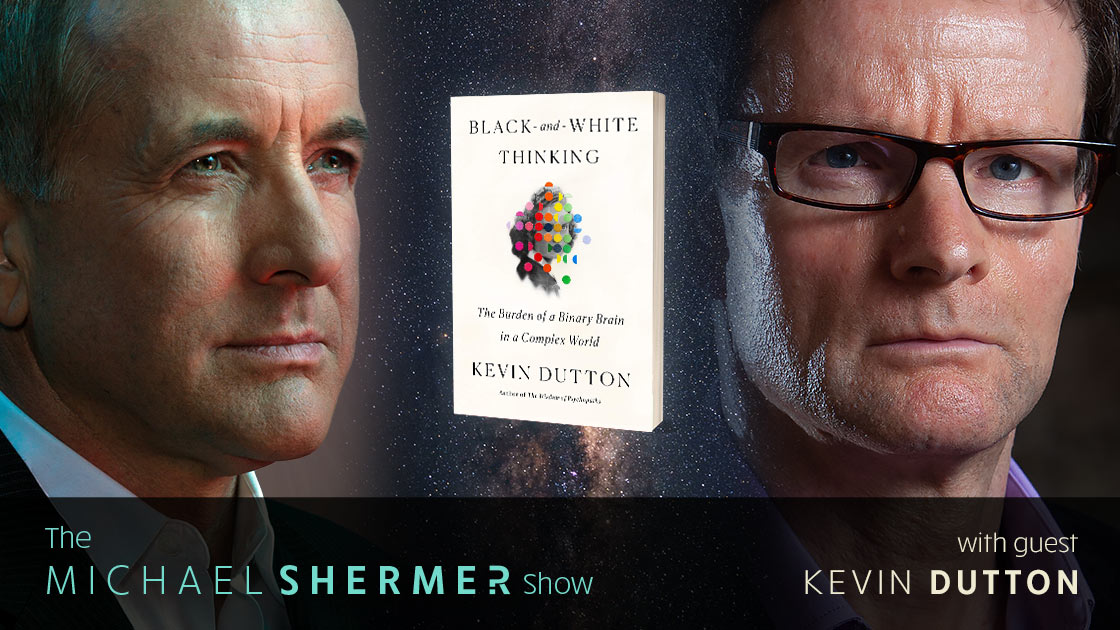
Kevin Dutton — Black-and-White Thinking: The Burden of a Binary Brain in a Complex World

Michael Shermer and Kevin Dutton discuss: black-and-white thinking in: physics, biology, psychology, politics, economics, society • categories and why we need them • when does a hill become a mountain? • How many grains of sand makes a heap? • from quantitative scaling to qualitative categories • How can there be dozens of genders if there are just males and females? abortion • stereotypes • tribalism, xenophobia, & racism • the difference between a cult, a sect, and a religion

Politics & Truth — Michael Shermer Responds to Critics of His Commentary “Trump & Truth”

In episode 152, Dr. Michael Shermer responds to critics of episode 151, reminding us that the truth or falsity of a claim of any kind that can be adjudicated by science and reason applies not just to astrologers, psychics, UFO proponents, and Big Foot hunters (all of which we cover in Skeptic magazine), but to conspiracy theories, including and especially those in the realm of politics, economics, and ideology, which as we’ve seen matters very much to the stability of

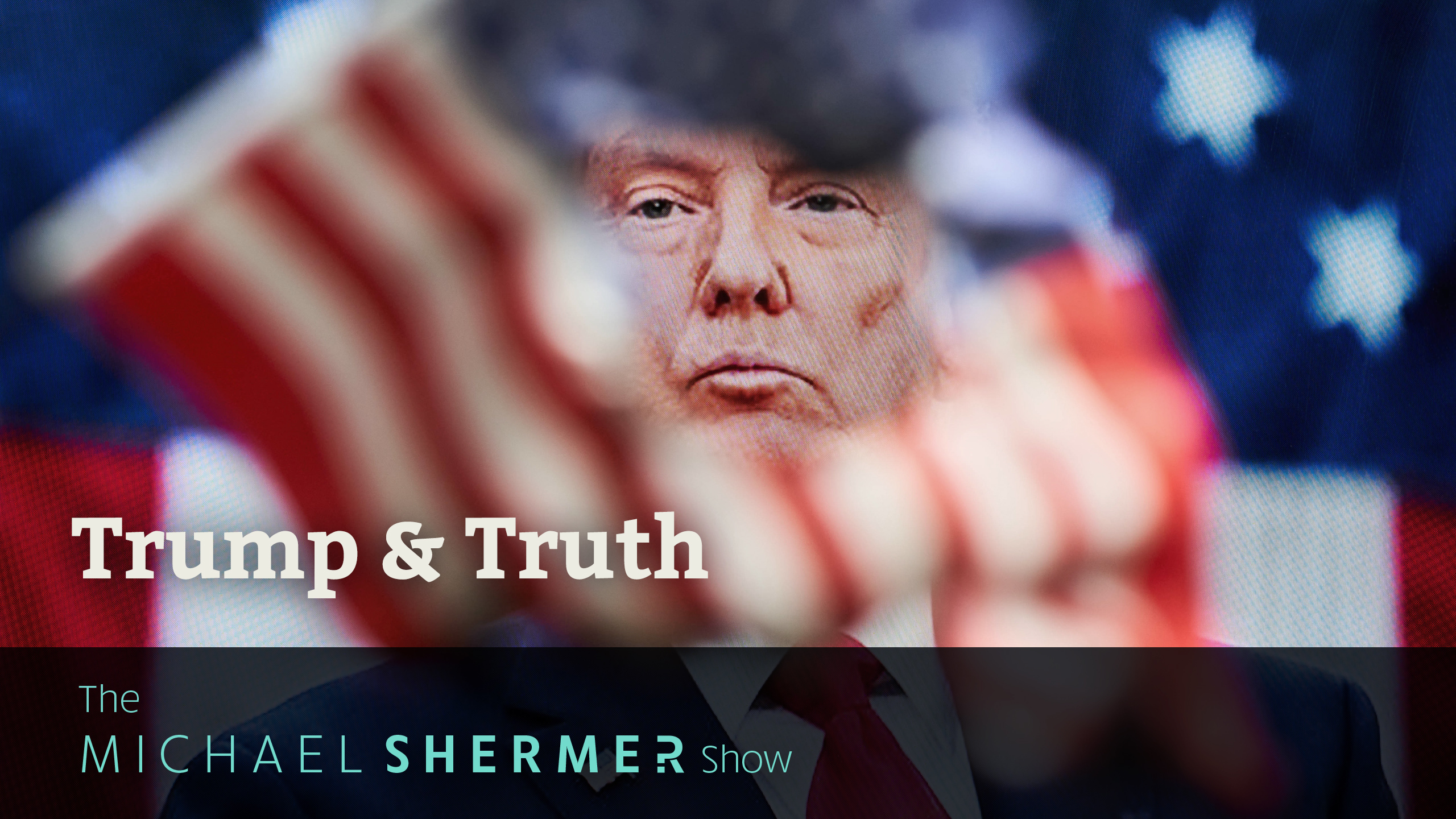
Trump & Truth — A Commentary by Michael Shermer

In this monologue commentary on the events of January 6, 2021, Dr. Shermer applies causal inference theory to Trump’s speech that morning, the violent assault on the Capitol that followed, the banning of Trump off social media platforms like Twitter and Facebook, the fears on the Right of social media censoriousness on the Left, the breaking up of big tech social media companies, and related topics, including what it means to “believe” a conspiracy theory.

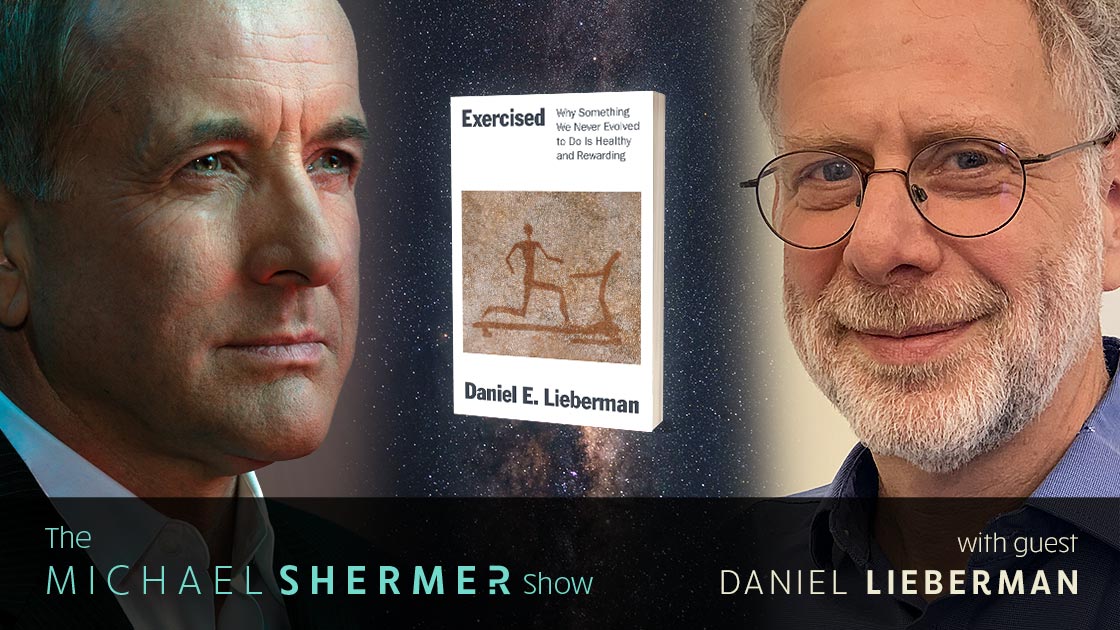
Daniel Lieberman — Exercised: Why Something We Never Evolved to Do is Healthy and Rewarding

In episode 150 of The Michael Shermer Show, Harvard professor of human evolutionary biology Daniel Lieberman discusses his pioneering researcher on the evolution of human physical activity in his book Exercised: Why Something We Never Evolved to Do is Healthy and Rewarding. Using his own research and experiences throughout the world, Lieberman recounts how and why humans evolved to walk, run, dig, and do other necessary and rewarding physical activities while avoiding needless exertion.

The After Time: The Future of Civilization After COVID-19

In Science Salon 149, the last of 2020, Dr. Michael Shermer reflects on the many issues we have witnessed this year: Black Live Matter, class conflicts, income inequality, lack of education, anti-Semitism, far-left illiberalism, far-right xenophobia and bigotry, and religious indoctrination. He then reads an expanded version of his essay The After Time: The Future of Civilization After COVID-19.

Have Archetype — Will Travel: The Jordan Peterson Phenomenon

In Science Salon # 148, Michael Shermer reflects on the recent resurrection of Jordan Peterson, the resurgent criticism of him and why so many people attack him, why similar such unwarranted attacks have been made against other public intellectuals.

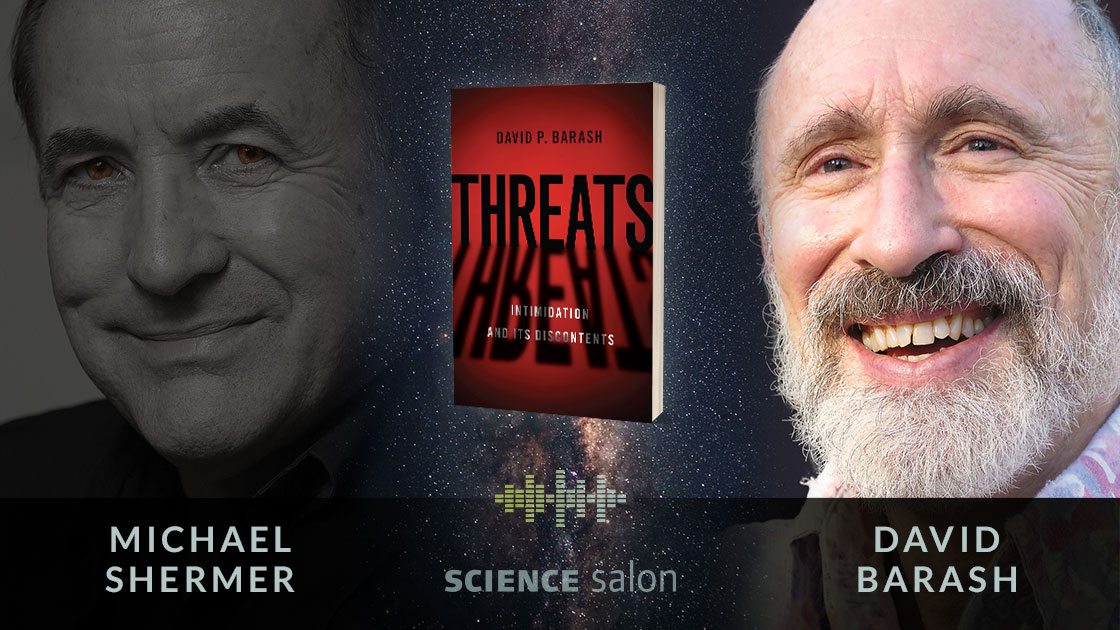
David Barash — On the Brink of Destruction

2020 has been one of the most momentous years of the past half century. In this conversation based on the book Threats: Intimidation and its Discontents, Shermer and Barash discuss: the evolutionary logic of nuclear deterrence, threat strategy and motive behind nuking, close calls with nuclear weapons, why they are not a sustainable strategy, the arms race within the U.S. between the Army, Navy, and Airforce, and more…

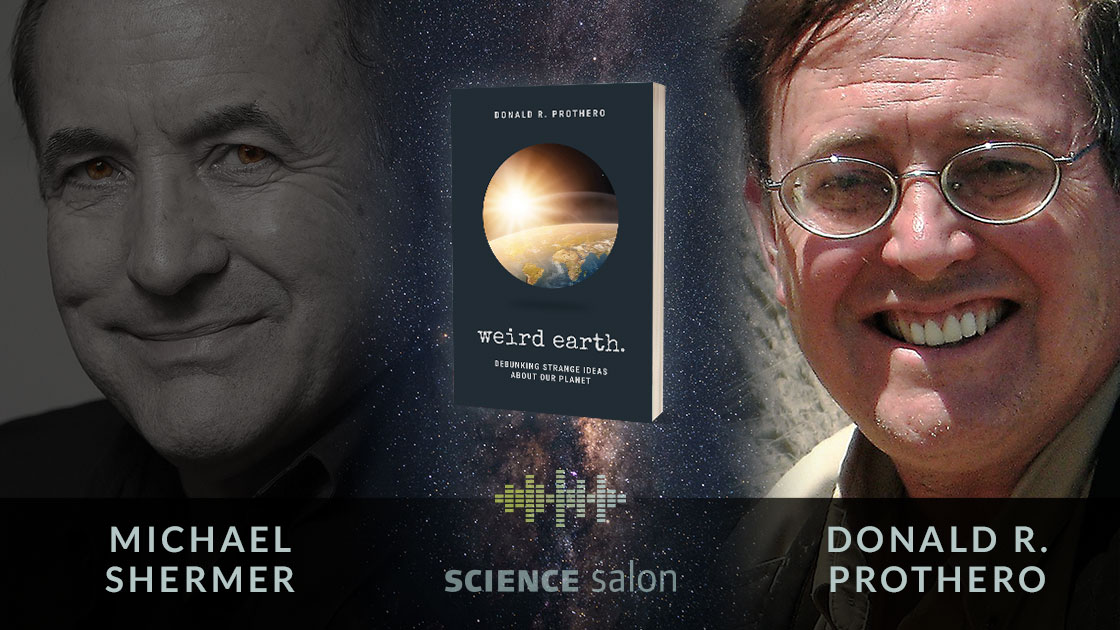
Donald R. Prothero — Weird Earth: Debunking Strange Ideas About Our Planet

Shermer and Prothero discuss: flat earth theories and how we know the earth is round • hollow earth theories and how we know it’s not hollow • the return of Ptolemy and an earth-centered solar system model (and how we know it’s wrong) • how science deals with anomalies and fringe claims • Were humans in the San Diego area 130,000 years ago? • flood myths • the age of the earth and how geologists determined it, and more…

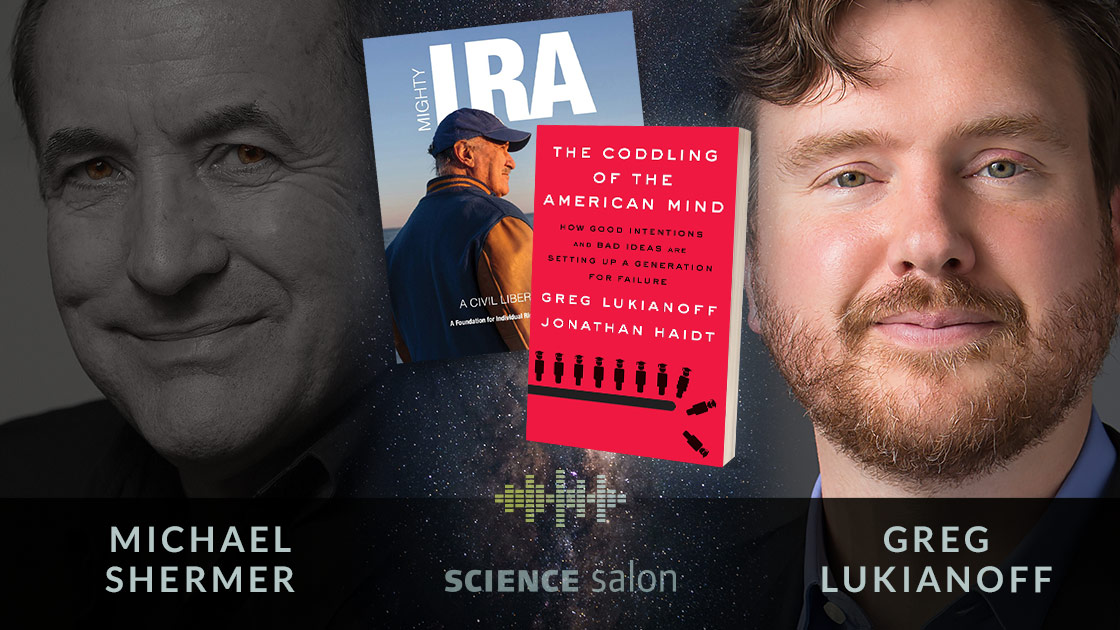
Greg Lukianoff — How Free is Free Speech?

Shermer and Lukianoff discuss: the state of free speech • how coddled today’s students are • rates of depression and anxiety in students today • possible causes: social media, screen time, culture of safetyism, culture of victimhood, helicopter parenting, the decline of unsupervised, child-directed play • cancel culture • current rates of deplatforming and canceling in academia, the polarization of politics • when self-censorship is healthy, and more…

Agustín Fuentes — Why We Believe: Evolution and the Human Way of Being

Why are so many humans religious? Why do we daydream, imagine, and hope? Philosophers, theologians, social scientists, and historians have offered explanations for centuries, but their accounts often ignore or even avoid human evolution. Fuentes employs evolutionary, neurobiological, and anthropological evidence to argue that belief — the ability to commit passionately and wholeheartedly to an idea — is central to the human way of being in the world.

Nicholas Christakis — Apollo’s Arrow: The Profound and Enduring Impact of Coronavirus on the Way We Live

Shermer and Christakis discuss: the replication crisis in social science and medicine • determining causality: how we know smoking causes cancer and HIV causes AIDS, but vaccines do not cause autism and cell phones do not cause cancer • randomized controlled trials and why they can’t be done to answer many medical questions • natural experiments and the comparative method of testing hypotheses (e.g., comparing different countries differing responses to Covid-19) • the hindsight bias and the curse of knowledge

PREVIOUS
 
NEXT
SKEPTIC • 3938 State St., Suite 101, Santa Barbara, CA, 93105-3114 • 1-805-576-9396 • Copyright © 1992–2024. All rights reserved • Privacy Policy